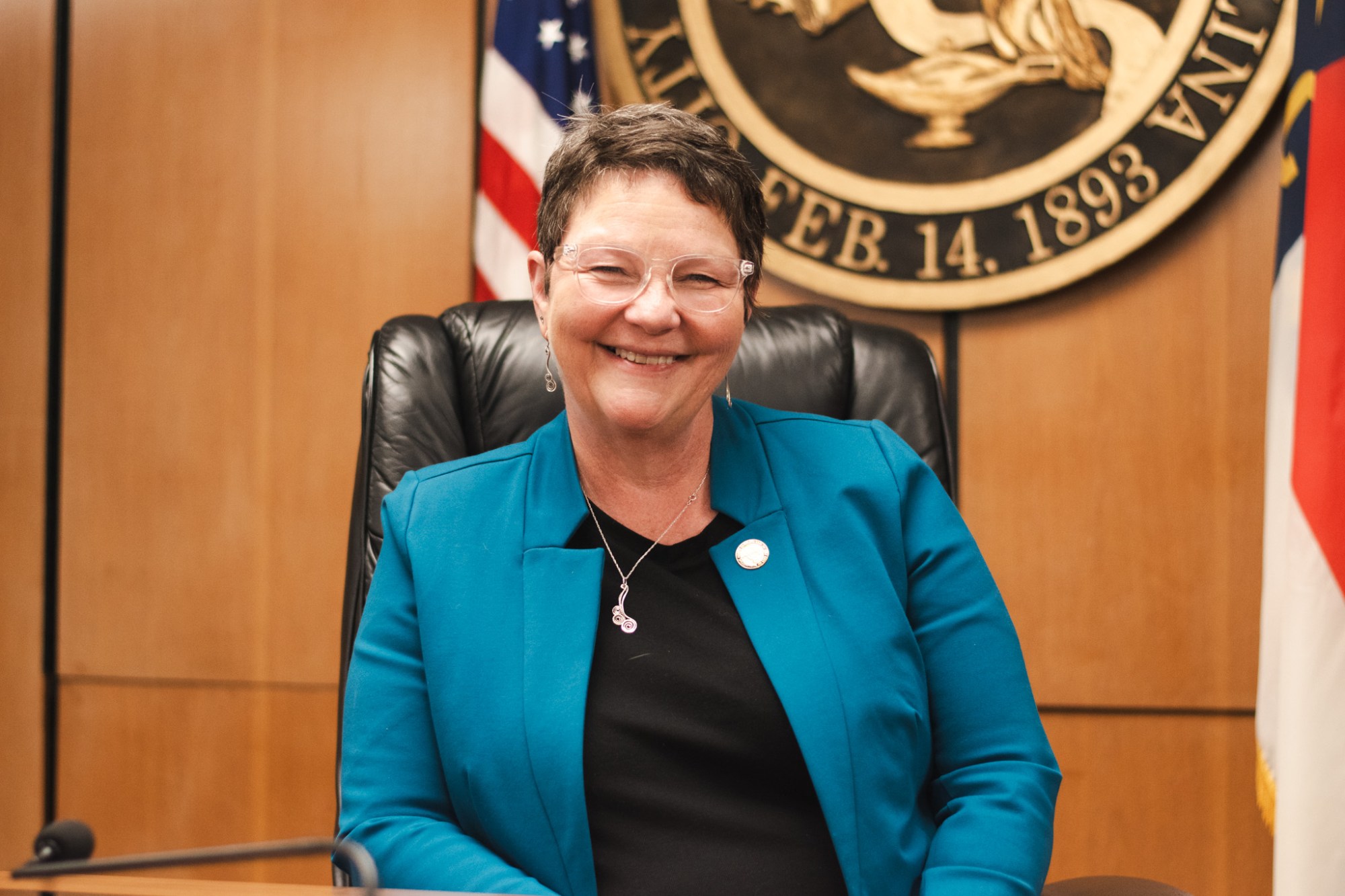
Before she held the gavel in the council chambers, Burlington mayor Beth Kennett’s career was defined by balancing the spiritual with the strategic. Kennett served as an ordained minister in the United Church of Christ and as director for the Center for Congregational Health. Having “difficult conversations” became a cornerstone of her 2025 campaign, which focused on a promise of “deep listening.”
On Nov. 4, 2025, Kennett made history with her election as the City of Burlington’s first female mayor, defeating former mayor Ronnie Wall by securing approximately 54% of the vote. Since assuming office a month later, she has a candid admission: She does not have all the answers, but she is committed to asking the right questions.
“Every meeting, every work session is a learning opportunity,” Kennett said of her first weeks in office.
While she navigates the complexities of rezoning, infrastructure overhauls and a shifting city budget, Kennett said she has deliberately avoided a top-down approach in favor of collaboration. “I don’t want people to feel like they have to apologize for being in a space,” she shared, referencing a goal to make city government more accessible. “This space is yours. This is the city’s space.”
While she still balances her professional coaching work with her mayoral duties, she said she views her transition from the pulpit to the dais as a natural extension of her life’s work: building a community where every resident feels they truly belong.
This interview has been edited for clarity and brevity.
Laura Brache: What is one thing about running a city – it’s a group effort, but you’re at the helm – that surprised you once you took that oath of office?
Beth Kennett: I think the thing that has surprised me most is how much support there is so that I do not feel like it is dependent on just me. The city staff is amazing. City council is a council that is willing to work together, or at least as we’re getting started we are.
And I think those two things bring me a lot of peace: I don’t have to navigate a city council that doesn’t want to work together because this city council is willing to. City staff are able to help me learn. I don’t even have to ask the questions most of the time.
They’re providing information for me in ways that help me to know what’s expected and to know what I need to do. And if I have a question, it’s okay to ask it. And so all of that I think that’s been the greatest surprise.
LB: During your campaign, you talked about “deep listening” – listening to the community, getting a good community pulse. Now you’re in the chair, what would you say is the most consistent concern that you’re hearing from residents? Whether it’s at the grocery store when they run into you, wherever it is that you are, or maybe just directly to your email inbox.
BK: I did expect some of this, but people want to be heard. I think every email that I get that’s, you know, “Dear mayor, I have this concern. I have done X, Y and Z, and the response to me has felt like A, B and C.”
Not everything is that detailed but I think there is a category that they all kind of fall into and that is, “I don’t know where to turn,” or “I don’t know what the next step is.” So it feels like people are seeking to be heard or looking for direction.
I don’t think they’re necessarily looking for direction from me, but my email address is one that they can find, and they can follow that. Most of the time I can’t answer the question because it’s actually a city staff person’s question to answer. But I am able to pass it on in a way that will get to the right person.
So the common thing – and we’re not talking about, you know, one kind of concern or issue – but the similarity is “I want to be heard.” “I want my concern to be addressed.”
LB: There’s going to be some problem solving in this role. What is a project at the forefront right now that you think will define maybe your tenure, your administration?
BK: What immediately comes to mind is city council. I think this started in a work session — and there’s been some one-on-one conversations with council members, too – that we need a way to get to know each other. Not just to get to know each other to be pals, but to get to know each other so that we know how to work together.
But the larger project is, “How do we support city staff?” I see city council and city staff as a big team. How can we really work together so that we’re all doing the best for Burlington?
Right now in Burlington there are some plans. There’s the Parks and Rec Master Plan. There’s a plan for streets and sidewalks.
We’ve talked about a retreat for council. And I’m hoping that that retreat is not just council, but involves hearing some of, again, the city staff. They are the experts in how the city works. Governance happens when we’re working together, I think.
LB: Can we talk about the transit system a little bit? Tell me about your vision for how we move here in Burlington.
BK: First, a confession: I have not ridden it. I have studied the schedule numerous times to try to figure out how I get to where I want to go.
I want to see more people using public transportation, walking, biking, getting around without having to get in a car.
That accessibility – not having to be dependent on a car – does excite me. It also puts us in the community with people together. I mean, while some people may get on the bus and not talk to anybody else, some people may get on the bus and actually exchange a “Good morning!” “Hello!” or whatever.
When I travel, when I go on vacation, and I go somewhere else, I don’t take my car. I use public transportation. So, why don’t I do that in Burlington?
One of the reasons I have not done that is because of the flow – to be able to depend on when the bus is coming and the connection that I need to make.
However, the temporary transit hub was moved [in front of the Municipal Building.] When I’m in here, I see people. It’s being used. I’m able to interact with people who are waiting to ride the bus.
LB: Let’s talk about infrastructure – water and sewer infrastructure. It’s part of Burlington’s growth. What is your understanding about these, if you will, “unsexy” issues?
BK: As far as resources go and what infrastructure Burlington has, what I’m learning is that water and sewer might be our greatest asset.
I’m on a huge learning curve with this because I’ve never worked in the arena of water and sewer before, right? Fortunately, that is our city manager’s background.
I don’t know that I ever thought of Burlington as such a rich city. And I don’t mean that in terms of millionaires living here. We are very rich in that resource of water and sewer.
In the storm last year, Burlington really helped out our neighbors.
We are rezoning and annexing properties into the city because of our water and sewer. People ask to be connected to our water and sewer.
I think that really puts us in a position to really think about growth, to really think: How can this resource change us? How do we make sure that it changes us for good and how do we honor that we have this resource?

LB: What would you say has been the most emotionally or mentally taxing decision you’ve had to weigh in these first few months?
BK: That’s a good question. What’s been the most emotional?
I’m struck almost every day by when I walk into a room, people know who I am. When I go to the grocery store, people know who I am.
I’m a person who is very comfortable along the edges of a crowd and to be in a position that people recognize and seem to have some hope in makes me a little bit nervous.
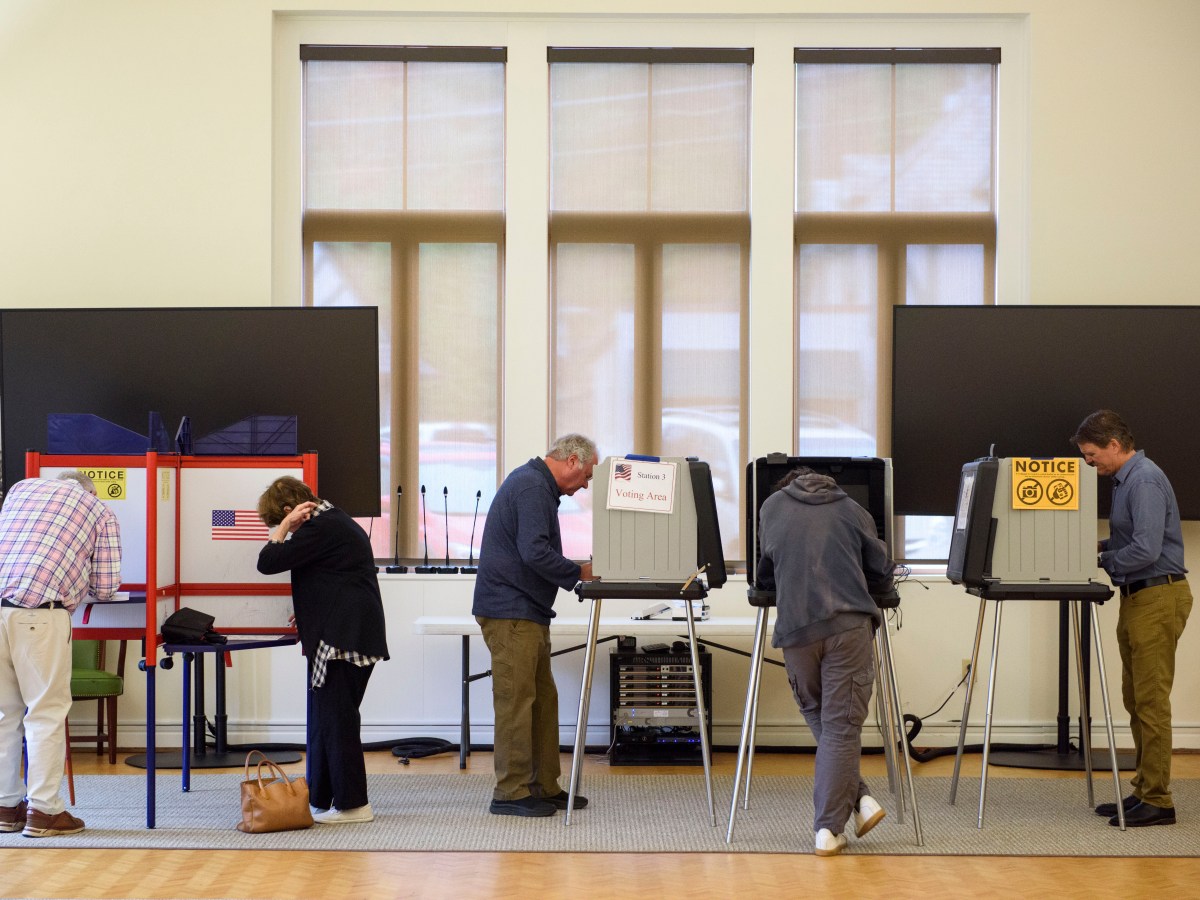
I hope that never gets old. I hope I never take that for granted because it’s a reminder to me that I am in this position because of all the people around me. Because the city showed up to vote and elected me.
And that can either be a heavy pressure or it can be a good reminder to pause, to listen, to not make any decision quickly, and to always wonder, “How does this impact others?” – whatever “this” happens to be.
LB: You’re bringing a new dynamic to city council. There are different perspectives. How are you all making sure that these differences aren’t leading to a gridlock when it’s time to make decisions?
BK: I’ll talk about council specifically. I think that, on our council, there is diversity.
We have Dejuana [Bigelow], the first Black woman elected to the city council. Bob Ward who has been a part of city council probably longer than anybody else on council right now. Ian [Baltutis] former mayor. Jeffrey Smythe, former police chief… I’m the new, inexperienced person in the seat of mayor.
In some ways I see my role as making sure that we’re hearing each of those diverse voices.
What I also hope is that we can hear more from the community.
I don’t know that people feel comfortable coming to city council, whether that’s Burlington or anywhere. You don’t have to speak at a city council meeting, but if you are paying attention to what happens at a city council meeting, then you’re going to know what you might want to speak to. And if you’re not hearing what you’re passionate about, or what you’re concerned about, then that’s an opportunity to reach out.
Yes, we are five individuals sitting as the council. And while we each have an individual perspective, we also have a responsibility to see beyond the five of us. And that’s what I want us to do.
LB: What about affordable housing? Right now, there are conversations happening here in Burlington about affordable housing, especially with the weather. What would you say so far is the biggest obstacle standing between the city’s current plan and actually getting people into homes? Is that even something that’s come about?
BK: So that is not something that has officially shown up on the city council agenda. Now, temporary housing, emergency housing, those things have shown up on city council agenda. But how do we make long-term home ownership affordable? I have no idea. And I wish that I did, because if I did, we would solve something across the country.
I think some of the answers to affordable housing are to be creative, to be collaborative, and for the community to come together and work on those issues.
In Burlington, I do think we are working on some possibilities. There’s the Burlington Land Trust that is getting a start. I’ve had a conversation with a pastor whose church has some property that they are intending to do some development on for affordable housing. I had a conversation with a developer a few weeks ago who used the phrase “attainable housing.” I thought, “Oh, I like that.”
Like I said, thinking outside the box and being very creative with private and public dollars, getting there I think could be a part of the solution.
Are you a Burlington resident looking for assistance from the city or a way to stay in the know? City leaders suggest using the Fix it / Report it / Request it site for requests and signing up for “What’s Up, Burlington?” notifications.