Overview:
In January, Alamance County leaders alerted commissioners about a projected $12.9 million deficit for the fiscal cycle starting July 1, 2026. For residents, this could create a choice between a property tax hike or elimination of what some county leaders deem “non-essential services.” In the past, some commissioners have discussed potentially closing library branches in Graham, Mebane, and North Park, and cutting funding for non-profit rescue and family services. There have been protests about these proposed cuts in the past, with a lengthy public comment section at a commissioners meeting last summer. Here’s what Alamance County residents need to know.
Breaking down the basics
How do North Carolina counties and municipalities adopt budgets?
North Carolina counties and municipalities follow the state’s Local Government Budget and Fiscal Control Act.
State law requires the county, city or town manager – and in some places a town administrator – to serve as budget officer with the responsibility of presenting a recommended budget to the Board of Commissioners or local Council and the public before June 1st of each year.
The budget officer is legally required to submit a balanced budget unless the board specifically authorizes the presentation of an unbalanced budget.
Copies of the proposed budget must be made available to the public for review. Once the county publishes a notice of the budget’s availability, it must hold a public hearing on the proposed budget.
After the public hearing, the board of commissioners can adopt the budget at any time but by July 1st.
If a county can’t meet the deadline, the board must adopt an interim budget to cover operations until the final annual budget is approved.
What process does Alamance County follow?
Alamance County’s budget process began late last year with capital planning, or funding for bigger projects. Here’s a breakdown of the county’s budget calendar, which you can find online here.
Where does the money come from? And where does it go?
What is the total budget for Alamance County?
Last year, the total budget was around $287 million. The largest chunk of that sum goes to the General Fund, also known as the operating budget for day-to-day operations, set at $242.1 million for the fiscal year.
The two largest expenditures were the Sheriff’s department and the school system at $40.5 million and nearly $59 million, respectively. These two categories alone account for approximately 41% of the county’s total General Fund appropriations.
Other top departments are social services, debt service, the health department and EMS.
How does the county bring in revenue?
County revenue largely depends on property and sales taxes. A projected shortfall of $12.9 million for the coming fiscal year means that current revenue isn’t enough to cover expected expenses unless some changes are made.
What is the property tax rate? How might it change?
The 2025-2026 property tax rate for Alamance County is set at 49.4 cents per $100 of a property’s valuation. This is a 2.5-cent increase from last year’s rate.
Because of where we are in the process for the upcoming fiscal year, it’s too early to know how the rate might change and if the county will increase or decrease it.
If revenue from sales tax or other sources does not bridge the county manager’s projected gap, commissioners may need to raise the property tax rate again to keep up with costs.
What are the funding priorities (and risks) this year?
The “structural gap” has put specific services in the spotlight again. Last year, proposed cuts included:
- Closing library branches (specifically in Graham, Mebane, and North Park in Burlington).
- Reducing funding for non-profit rescue services.
- Reducing funding for family services.
However, the Board could choose to close the gap through a property tax increase rather than service cuts.
What about the other municipalities?
Does this apply to my town?
Under state law, the same rules as counties apply to towns and cities. While the county budget sets your county tax rate (which everyone pays), your municipal tax rate is separate and depends on where you live.
In Alamance County, this process is currently unfolding in all of its towns and cities. Unlike the county, not all of these municipalities share budget calendars so we’ve linked to pages where you’ll find more details about each of their financial and budget processes:
- The Village of Alamance
- The City of Burlington
- The Town of Elon
- The Town of Gibsonville (located in both Alamance and Guilford Counties)
- The City of Graham
- The Town of Green Level
- The Town of Haw River
- The City of Mebane (located in both Alamance and Orange counties)
- The Town of Swepsonville
What to expect this year
What are the public input opportunities for Alamance County?
Copies of the proposed budget must be made available to the public for review after the presentation on May 18. Once the county publishes a notice of the budget’s availability, it must hold a public hearing. It’s currently scheduled for June 1 in Alamance County.
Residents can also share their perspectives before the hearing by completing the budget input survey, contacting the Board or speaking during the public comment periods at regular meetings on the first and third Mondays of the month.
How can I share my perspective?
The Alamance County Community Budget Input Survey is open until March 31. Here’s the link to participate. This survey is anonymous. If you’d like your name and address attached to your response, here’s how to engage:
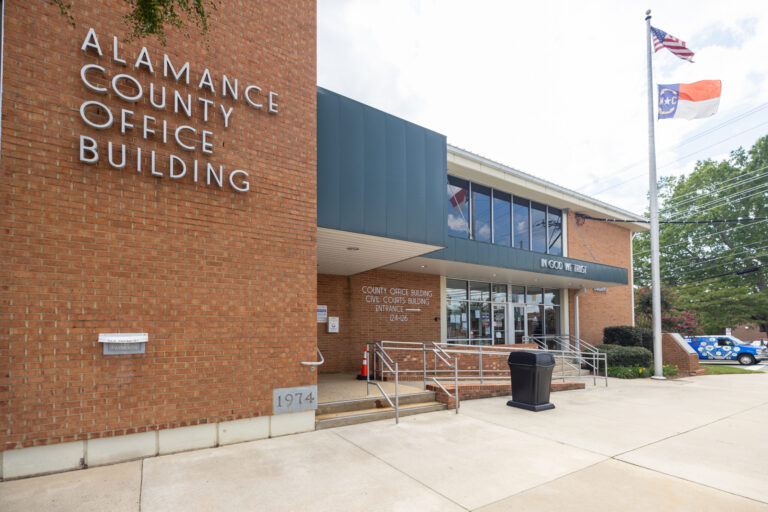
- The Alamance County Board of Commissioners meets on the first Monday at 9:30 a.m. and third Monday at 6:30 p.m. of each month at the County Office Building located on 124 W. Elm St., Graham. Here’s the full meeting schedule for 2026.
- There is a 30-minute Public Comment section at these meetings. You do not need to wait for the budget hearing. You can advocate for services now while the manager is still writing the draft.
- Follow the board’s Public Comment and Public Hearing Policy:
- Sign up online or outside the meeting room before the meeting starts.
- You have 3 minutes, which tend to be strictly enforced.
- Follow the board’s Public Comment and Public Hearing Policy:
- You can also email the board: If you cannot attend, email the clerk, Jenni Brown, to have your comments distributed to commissioners at Jenni.Brown@alamancecountync.gov.
If you take an action, let us know. Email laura@alamancefabric.org.
Clarification, February 26, 2026 2:58 pm: On Feb. 16, 2026, the Alamance County Board of Commissioners appointed Jenni Brown as clerk to the board. Tory Frink serves as Greensboro City Clerk effective Oct. 1, 2025.