
Editor’s note: In the wake of Tuesday’s Democratic landslide, NC Local queried six of the state’s most seasoned political reporters to get their interpretation of the 2026 vote. They cautioned that the results were more a rejection of Republicans than an embrace of Democrats — and that the state remains as unpredictable as ever. Meanwhile, there are lessons for both parties. (And Democrats shouldn’t mistake a landslide for a lasting mandate.)
NC LOCAL: Pick one, and unpack it for us: the biggest North Carolina election surprise or the slam-dunk result you expected.

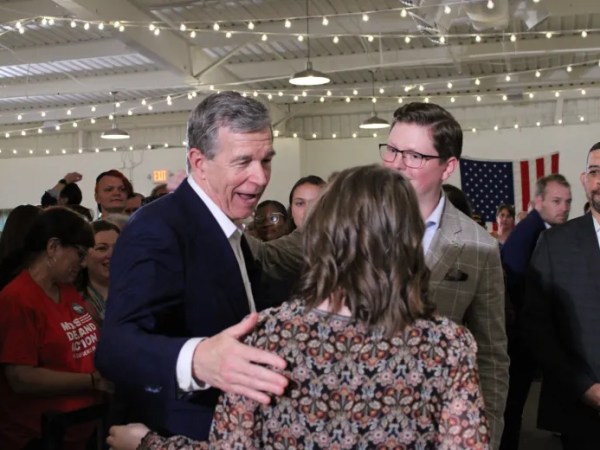
FRANK BRUNI, New York Times: My biggest surprise and slam-dunk are the same. It was a slam-dunk – at least by the time that Election Day rolled around – that Roy Cooper would win his Senate race. But by 20 points? Although that set the tone for the night and was consistent with what happened in Senate races elsewhere, it’s still hugely significant. Cooper won his 2016 governor’s race by less than 1 percentage point. He won in 2020 by about 4.5 points. So 20 points speaks volume.
As I wrote late Tuesday night in The New York Times, it affirms the importance of the right candidate running the right campaign. Cooper was perfectly chosen: a soft-spoken, affable, no-nonsense, indisputably competent choice for fickle and fiery times. He didn’t just say the word “affordability” over and over; he outlined a specific affordability agenda that made him seem committed and credible.
He got lucky, sure: His Republican opponent, Michael Whatley, was the quintessential Trump loyalist and Trump proved to be the kiss of death. But, again, 20 points? That margin carries important lessons for Democrats: Don’t fight the culture wars. Cooper didn’t. Don’t be a bomb thrower. Cooper wasn’t. Promise that you’ll try your level best to improve people’s lives. And seem to mean it.
SARA MICHELS, Carolina Public Press: I knew the blue tsunami was real when Democrat Shelly Headen defeated State. Rep. John Blust (R-Guilford) in State House District 62. Yes, the district was originally on the map for Democrats, as an R+2 Republican leaning district, but Headen faced a major scandal toward the end of the election cycle. Some of her past social media posts, which included calls for violence against Republicans and Trump supporters, were uncovered. It looked like it was over for her.
But apparently, voters either didn’t know or didn’t care. As of the end of Election Night, Headen was up with 50.27% of the vote, or 233 votes. I expect there to be more drama to come in that race, but it showed me that this election was all about national politics and party loyalty, not necessarily the specific candidates.

BEN SCHACHTMAN, WHQR:
Since I live and work in southeastern North Carolina, I have to say State Senate District 7 – definitely a surprise.
As the race started in earnest this summer, Republican incumbent Michael Lee had a winning streak, a war chest, a gerrymandered district (featuring the infamous “notch” carveout, shifting left-leaning downtown Wilmington voters into ruby-red Senate District 8), and a state Republican party heavily invested in his success as the heir apparent to Senate Leader Phil Berger. Democratic challenger Jessica Bichler had a successful small business, a popular local yoga studio, but no name recognition, and a campaign that was starting from scratch on policy and fundraising.
This race has historically been expensive and nasty, and this year was no different. Based on Q3 reports, Lee raised at least $2.8 million, including roughly $1 million in support from the Senate Majority Fund, and Bichler raised at least $1 million, with significant help from the state Democratic Party. Lee used that money to tout his own legislative achievements, but also to run a series of attack ads against Bichler, including an AI-generated video that drew mixed, at best, reactions. Bichler ran her own ads criticizing Lee’s track record on environmental regulation.
In the end, Lee’s dramatic three-to-one fundraising edge and other advantages still left him five points short after preliminary results.
I’m sure there will be a lot of autopsies on this one. Obviously the blue wave – or the “Bluenami,” as the recently rebranded Washington Sun called it – played a role here. But I have to wonder if Lee’s negative campaign ads had an impact, in fact, a twofold impact: first, I think they may have turned off some independents and moderates, and second, I’m pretty sure they did as much to get Bichler’s name out there (including mentions by NPR and The New Yorker) as Bichler’s own campaign.

CLAUDIA RIVERA COTTO, Enlace Latino NC: There were several surprising results in North Carolina, including some high-profile congressional and state legislative races. But one race that particularly stood out to me was at the local level, which often does not get as much attention. The Republican Alamance County Sheriff, Terry Johnson, lost to Shannon Long, an unaffiliated candidate, by nearly five percentage points.
Johnson had held that office since 2002. He ran unopposed in 2014 and 2018 and won nearly 59% of the vote in 2022 against his opponent. Alamance is also a Republican-leaning county that Donald Trump carried by about eight points in 2024.
What makes this result particularly significant to me, given my reporting on immigration, is Johnson’s long history of cooperation with ICE. Johnson was an early adopter of the federal 287(g) program in North Carolina. His office became the second sheriff’s department in the state to enter an agreement with ICE, back in 2007. That partnership went on to become a major source of controversy over immigration enforcement and allegations of racial profiling against Latino residents. In 2012, the Justice Department sued Johnson following an investigation that alleged a pattern of discriminatory policing against Latinos, including racial profiling during traffic stops. A federal judge ruled in Johnson’s favor in 2015, finding that the government had failed to prove its claims. The parties reached a settlement in 2016 that included changes to department policies, training and Spanish-language access, with the Justice Department agreeing to withdraw its appeal.
Long, meanwhile, campaigned on rebuilding trust with immigrant communities and opposed participating in the 287(g) program in its current form. He pledged not to hold people for ICE beyond what state law requires and proposed additional training for deputies on racial profiling and de-escalation. He also promised to strengthen language access, hold listening sessions with immigrant communities and make it easier for victims and witnesses to report crimes without fearing that contacting law enforcement would automatically expose them to immigration consequences.
I wouldn’t interpret the outcome as a referendum on immigration enforcement alone, especially since other Republican incumbents also lost in Alamance. But it’s a significant change in local leadership, and I’ll be watching what it means for immigration enforcement and the relationship between law enforcement and Latino residents in the region.

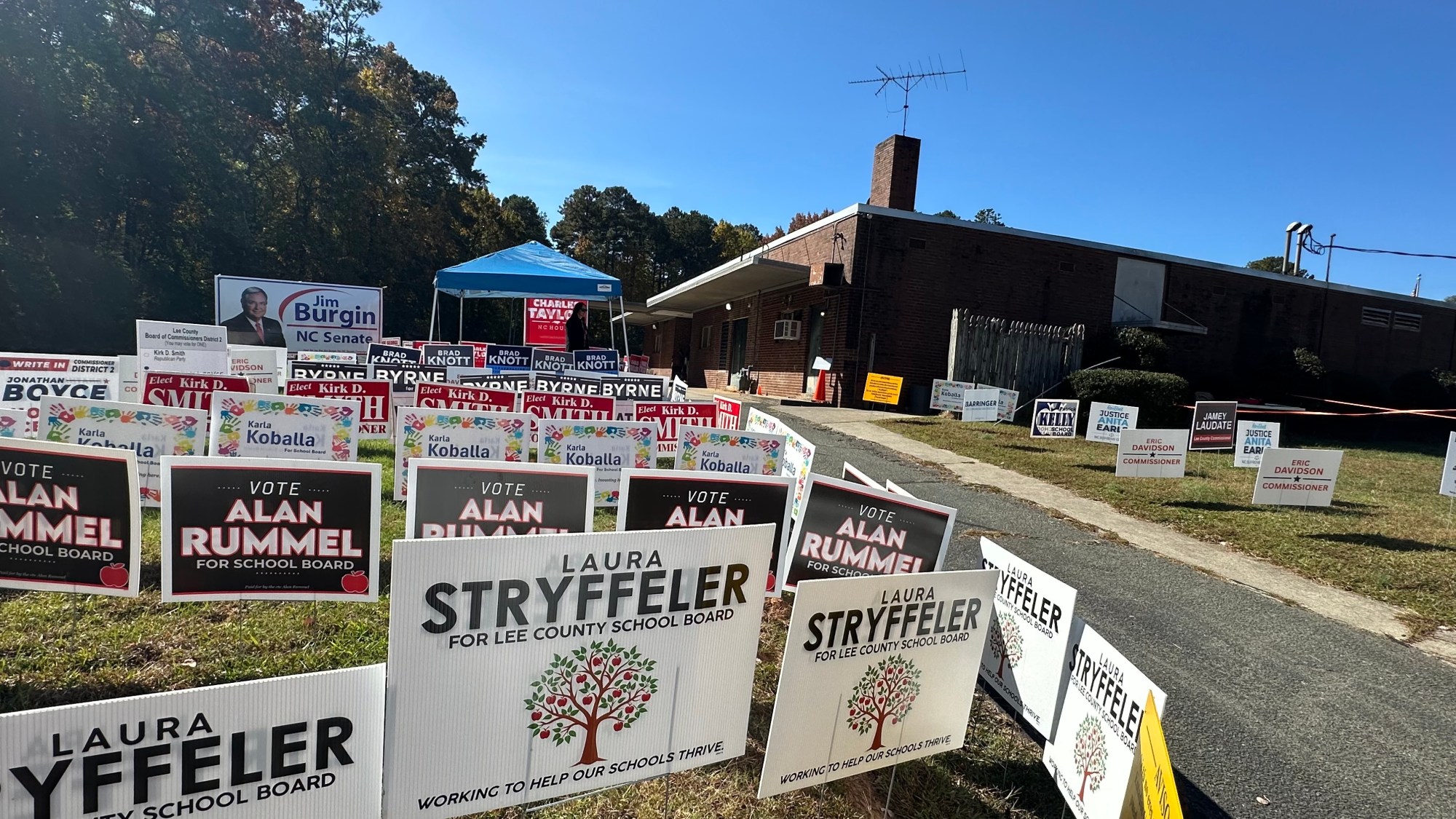
BRYAN ANDERSON, The Assembly: On paper, the biggest surprise of the election is unaffiliated candidate April Montgomery winning a state House contest that Republicans had carried in 2024 by 29 percentage points. But as The Assembly reported, Republican Charles Taylor of Lee County faced heightened scrutiny after our reporting showed Taylor owning an undisclosed property that a tenant was using for video gambling. The ALE has since opened an investigation into the gambling business.
The idea that Democrats could flip multiple U.S. House seats seemed unfathomable. As of Friday, a 10-4 GOP edge is on track to become a 10-4 advantage for Democrats. The string of apparent defeats of Republican Reps. Tim Moore, Richard Hudson and Addison McDowell are a few of the many stunners.

THOMAS MILLS, Politics NC: The Congressional races were the biggest surprise of the year. Democrats appear to have flipped the majority of seats from 10-4 Republican to 10-4 Democratic. Going into the election, three seats were safe for Democrats and only two, NC-01 and NC-11, were considered competitive. Late in the cycle, national Democrats started watching seats in NC-03, NC-09 and NC-13, but on election night, they won NC-05, NC-06, and NC-14. Those races had very few resources and most people had never heard of the candidates. The margins in the seats Republicans held are very small, indicating Democrats almost swept the heavily gerrymandered districts.

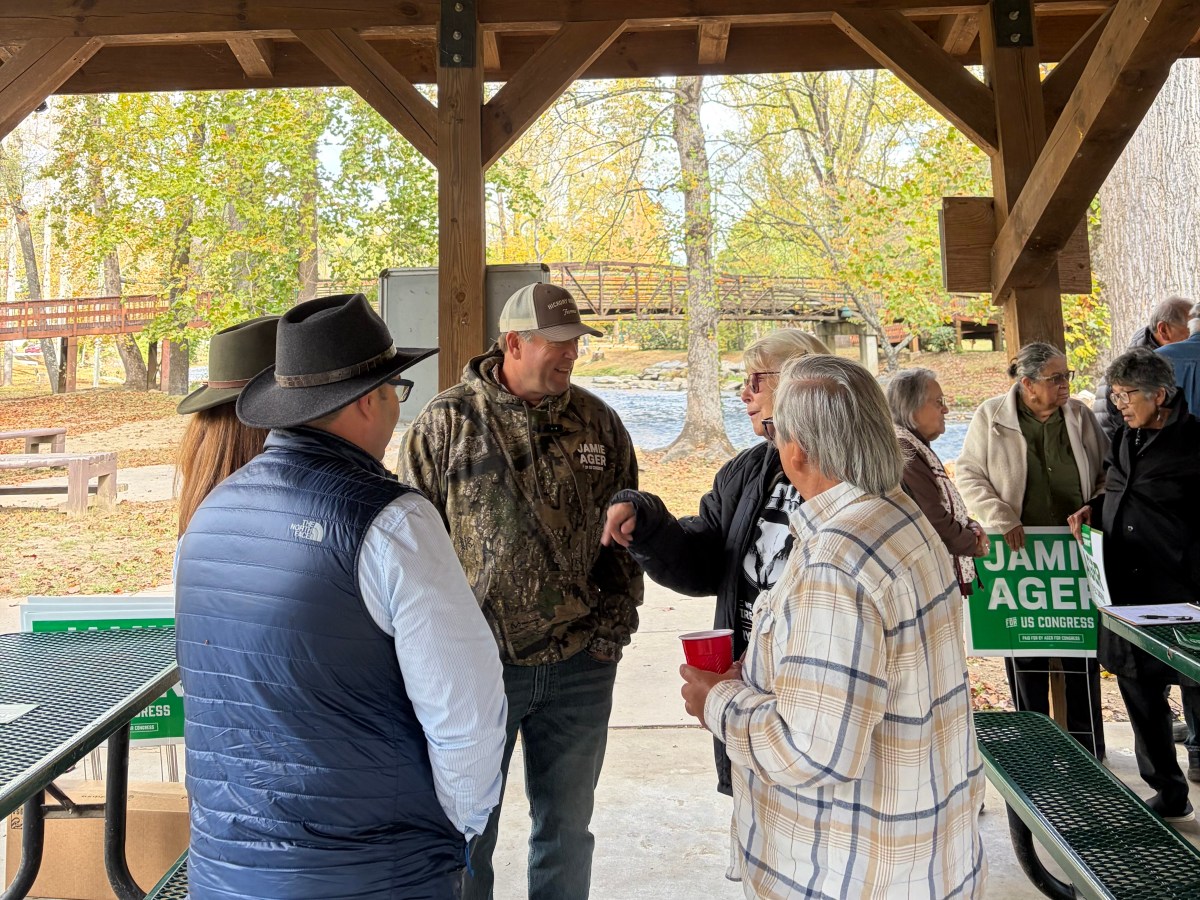
LILLY KNOEPP, NC Local: My pick would have to be Jamie Ager’s NC-11 win. I’ve been covering politics in the mountains since 2018 so there have been a few times that an expected “blue wave” never materialized. Ager raised more than $5 million dollars during his more than year-long campaign – compared to Republican Jennifer Balkcom’s less than $400,000 raised during her less than 90-day campaign. So a win felt inevitable, but much of the region is deep red so I wasn’t expecting the race to be called so quickly. Part of Ager’s win was thanks to a shift to the left in some of the biggest counties in the region, like Buncombe and Henderson; we saw that shift continue on Election Day.
Which race or issue on your North Carolina ballot intrigued you the most, and what’s your take on the result?
FRANK BRUNI: I’m going with a collection of races, by which I mean all the races that composed the flipping of the North Carolina House to Democratic control – after a span of many years in which Democrats often dealt not just with a Republican majority but with a Republican supermajority. I think this says as much as any of the marquee U.S. House, Senate or governor’s races do about the anti-Republican mood of the midterms, because these smaller, more local contests can often be less influenced by personality and advertising and gaffes and all that stuff. They can be truer to which party voters feel they can trust more at a given moment.
SARA MICHELS: I’m going to cheat and talk about the two races I was most interested in following this election.
First, the state supreme court contest between Democratic Associate Justice Anita Earls and former Republican State Rep. Sarah Stevens (R-Surry). I imagine voters weren’t thinking too much about that race, but it is massively consequential for state Democrats.
Democrats needed to keep Earls’ seat on the court so they are in a good position to retake control of the state supreme court by the next redistricting cycle. I thought it might be close, given the emphasis and importance of the race.
It was not. Earls cruised to victory with nearly 59% of the vote. To me, that could mean that Democrats’ efforts to highlight Earls’ race worked or that the blue wave extended all the way downballot — or most likely, both.
Second, the 11th Congressional District in Western North Carolina was fascinating from beginning to end. It’s a typically red district, so in theory, a Democrat shouldn’t have had a chance.
But several factors came together to make it possible for Democratic candidate Jamie Ager to not only win, but win by 16 percentage points. The national political environment was harsh for Republicans. The incumbent, U.S. Rep. Chuck Edwards, had to drop out less than 100 days before Election Day over a scandal. Even before then, he put up pitiful fundraising numbers and caught flack for appearing absent after Hurricane Helene. His replacement, State Rep. Jennifer Balkcom, R-Henderson, wasn’t as well known as Edwards, and barely had any time to introduce herself to voters.
While I wouldn’t bet on NC-11 staying blue in 2028, it’s a massive flip regardless.
BEN SCHACHTMAN: I was not paying extraordinarily close attention to North Carolina’s 7th Congressional District until the final few weeks, when it really started to catch my interest.
Incumbent Republican David Rouzer has been extremely comfortable in his seat for most of his time in office, to the point where his lack of public appearances, refusal to attend candidates’ forums or answer questionnaires, and avoidance of the press have become a punchline.
Traditionally, Democratic challengers have done well in blue Wilmington, winning a lot of local precincts, but have been trounced in the redder, more rural parts of Rouzer’s district. This year, after preliminary results, Democratic challenger Dr. Kimberly Hardy is within a percentage point, and also within the recount range. The gap between Hardy and Rouzer is less than the few thousand votes picked up by Libertarian challenger Maad Abu-Ghalazah, who – based on his policy preferences – probably picked up more left-leaning votes than he shaved off of Rouzer’s lead.
In many of the close races we covered, the outcome was overdetermined, or at least driven by multiple factors, but in this case, given how little Rouzer did, and how close he came to losing, I wonder if – assuming his win isn’t overturned by a recount – he’ll be more visible and accessible going into 2028. And I wonder if the close call will influence Democrats’ approach to redistricting (more on that, below).
CLAUDIA RIVERA COTTO: I was intrigued by the passage of all three constitutional amendments, each with roughly 60% support statewide, despite the significant Democratic gains in North Carolina, according to preliminary results from The Associated Press.
I was somewhat surprised, particularly by the results in counties that have consistently voted Democratic in recent presidential elections. For example, in Wake County, where Democrats won races across the ballot, including two state House seats previously held by Republicans. While reporting from several polling locations across the county on Election Day, I noticed Democratic volunteers handing out sample ballots explicitly encouraging voters to reject all three constitutional amendments while supporting local bond measures, including Raleigh’s housing and transportation bonds. Yet Wake County had narrowly approved both tax amendments, with just over 51% support for each, while rejecting the voter ID amendment.That contrast of a heavily democrat county voting in favor of most of the amendments was quite interesting.
This pattern also extended well beyond Wake. The property tax amendment passed in 95 of North Carolina’s 100 counties, including Mecklenburg, Guilford and Forsyth, which also voted Democratic in the 2024 presidential election. Durham, by contrast, overwhelmingly rejected the measure, with 71% voting against it.
The results regarding the amendment show that North Carolina’s electorate can be complicated and should not be taken for granted. Voters may disagree with Republican decision making or individual candidates but still on the other hand support some Republican-backed policies. That being said, I do wonder how many voters knew who proposed these amendments or fully understood their implications. Either way, these are changes that will have an impact on the upcoming years for the state and I’d like to follow them closely.
BRYAN ANDERSON: I was most intrigued by Democratic state Rep. Shelly Headen ousting Republican incumbent John Blust, despite losing the support of state and local Democratic leaders over inflammatory social media posts that included calls for violence against supporters of President Donald Trump.
In an interview with me, Headen vowed to remain in the race and compared herself to some unique historical figures. “I’ve sacrificed myself just like Jesus sacrificed himself on the cross, and Martin Luther King and Abraham Lincoln and all the people that put themselves out there to sacrifice for our country,” she told me. “If a few angry moments on social media are the end, then so be it. MAGA will keep winning if we continue with not standing up for what’s right.”
For all the discussion about candidate quality on the Republican side, Democrats largely wrote off the race. To me, her victory is reflective of deep Democratic frustration with the status quo in Washington, D.C. and an erosion of what many Democratic and Republican onlookers alike saw as disqualifying behavior.
THOMAS MILLS: In a district covering all of Lee and part of Moore Counties, April Montgomery won a state House seat running as an independent, or unaffiliated as we call them. It was the first time in 16 years that an independent has won a legislative seat in North Carolina.
North Carolina makes getting on the ballot as an independent difficult. Candidate have to get a large number of signatures from registered voters living in the district, while members of parties just have to pay a fee. Hence, North Carolinians haven’t had many chances to vote for independents.
Montgomery built a bit of an organization collecting ballots and ran a vigorous campaign. While she benefited from the wave, she also outperformed Roy Cooper by two points, and Cooper outperformed Democratic legislative candidates statewide by about five points. She is a strong candidate who fits her district, and shows that people who want change will vote for it given the chance.
LILLY KNOEPP: I’ve been interested in the blowback from the NC-11 race. It seems like on the Democratic side, the hope of a blue flip helped drive voters to the polls during early voting. On the Republican side, uncertainty following Rep. Chuck Edward’s stepping out of the race seemed to dull support locally. I’ve even started seeing fingers pointed within the WNC GOP about who is at fault – not only for Rep. Jennifer Balkcom’s loss but for the trickle down. When Balkcom left the NC-117 race to start her congressional campaign, she left a short runway for Henderson County Republican Chelsea Walsh to secure her seat. Ultimately, that was part of what led Democrat Lynne Russo to narrowly win with 51.7% of the vote compared to Walsh’s 48.2%
Look beyond the winners and losers… If you could make every North Carolina voter understand just one thing about Tuesday’s results, what would it be? (Does something deserve more attention than it’s getting?)
FRANK BRUNI: These midterm results are not primarily an embrace of the Democratic Party. They’re a rejection of the Republican Party under Donald Trump – and they’re a rebuke of Trump specifically. Yes, Democrats chose candidates wisely, including in North Carolina, with Roy Cooper and Jamie Ager being excellent examples. Yes, Democrats focused on economic issues in a disciplined and effective way. But voters haven’t fallen in love with the Democratic Party writ large – and they could quickly turn on it if it reverts to some of its fixations of the past decade and to the boutique obsessions that opened the door to Trump.
SARA MICHELS: I would caution Democrats from getting too excited about the results. I know that sounds crazy, but the bigger picture of the election to me is that Republicans lost, not that Democrats won.
Why do I think that? Two reasons. Democrats won across the board, regardless of candidate quality or fundraising. That shows me that voters weren’t as excited to vote for particular candidates as they were to vote against the Republican Party or Republican candidates.
Also, the three statewide ballot referenda succeeded, by about a 60-40 split each. Those were Republican-led policies. If voters were motivated to vote for Democratic policies, I would think these referenda wouldn’t fare quite so well.
There is room for interpretation here, though, because the referenda language wasn’t necessarily the most clear and most Democratic candidates didn’t campaign on the referendums.
If I’m a Republican, this is a bit of hope heading into a consequential 2028 cycle. If I’m a Democrat, it’s a stark reminder that to earn North Carolina voters’ trust, they have to make good on their campaign promises to fight corruption and make life more affordable.
BEN SCHACHTMAN: Some of the narrative I’ve been hearing is that Democrats have flipped the House and weakened the GOP hold on the Senate after 15 years of Republican domination in the General Assembly. But the underlying electorate hasn’t shifted all that dramatically. In my neck of the woods, more Democrats showed up, and more Republicans stayed home. Unaffiliated voters tilted left, but they’ve tilted right in the past (including towards Trump).
What I hope doesn’t get lost is that North Carolina remains an extremely purple state. The GOP has held majorities – and sometimes supermajorities – in the General Assembly at least as much through gerrymandering as through recruiting and retaining popular candidates. (Some would say much more the former than the latter: see also the attempt to turn an almost evenly divided state into an 11-3 Congressional split in favor of Republicans).
So, if it’s fair to say that Republicans had a majority but not a mandate – and I think it is – then the same goes for Democrats. Especially in races where they won on the frothing tide of frustration – and anti-Trump sentiment – Democrats will have to figure out how to govern and pass meaningful legislation.
A lot of the winners I’ve spoken to today have cited the need for bipartisan work. That could just be the post-election oxytocin talking, but it’s a good strategy – not just for getting stuff done, but for getting stuff done that appeals to people beyond registered Democrats who make up just a third or so of the electorate.
CLAUDIA RIVERA COTTO: One thing I wish more North Carolinians understood about this election is that we’re not just seeing changes in which candidates voters support. We’re also seeing important changes in the demographics of who is showing up to vote.
I’ve spent the past few weeks analyzing Latino early voting data, and some of the findings surprised me. Accepted Latino early and mail ballots nearly tripled compared with the 2022 midterms, increasing by about 190%, compared with roughly 31% statewide.The increase was especially striking among Latinos ages 18 to 24, at 466%. With Latinos making up roughly 11% of North Carolina’s population, I think it’s important to pay attention to a younger generation, including children of immigrants who are reaching voting age. But the story is not just about younger Latino voters becoming eligible. Latino early voting increased across every age group and in 99 of North Carolina’s 100 counties. My analysis also identified approximately 15,000 Latino adults who were registered before the 2022 election but had no matching voting record from that election. They cast accepted early ballots this year.
There was also a NBC’s exit poll that estimated that Latino voters made up 4% of the electorate and favored Roy Cooper over Michael Whatley by 69% to 26%. I’m not suggesting they decided this year’s Senate race. But in a state where several recent Senate elections have been decided by less than 4%, I think this is a population whose political participation deserves closer attention.
It’s also worth noting that the increase in early voting wasn’t limited to Latinos. Other analyses found substantial growth among Black and unaffiliated voters, suggesting that changes in participation are happening across different segments of North Carolina’s electorate and deserve closer attention.
BRYAN ANDERSON: Voters are clamoring for change, and they can see through a lot of manipulative political ads. In Senate District 7 and U.S. House District 11, Republicans used AI to negatively portray their Democratic opponents. Those tactics didn’t seem to move the needle in their favor.
Fear is a powerful motivator, but so is anger. The results reflect a profound gap between what constituents and their representatives see as top priorities.
THOMAS MILLS: This election is the exception. The last one we saw with such consequences happened in 1994 when Republicans were washed into office all across the country. Elections like this one tend to reshape the focus of the country.
In 1994, Washington politics was defined by a shift to the right as Bill Clinton declared the era of Big Government was over. He implemented welfare reform and embraced deregulation. He positioned himself between Democrats and Republicans in move described as triangulation. He angered some in his own party, but had an effective second term despite his impeachment.
This election should change our politics, too. Voters have let politician know they are unhappy with the way the country is moving and want something very different. Their vote is their voice and it makes a difference, especially when they speak as loudly as they did on Tuesday.
LILLY KNOEPP: Democrats are celebrating this blue wave as a rubber stamp on their policies. It’s common knowledge that the midterms are a referendum on the party in power, in this case Republicans and particularly President Donald Trump. I think Democrats need to take their newfound power as an opportunity, not a mandate. I talked to political scientist Chris Cooper at Western Carolina University Wednesday morning about the election. He shared how he is thinking about the results.
“[I]t is a massive red undertow that sort of looks like a blue wave,” Cooper told me. “In other words, Democrats won and they won in unexpected places. Not so much because people were wild about the Democrats, but they were fired up to vote against the Republicans, and the Republicans stayed home in bigger numbers.”
Let’s set aside the political horse race. How might the results of this election change life for North Carolinians over the next two years? (And: what will you be watching closely as North Carolina heads toward 2028?)
SARA MICHELS: On the state level, Democrats gained quite a bit of leverage in the legislature.
They are two seats shy of a supermajority in the state House, and one seat shy of an even state Senate (Democratic Lieutenant Gov. Rachel Hunt could break ties in Democrats’ favor).
That one seat may make all the difference. To enact their preferred policies, Democrats must get at least one Republican state senator on their side. Otherwise, all policy making could come to a halt. Being the cynical journalist I am, I’d bet more on the latter option.
Next year is a budget year. If Democrats are able to enact their preferred policy, I’d anticipate a lot of money for public schools, a partial rollback of Opportunity Scholarships, funding for affordable housing, reinstatement of environmental goals, voting reforms and much more.
I’ll be watching closely to see how much legislation Democrats are actually able to pass, because that will help determine what they can campaign on in 2028.
BEN SCHACHTMAN: School funding is probably top of mind for a lot of folks. North Carolina’s long history of underfunding its public schools, the Leandro fight and associated court shenanigans, Republicans’ enthusiastic embrace of the Opportunity Scholarship, and the painful delay in salary adjustments for teachers due to the embarrassing budget stalemate – all of that gave Democrats a mandate to push for improvements. When the budget did come out, I think it helped, but we’ve heard bipartisan calls from local officials, including school board members and candidates, to improve both how state funding is allocated and how much funding schools get.
I’m also curious to see where things go with legalizing medical cannabis – something our local Republican state senators Michael Lee and Bill Rabon had pushed for several years before other issues took precedence. I’m biased towards local issues, and so I’m not sure PFAS and other water quality regulations rank quite as high everywhere around the state as they do along the Cape Fear River – but we could see some new approaches to protecting surface water and punishing polluters. Some experts say that’s fraught territory, given the scientific and legal complexity, but I think there’s a broad non-partisan appetite to see the state do much more.
And there’s a slew of healthcare, childcare, and mental health programs I’ve heard Democrats supporting but how that all shakes out in terms of priorities isn’t clear yet.
And, there’s the two-headed monster of gerrymandering. For years, Democrats created some truly comical districts, which Republicans have cited as they twisted district boundaries to their own benefit for the last decade or more. In a perfect world, Democrats would repress their baser revanchist impulses and opt for an impartial third-party redistricting committee rather than retaliatory map drawing. I take Republicans’ oft-repeated points that finding truly nonpartisan committee members would be difficult, but I’d love to see the General Assembly try.
CLAUDIA RIVERA COTTO: One thing I’ll be watching over the next two years is how the new balance of power in the General Assembly changes the dynamics between both chambers. I’ve spent the past few years covering the legislature, and one of the things that stood out to me was how difficult it became for lawmakers to agree on a budget. Even when Republicans controlled both chambers we saw disagreements over teacher and state employee raises, tax cuts, among other things.
Now, with Democrats set to control the House for the first time since 2010 and Republicans no longer having a supermajority in the Senate, I’m interested in seeing if the two parties can find common ground on a state budget. I’ll also be watching what happens with immigration legislation. We saw lawmakers override Gov. Josh Stein’s vetoes of bills expanding cooperation with ICE, with in some cases help from Democratic legislators. Those laws won’t automatically change, but the new legislative makeup could make it harder to pass similar measures in the future or they can even decide to create new legislation that counteracts the effects.
Looking ahead to 2028, I’m particularly interested in how political parties respond to the changes we’re seeing in voter participation, especially among Latinos. Some of the Latino voters I’ve interviewed described how their relationship with politics has changed as they’ve built their lives and families in North Carolina. But many also told me they hadn’t felt much outreach from either party, despite Democratic and Republican leaders describing efforts to engage them. Instead, voters described more direct engagement from community organizations and local leaders.
It will be interesting to see whether the increase in Latino participation leads the parties to rethink their outreach strategies, and whether the voters who showed up this year continue participating in 2028.
BRYAN ANDERSON: Democrats flipped the state House, bringing an end to the GOP’s 16-year grip over the General Assembly. This will force Republicans to work across the aisle if they want to get anything done over the next two years. If party leaders can work together, there could be positive outcomes for voters. But if lawmakers revert to their political tribes and fail to deliver any economic gains to voters, a price will be paid at the polls in the next election.
For 2028, I see the three GOP-held state Supreme Court races. Without more politically balanced voting maps, Democrats will continue to have an uphill battle in their efforts to bring about positive change. If Democrats can win at least two of the three seats up for grabs, they’ll be in the driver seat when it comes time to redraw voting lines after the next U.S. Census.
THOMAS MILLS: The governor has far more power than he has and the balance of power in Raleigh has shifted towards the Democrats. Democrats in the state House are operating with huge majorities while Republicans in the Senate will have the narrowest of majorities. Governor Stein and the House leadership have leverage to shift the priorities toward things like funding public schools and making life more affordable instead of cutting spending and taxes.
With a divided legislature, we could also see an era of cooperation that has not been present in Raleigh since Republicans took control of both the state House and Senate in 2011. There’s a possibility that we’re seeing the beginning of the end to the extreme partisanship that has defined our politics.
And lastly, is there anything about this election cycle you believe indicates where North Carolina is headed politically — and where might the conventional wisdom be wrong?
FRANK BRUNI: After this election, I suspect there will be less certainty about predicting election outcomes based simply on the partisan demography of a given district. That’s sensible and just. When you look at the smashingly good Democratic performances in congressional races in North Carolina districts freshly gerrymandered (again!) to Republicans’ supposed advantage, you see an explosion of assumptions. It turns out that if one party behaves miserably enough (as Republicans have over the past two years) and another party responds in a prudent fashion (as Democrats just did), some people will switch the party they vote for, independents will break hugely in one party’s favor and there can be consequential discrepancy in how big a fraction of each party’s stalwarts show up to vote. Stay in the game. Don’t throw in the towel.
SARA MICHELS: North Carolina is a purple state. While Republicans have ended up on the winning side of the state’s reliably close contests in recent history, this time, Democrats switched it up.
This does not mean North Carolina is reliably blue for 2028 or thereafter. It will continue to be a purple, flip-flop state for a long time, if I had to bet on it.
The fun part about covering this state is its unpredictability. I don’t think anyone can say for sure who will show up in the next few election cycles, or how long this Democratic reign will last.
BEN SCHACHTMAN: That’s a good question – and also a really tough one. North Carolina isn’t just purple; it’s mercurial and contradictory. We split tickets like almost no one else in the nation.
We went for Trump three times, but elected Democratic governors three times (and now, a Democratic Senator). In my neck of the woods, a strong majority voted for nine-figure school bonds in Brunswick and New Hanover counties, and a similar majority also voted to cap the local property taxes that allow bonds like that to get paid back.
For those reasons, I’m very cautious about charting the political course of the state as a coherent ideological whole. I have a feeling our vibes-based politics, and all the weirdness that comes with it, is here to stay. And a journalist – that’s job security, so I’m okay with it.
CLAUDIA RIVERA COTTO: For me, this election showed that votes cannot be taken for granted, especially as North Carolina’s electorate showed notable shifts across counties. We saw Democrats make gains in counties like Alamance, Johnston, Cabarrus and Gaston, including areas where Republicans have historically won many elections. Several seats that were not considered competitive were suddenly lost by their incumbents. For example, former North Carolina House Speaker Tim Moore. During his time leading the House, he helped oversee the redrawing of congressional maps to give Republicans an electoral advantage, including in the district he eventually represented. He won that district by about 16 percentage points in 2024. This year, he lost to Democrat LaKesha Womack by more than 6,000 votes.
Of course, much of the momentum for the Democratic Party was also a response to decisions made at the federal level, and we saw similar shifts across the country. But I think North Carolina serves as an example of how voters can be mobilized by specific concerns, such as the economy or immigration, and how that can change voting patterns even in areas that have traditionally favored one party. This election changes the perception that some seats are “safe” for a particular party. It seems like some voters may be prioritizing issues that directly affect their daily lives over party loyalty.
BRYAN ANDERSON: This election seemed to prove false the idea that lesser-known candidates can rely exclusively on their own campaigns and politically-aligned media outlets to influence enough undecided voters in a general election. Republican U.S. Senate Michael Whatley ran a highly risk-averse campaign and lost by nearly 20 points, the widest margin of victory for any Democratic U.S. Senate nominee since 1974.
We also didn’t have a Senate debate for the first time in nearly three decades, thus depriving voters of a meaningful opportunity to get to know the candidates in an unfiltered way.
Based on the results of key legislative races in New Hanover, Alamance and Cabarrus counties, Democrats appear to be making inroads in suburbs across the state. Republicans will need to work harder to appeal to voters beyond their base.
THOMAS MILLS: I think North Carolina has become bluer shade of purple. The people who came of age during the Obama era are now becoming more regular voters. Younger voters are always more sporadic but become reliable as they gain a stake in the system. They have families, buy houses, send children to school, and generally become aware of how government interacts with their lives.
The younger voters who powered Obama’s coalition are now in their late 30s and early 40s, They will become more frequent voters, shaping the politics of North Carolina. While some may become more conservative as they age, they are disproportionately Democrats. They are also more suburban and urban than previous generations of North Carolinians who were raised in rural areas and small towns. Over the next decade, they will move North Carolina in more Democratic direction.
More about the contributors:
Frank Bruni, a contributing Opinion writer for the New York Times, joined the newspaper in 1995. He’s also a professor of journalism and public policy at Duke University.
Sarah Michels reports on politics and elections issues in North Carolina for Carolina Public Press.
Ben Schachtman, the news director for WHQR, is a journalist and editor with a focus on local government accountability.
Claudia Rivera Cotto is the state political reporter for Enlace Latino NC.
Bryan Anderson covers politics for The Assembly.
Thomas Mills is the founder and publisher of PoliticsNC, a website of commentary and analysis.
Lilly Knoepp is NC Local’s regional reporter for Western NC, where she helps residents understand how they are affected by statewide issues.