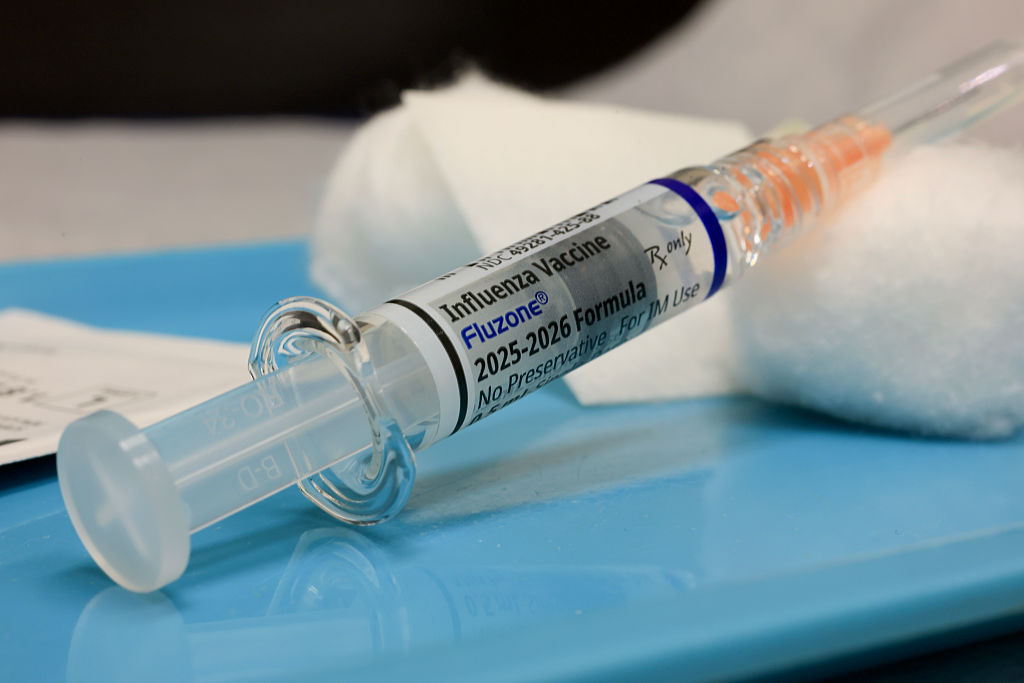
Nine North Carolinians have died of flu-related complications so far this flu season, and infectious disease experts are urging people to take precautions, including getting a flu vaccine.
So far, 15.5% of people in the state have gotten the flu shot this season. Last season, 24% of residents were vaccinated in total, according to the North Carolina Department of Health and Human Services (DHHS).
Most people who get the flu are able to recover at home in a week or two, but the disease can lead to hospitalizations and, for more than 300 North Carolinians last year, death.
Flu season starts early in North Carolina
Last flu season, North Carolina recorded 335 deaths due to flu-related complications – the third highest number of statewide flu deaths recorded since reporting began in 2009. Of the 325 adults and 10 children who died, more than two-thirds were not vaccinated for the flu, according to DHHS.
The latest report from the U.S. Centers for Disease Control and Prevention shows flu season began two months earlier than usual this year and flu activity is higher than normal.
To help people feel more prepared this flu season, NC Local spoke with Dr. Cameron Wolfe, an infectious disease expert and professor of medicine at Duke University School of Medicine. He is also an associate of the Duke Initiative for Science & Society and a member of the Duke Human Vaccine Institute. This interview has been edited for length and clarity.
Next week, in part two of our interview with Wolfe, we’ll examine the future of flu treatments and the latest breakthroughs, common flu myths and how to know if you need to see a doctor.

NC Local: Can you tell me about your background and your expertise with the flu?
Wolfe: I’m an infectious disease specialist first and foremost, and I hold a couple of roles here at Duke. I look after immunosuppressed people mainly, so transplant or chemotherapy or HIV-affected patients. But I also have a role in our vaccine institute, trying to study vaccine defense. And I have been in charge — for probably 15 to 16 years — of our flu and outbreak infection response [including COVID-19, Ebola, etc.].
NC Local: The CDC says flu season started earlier than normal this year. Is that what you’ve seen, too?
Wolfe: Yes, it did. We started to see wastewater cases rise in September and October. That has become a very early beacon of what infection is starting to transmit in the community.
Even if you’re only mildly infected and symptomatic and don’t need an urgent care or a hospital, your stool test will still be positive, as we find in the wastewater. So we can often see little early signals before it starts hitting us on the hospital side.
NC Local: Last year, 24% of North Carolinians got a flu vaccine. What’s your reaction?
Wolfe: Yes, last year was a disappointing year. The flu vaccine just wasn’t taken as much as we would like, but it was also not a good match year. Whereas this year looks like a good match year. So I think people actually do have a nice little window of opportunity to go and get a shot if they haven’t already.
[Editor’s note: A flu vaccine’s protection depends, in part, on the similarity or “match” between the viruses in the vaccine and those in circulation, according to the CDC.]
NC Local: When should people get the flu vaccine?
Wolfe: We say anywhere between September and December. October is usually the sweet spot. It takes one to two weeks to develop a decent immune protection level. So if you go and get a vaccine now and get exposed to someone tomorrow, it’s not actually going to do that much help yet.
Some people in the past, when we used to vaccinate more people in December and January, would often go, “Ah, that flu shot made me sick.” What they’ve done is they’ve conflated one of three things:
- They’ve either had the flu shot and actually got the flu very shortly thereafter before their defense had learned how to respond to the vaccine;
- Or they’ve confused the occasional 24 hours of aches and pains that any vaccine can give you with being the flu, which is your immune response to the vaccine;
- Or, worst case scenario is that they’ve got the flu shot, it’s worked appropriately, but then they’ve run into COVID or RSV or some other winter virus, and of course they then blame the vaccine, whereas in fact the vaccine was doing the right thing by them.
NC Local: How long does the vaccine stay in your body? How long is it effective?
Wolfe: You certainly can see residual protection for at least a year. Its peak protection is probably a good few months, depending on individual variation. But you can get a vaccine at this stage and be fully expecting that the overwhelming majority of people will last through the whole season very effectively.
[Editor’s note: North Carolina’s flu season usually runs from fall to spring. The virus typically becomes widespread in late fall and winter, according to DHHS.]
NC Local: What advice do you have for people who don’t want to get the flu vaccine and prefer more holistic or natural remedies?
Wolfe: There are certainly people who want to find more natural ways out of this, and that’s fine. It’s like the [people who think], “I can get out of this by drinking lots more vitamin C.” That appeals to our environmentally friendly view of the world or natural-is-better view of the world. Your own self control is the other part of it that sort of invokes that feeling for people.
But when we’ve looked at large cohorts of people and many health systems’ worth of data and say, “Did any of these vitamin processes actually help people?” — in fact, statistically, they don’t, and that’s part of the challenge. There’s lots of people who will anecdotally say, “Look, it really helps me.” On average, unfortunately, there’s no good data sets to support that being true.

When your chiropractor or naturopath or nutritionist gives you that guidance, it’s probably not unhelpful. Most people will get better by themselves. Then, of course, they’ll do the reverse of blaming the vaccine when you get sick. They’ll blame the multivitamin for helping you get better, but statistically, that was unfortunately just good luck and nothing more than that.
To me, that’s OK, provided that the person who is really at high risk or really getting sick does not use that as an excuse to not seek the care that they need and that is proven to work.
NC Local: What flu treatments do you recommend?
Wolfe: The data say very clearly that if you are early in your illness — within the first 48 hours of fevers and symptoms — then some of the antivirals will likely get you better 24 hours sooner than not doing anything. There’s either Tamiflu or a second drug called Baloxavir, which is a one-pill-and-you’re-done treatment.
Both of those drugs have actually really good data, both in treating someone who’s early in their illness, or using it as a preventative for someone who’s not yet sick but you think is exposed.
If you’re in the household of someone who just turned flu positive, and you yourself are at high risk of a bad outcome — let’s say you have emphysema, recently had a heart attack or a stroke, cancer, transplant or some sort of immunosuppression — there’s very, very strong data that says if I give the exposed person an antiviral, it will meaningfully reduce their likelihood of getting the flu.
[Editor’s note: Flu vaccines are widely available. You can find locations for free or low-cost vaccines on the DHHS website.]