
“Gratitude” and “community”: two words repeated over and over Wednesday evening at a gathering of more than 200 people on the campus of UNC-Asheville. NC Local’s inaugural live journalism event, The Heart of the Mountains: Stories from a year of courage, kindness, and community after Hurricane Helene, marked the one-year anniversary of the storm. The event demonstrated NC Local’s mission and values—providing a service to communities with journalism about important statewide and regional issues, centering the community’s voices on topics they care about, and collaborating with other news organizations.
Special thanks to Katie Linsky Shaw and Ashevegas for the photography.
Explore our recap of the evening or watch the full event below.
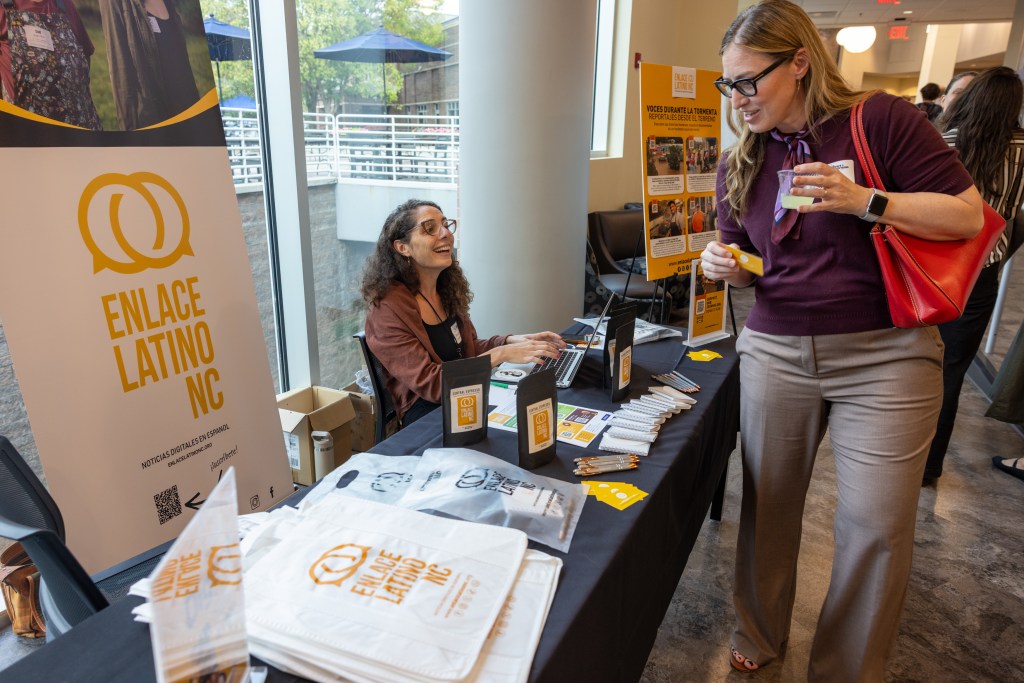
Presented by NC Local, the event began with a reception where partner news outlets and community organizations provided information about their work to community members from across the region.
Partners included the Asheville Citizen-Times, Ashevegas Hot Sheet, The Assembly, Beacon-Tribune, Blue Ridge Public Radio, Buncombe County Special Collections, Carolina Public Press, The Charlotte Observer, Enlace Latino NC, Mountain Xpress, The News & Observer and the Smoky Mountain News.

At the start of the program, Umoja Health, Wellness, and Justice Collective Founder and Executive Director Michael Hayes offered a reflection.
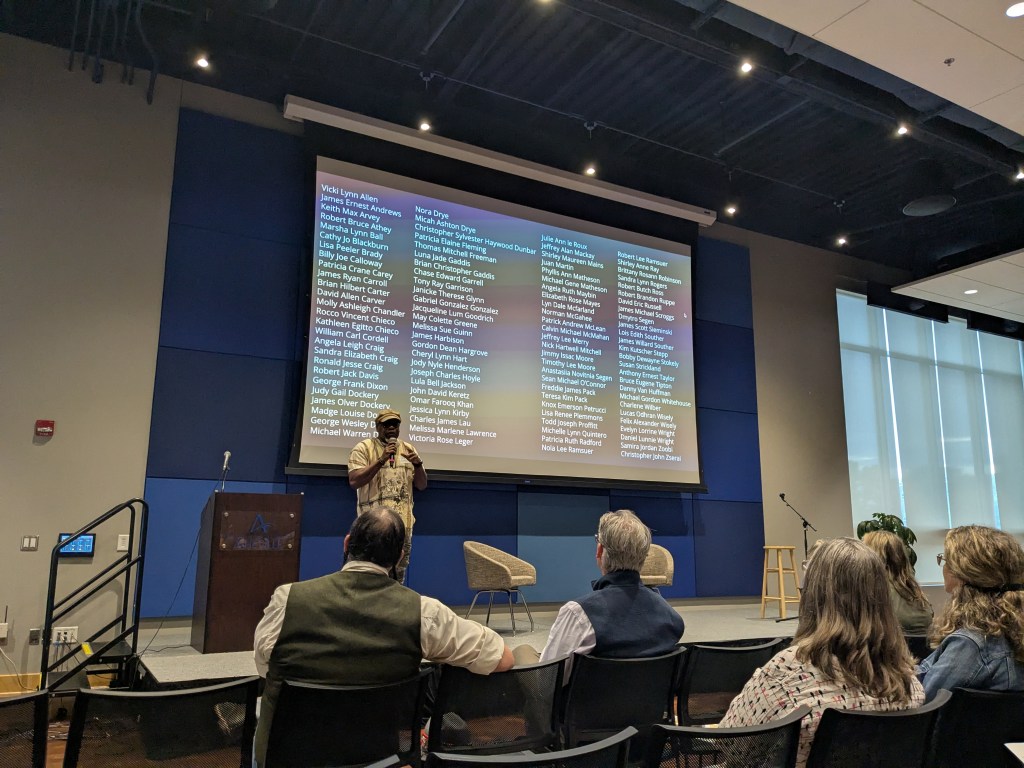
“The most beautiful thing happened,” he said. “People started rallying together to make sure their neighbors, their neighbors’ neighbors, the people across the street, started making sure everybody was ok.”
Hayes also offered a moment of silence to remember the lives lost during the storm.

Ashevegas Founder Jason Sanford conducted the first on-stage interview, speaking with Black Mountain Fire Chief John Coffey.
The rain in the days prior to the hurricane hitting the area created dangerous flooding. “We started rescues before the hurricane even got here,” Chief Coffey said.
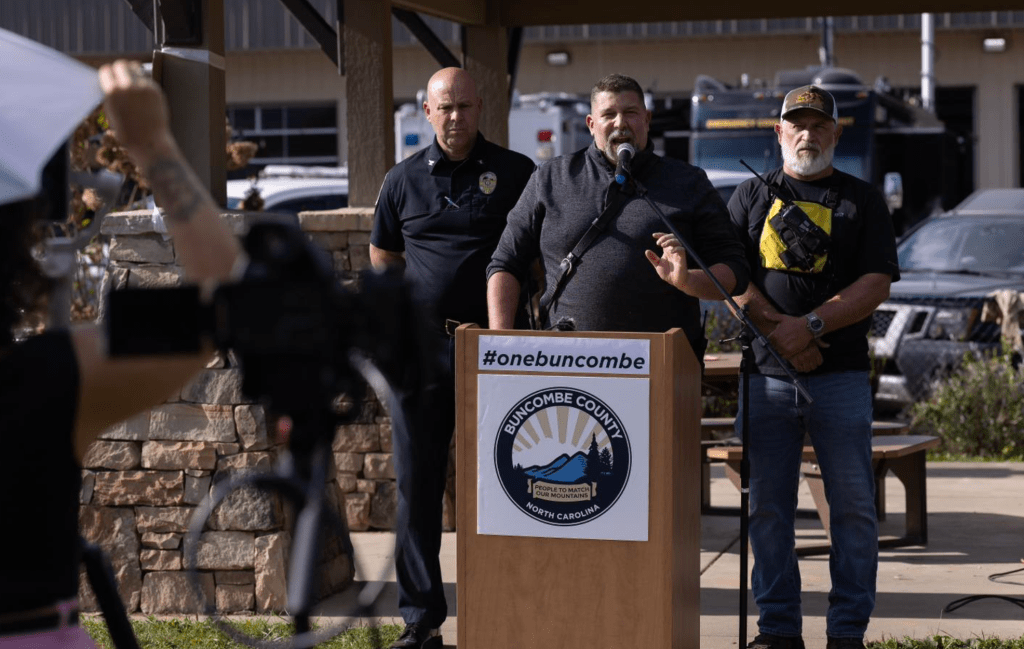
He recalled making difficult decisions during the height of the storm about where and when to send rescue operations into action. “It was something I had never seen before,” he said.
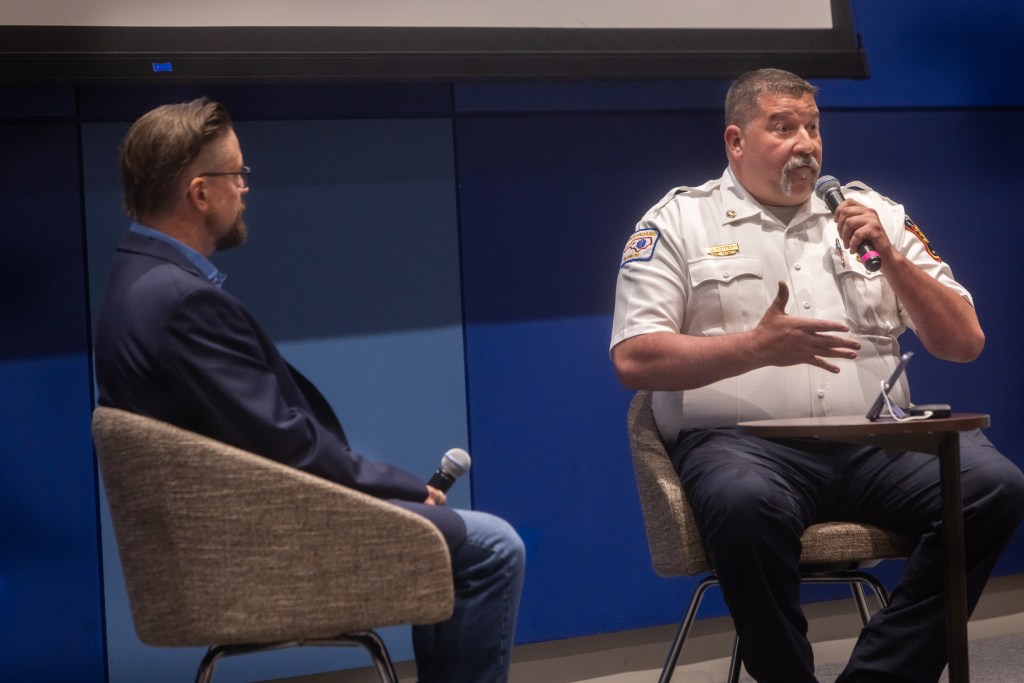
“I got on the radio—it was still working at the time— and I asked emergency management for more personnel, and they said, ‘There isn’t anybody, and we can’t even get to you if we had [staff].'”
“John, you’re on an island,” the emergency management staff person told him.
News & Observer Photojournalist Travis Long shared his memories of the storm alongside a slideshow of images he took during the aftermath.
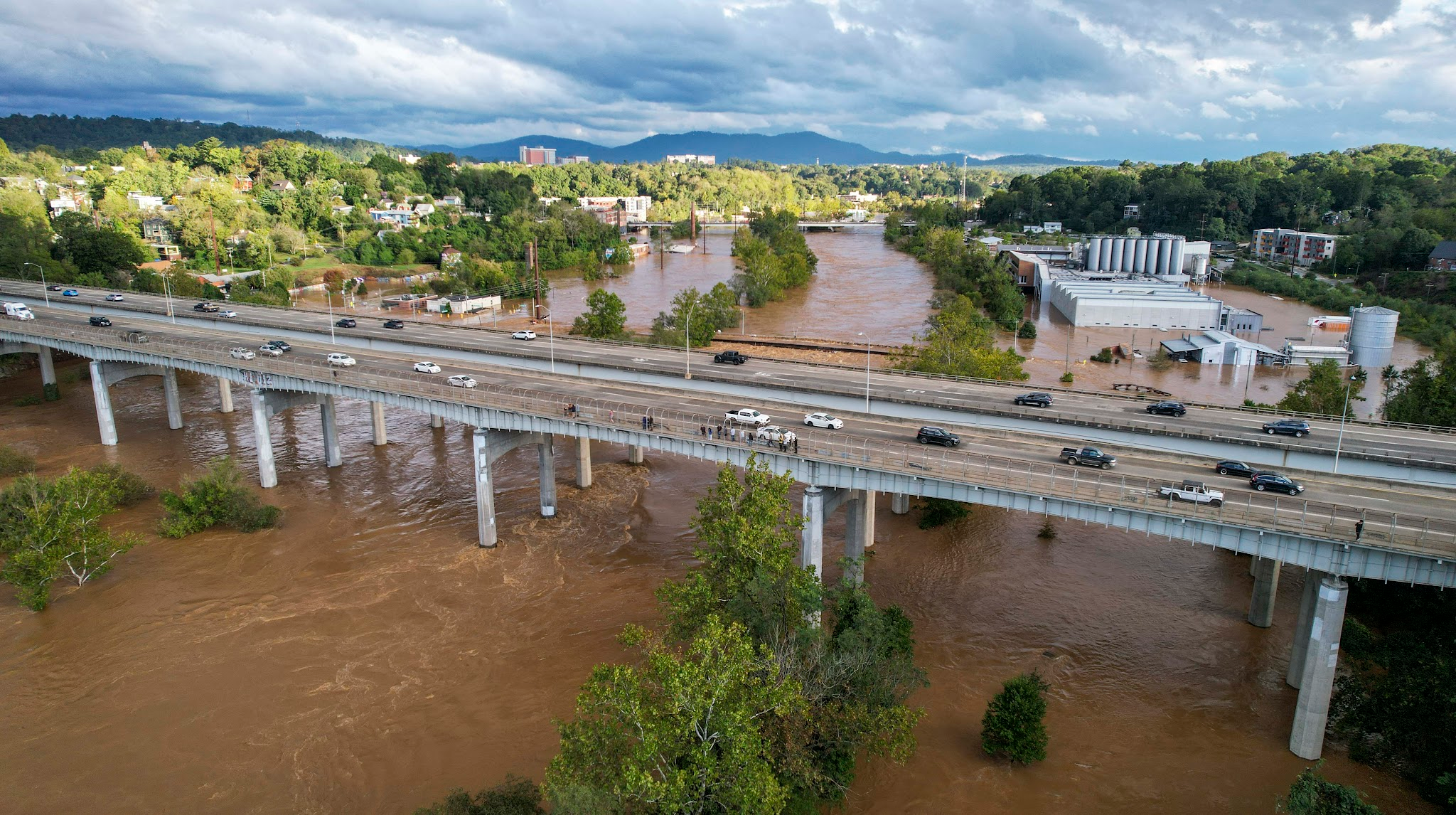
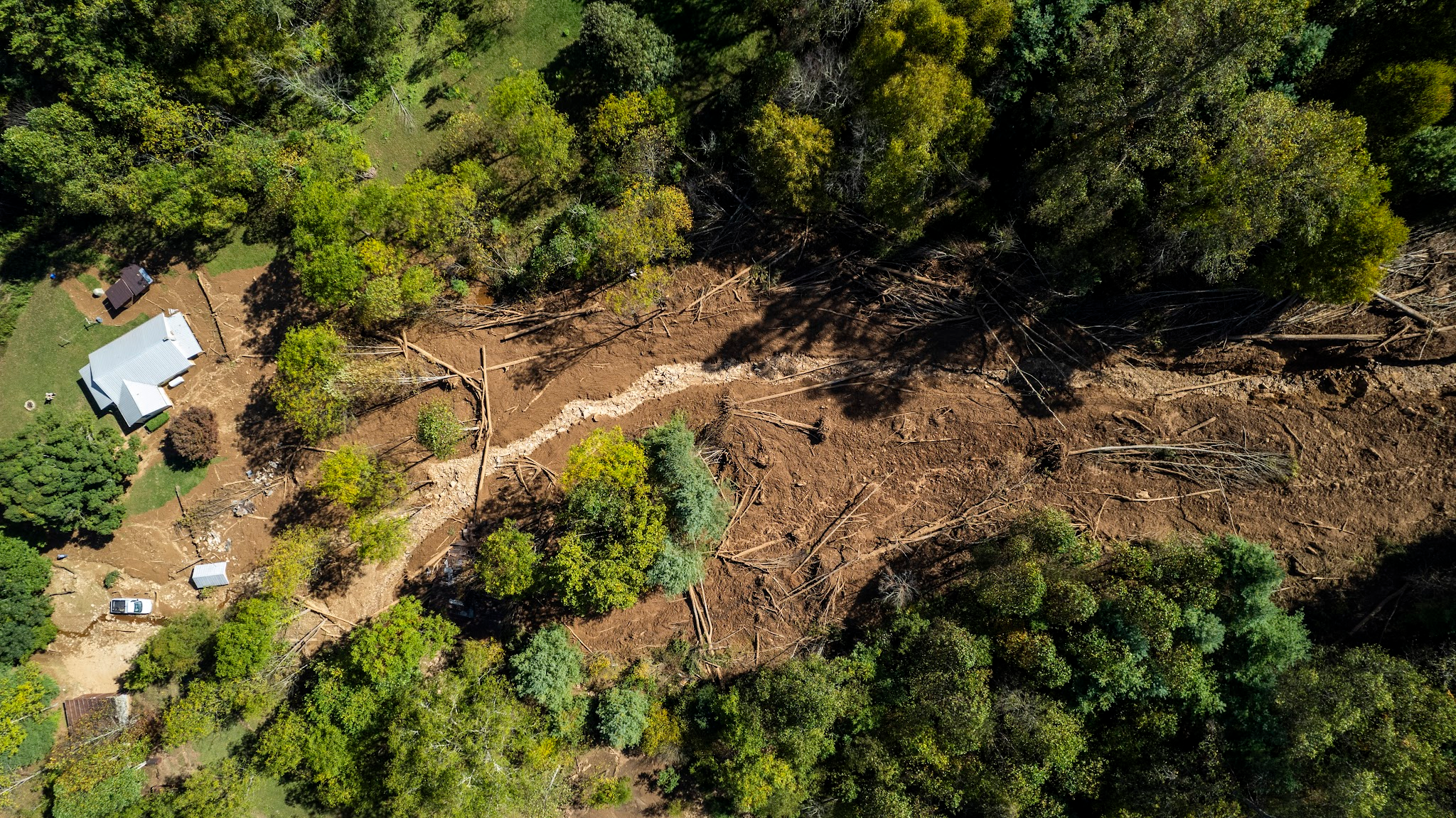
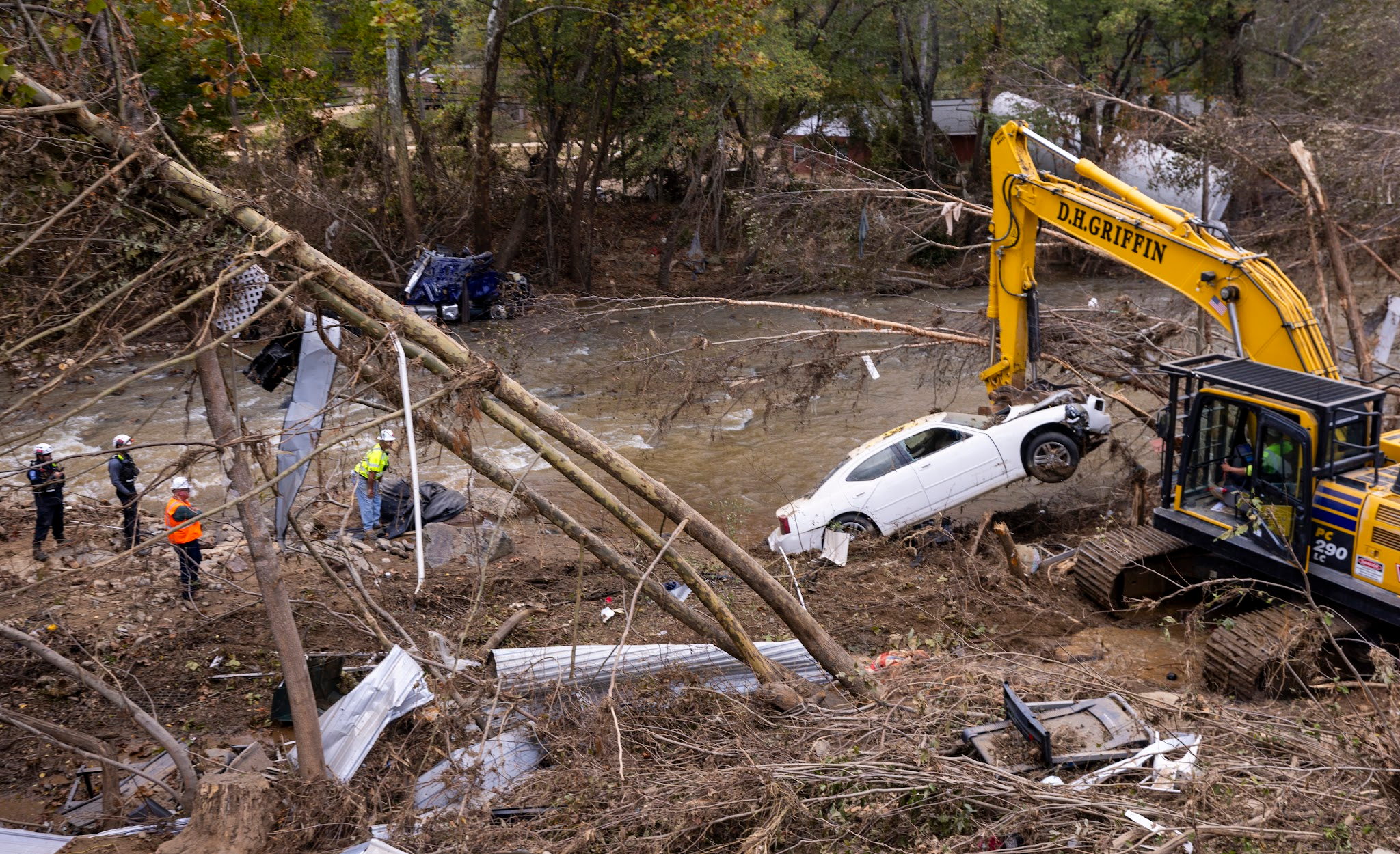
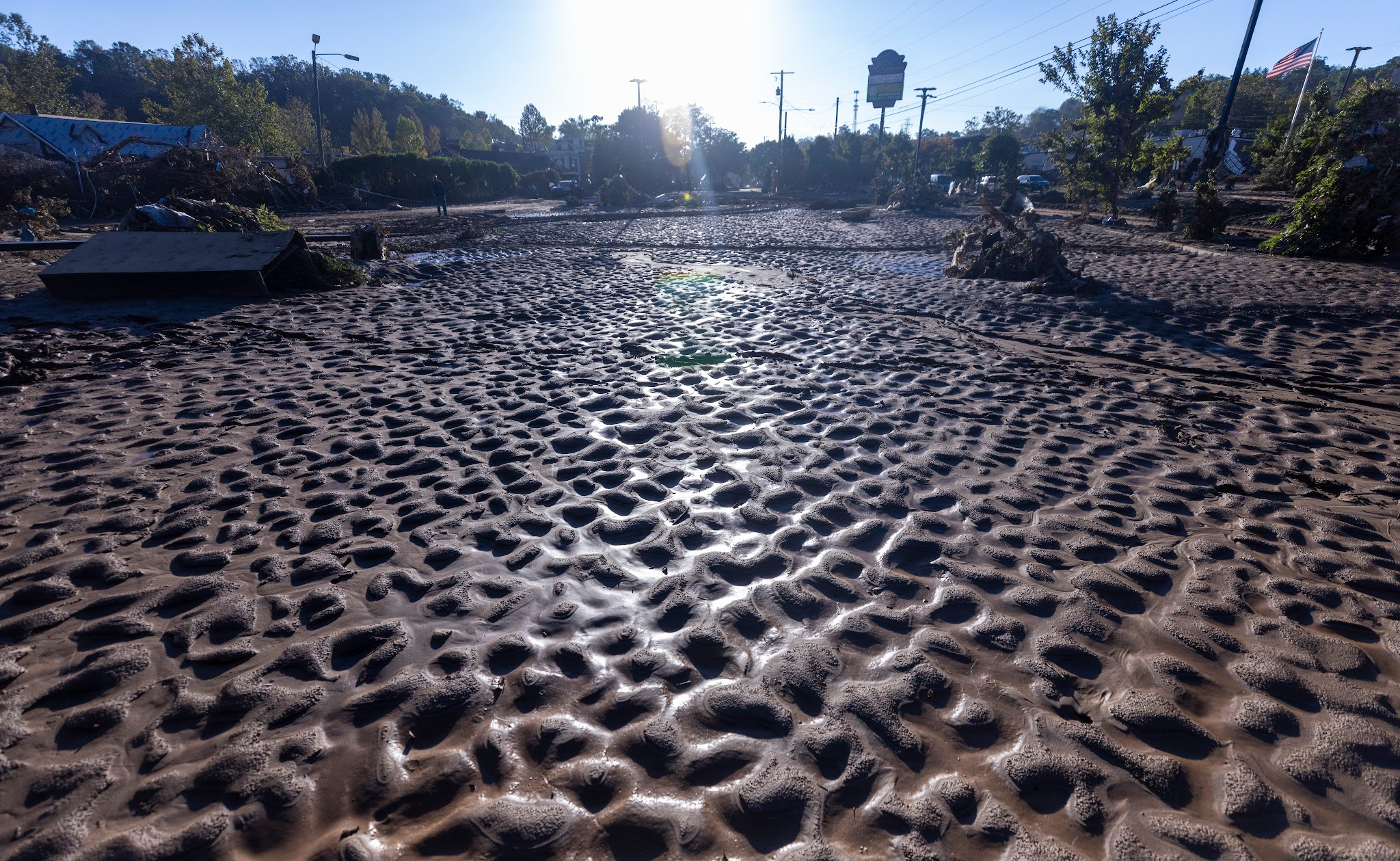
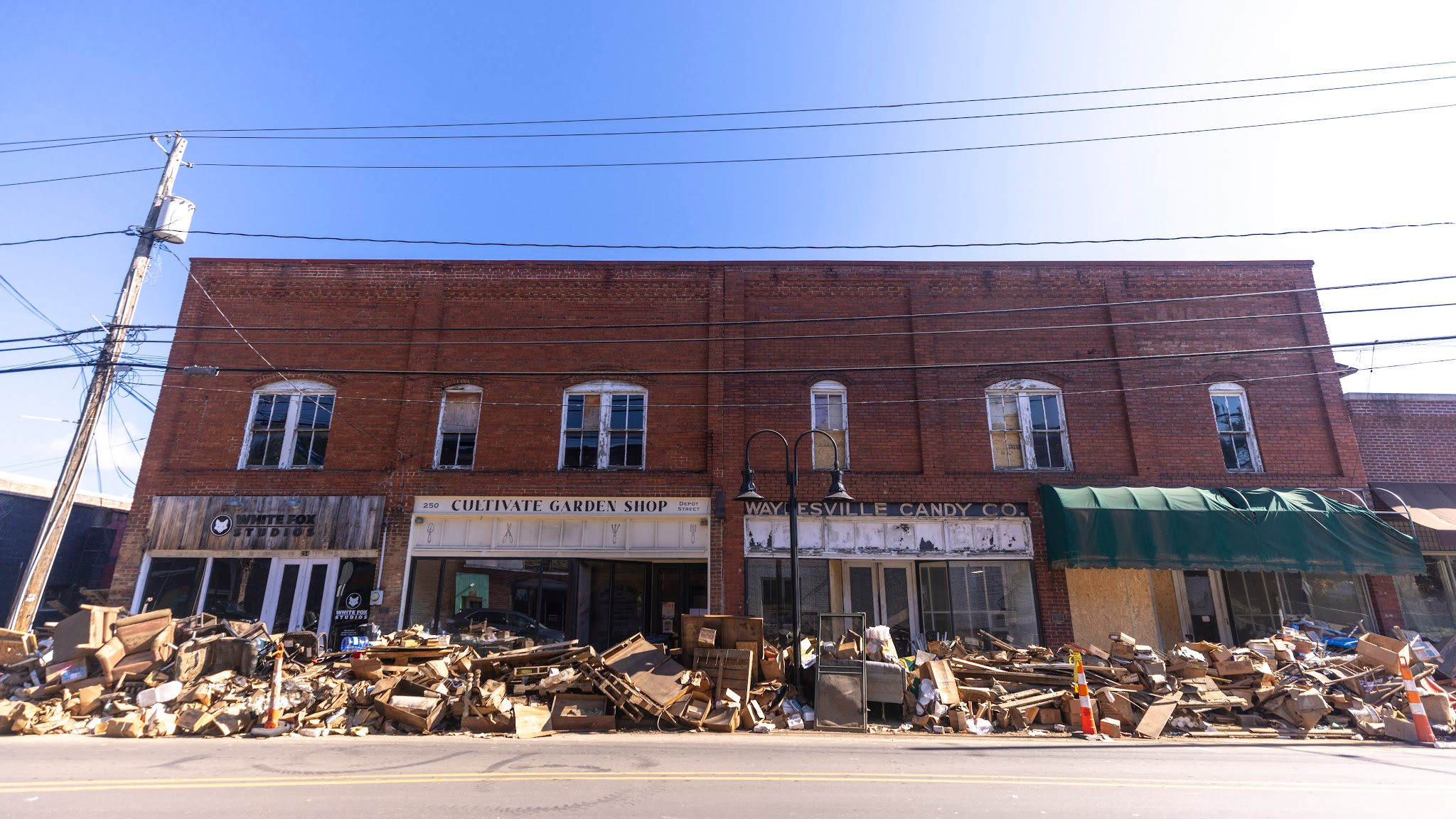
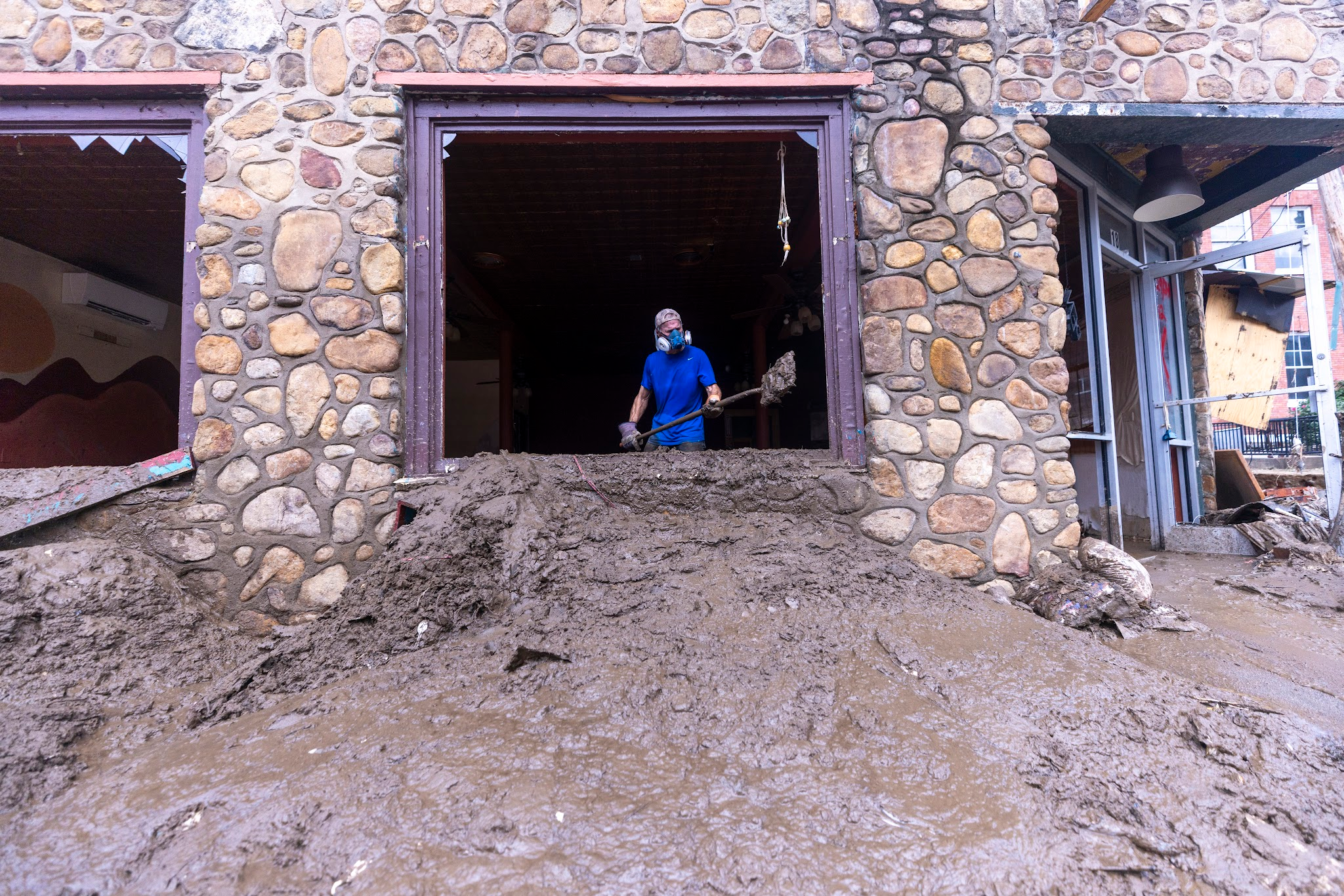
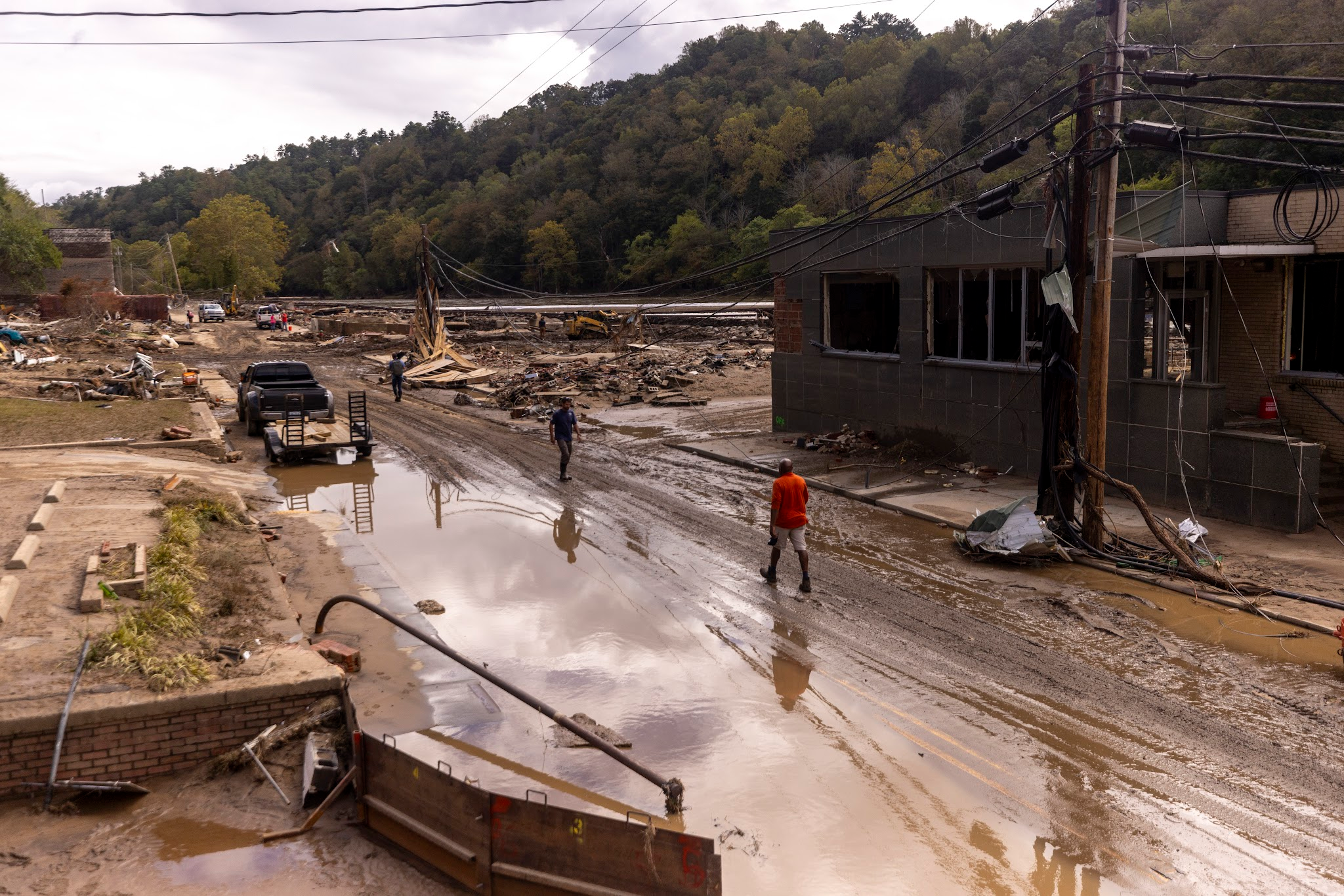
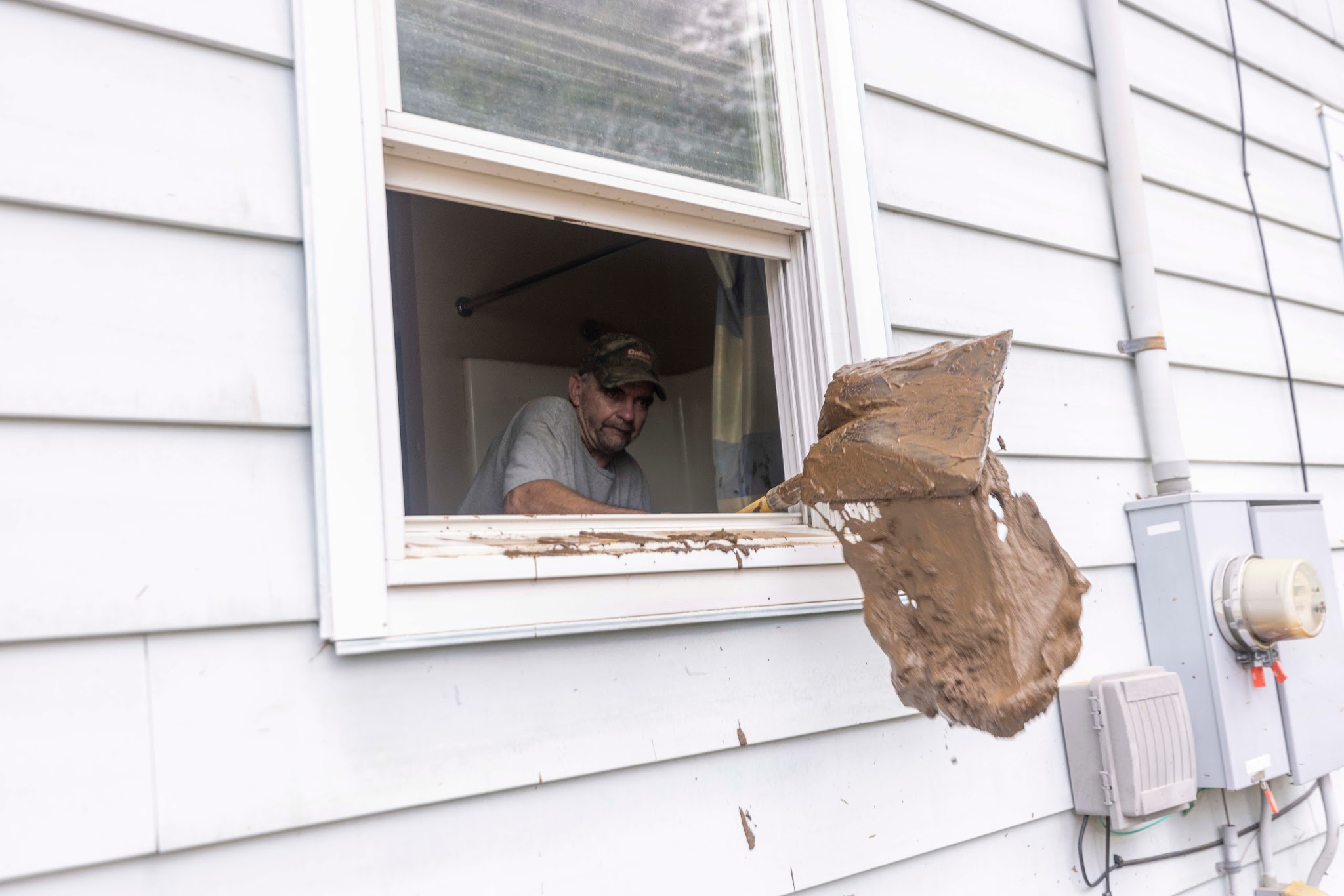
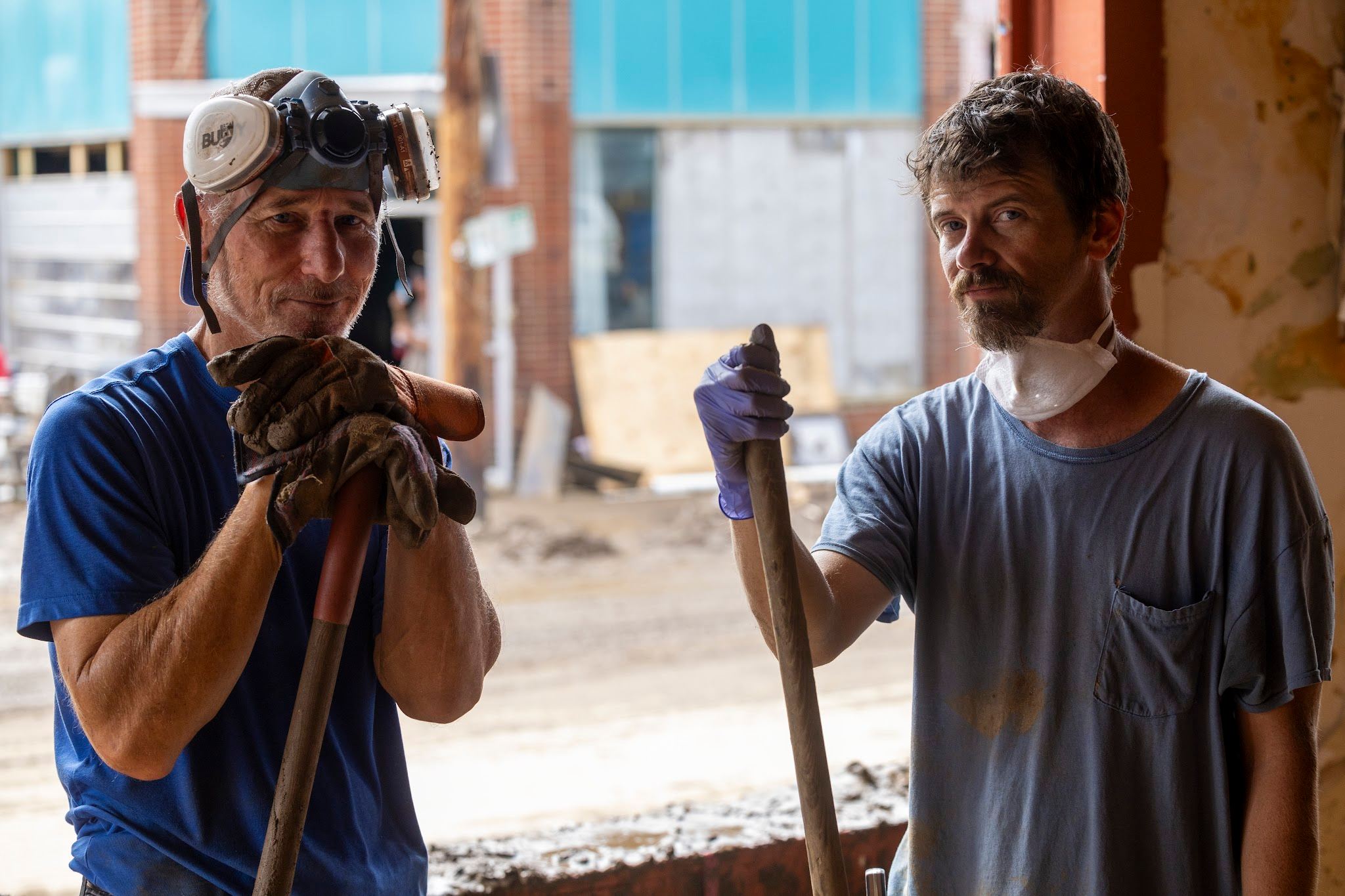
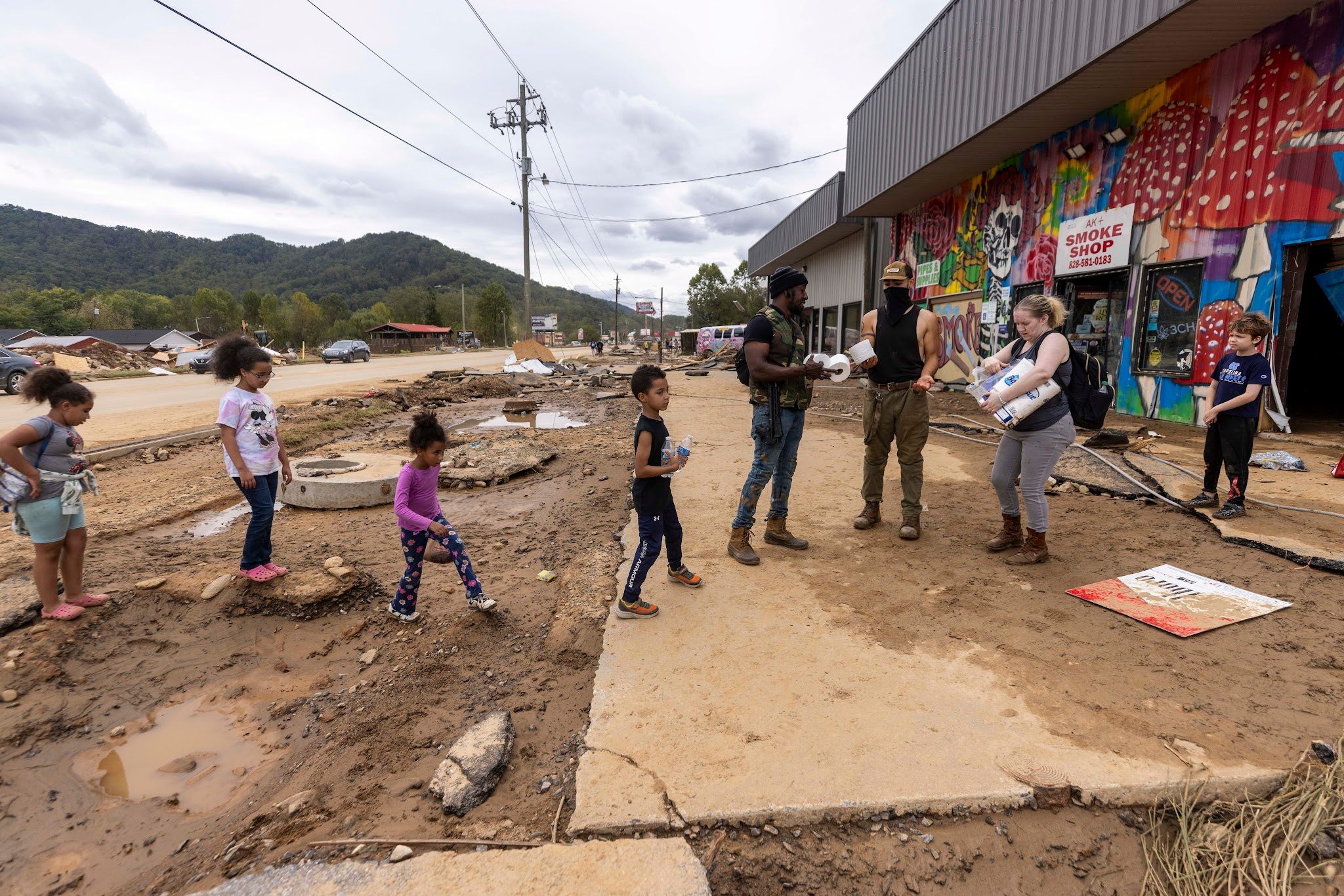
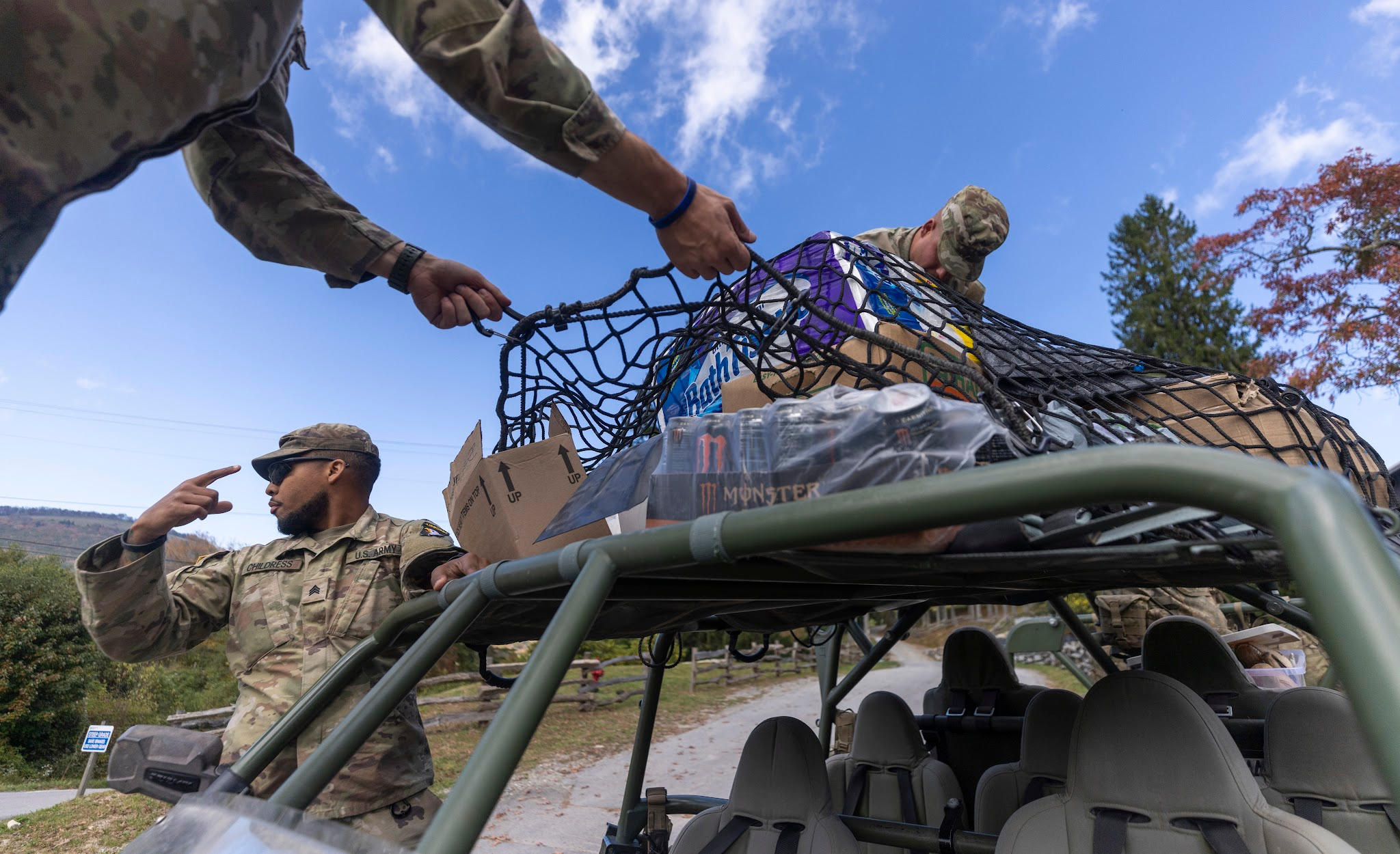


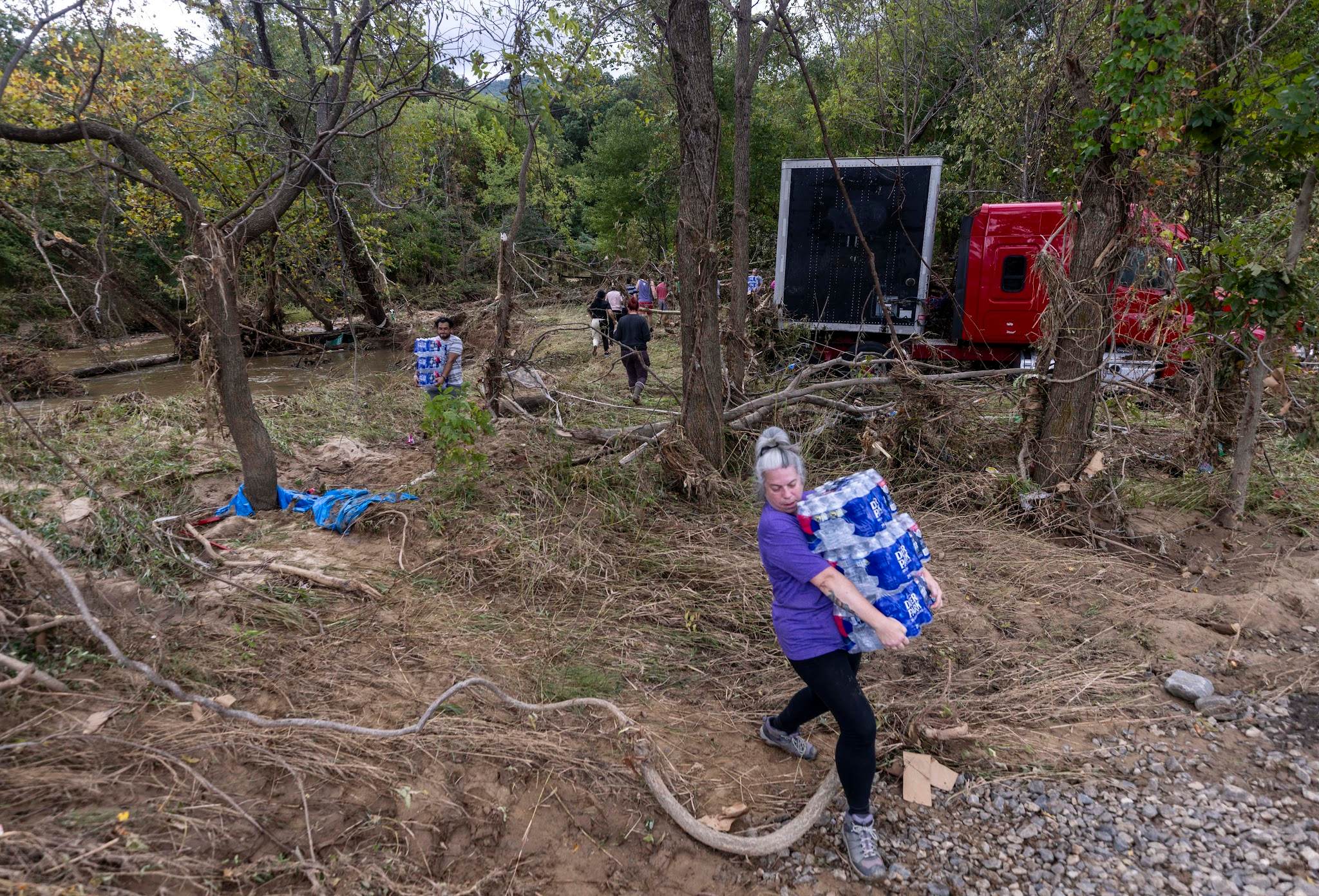

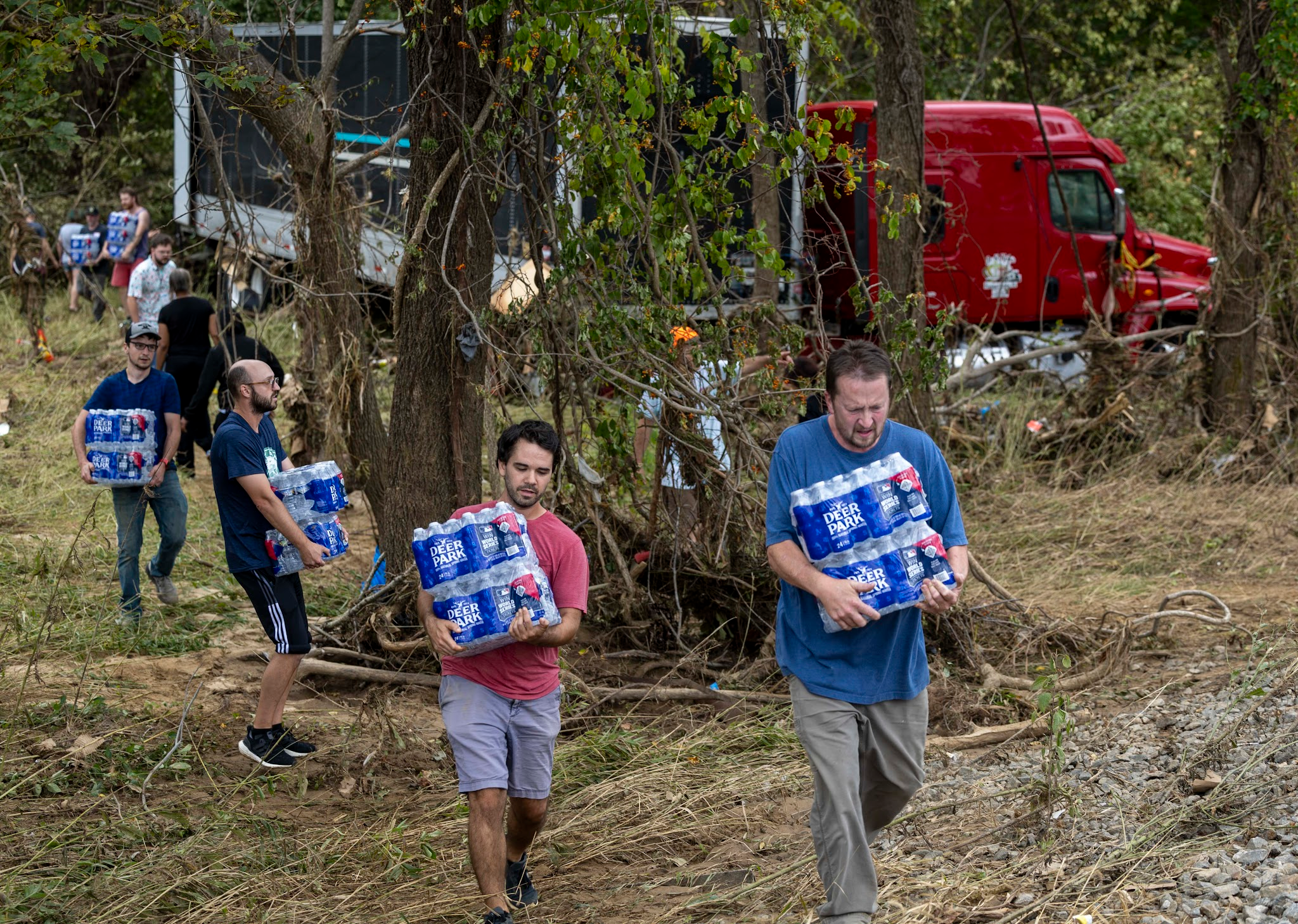
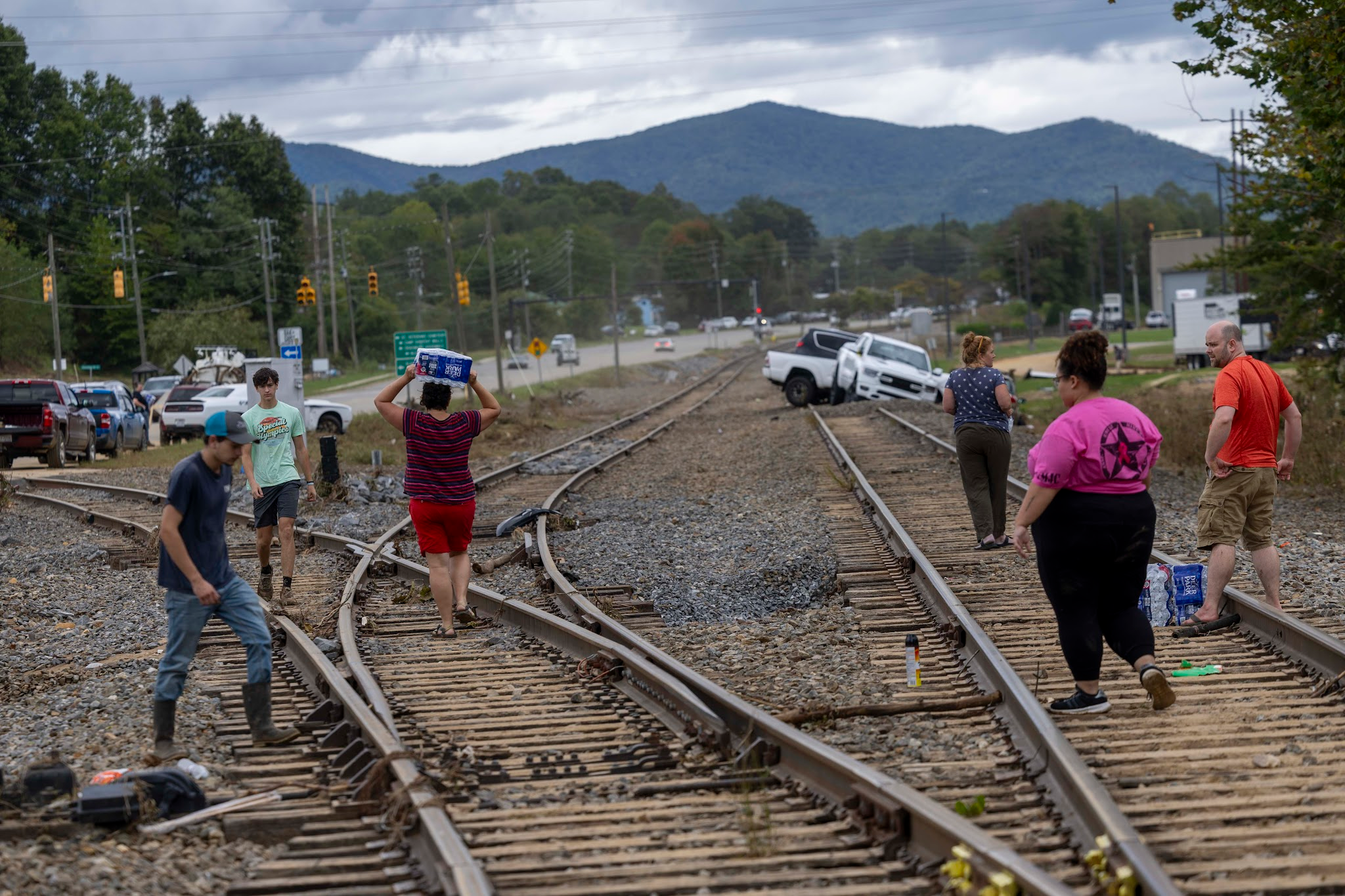
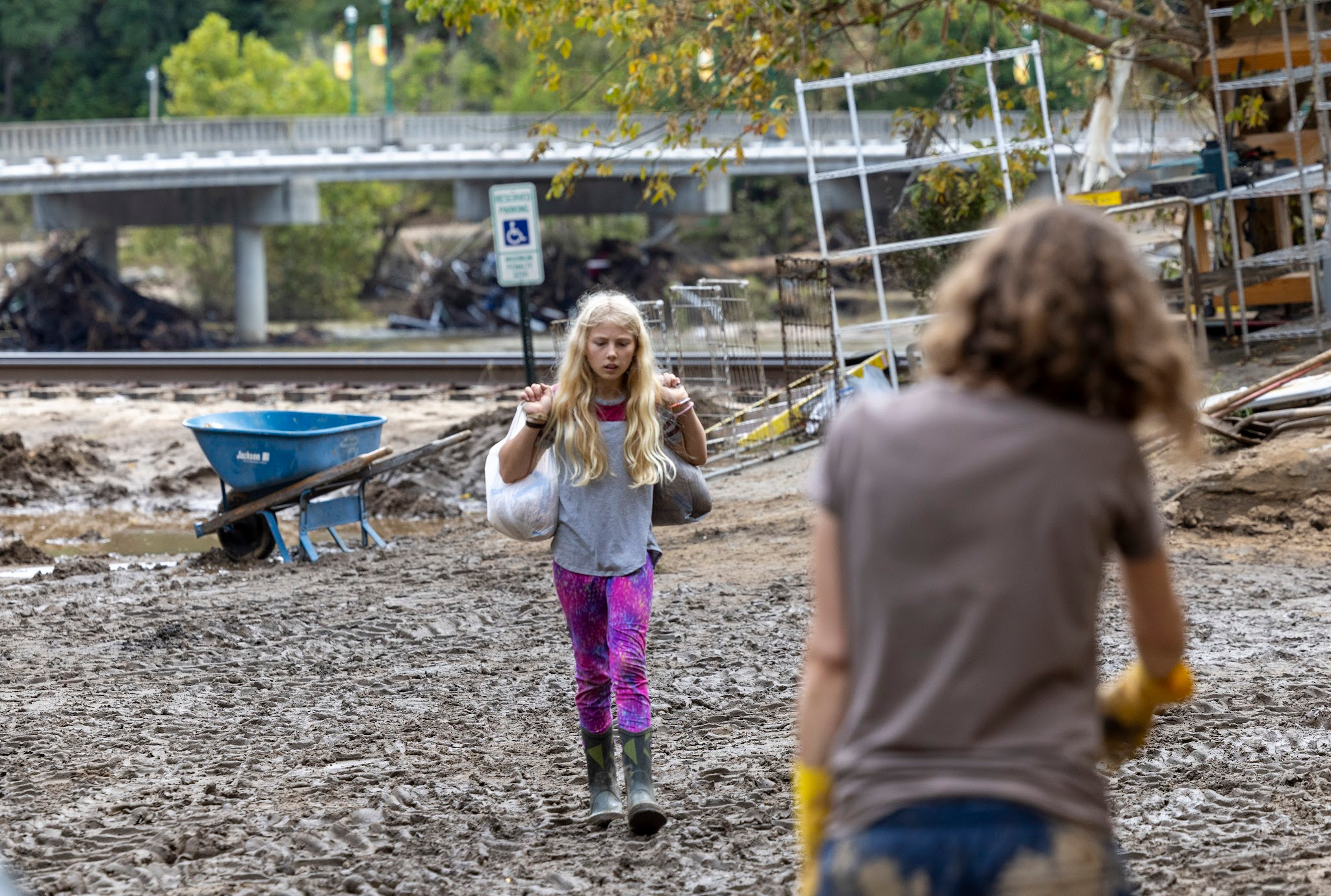

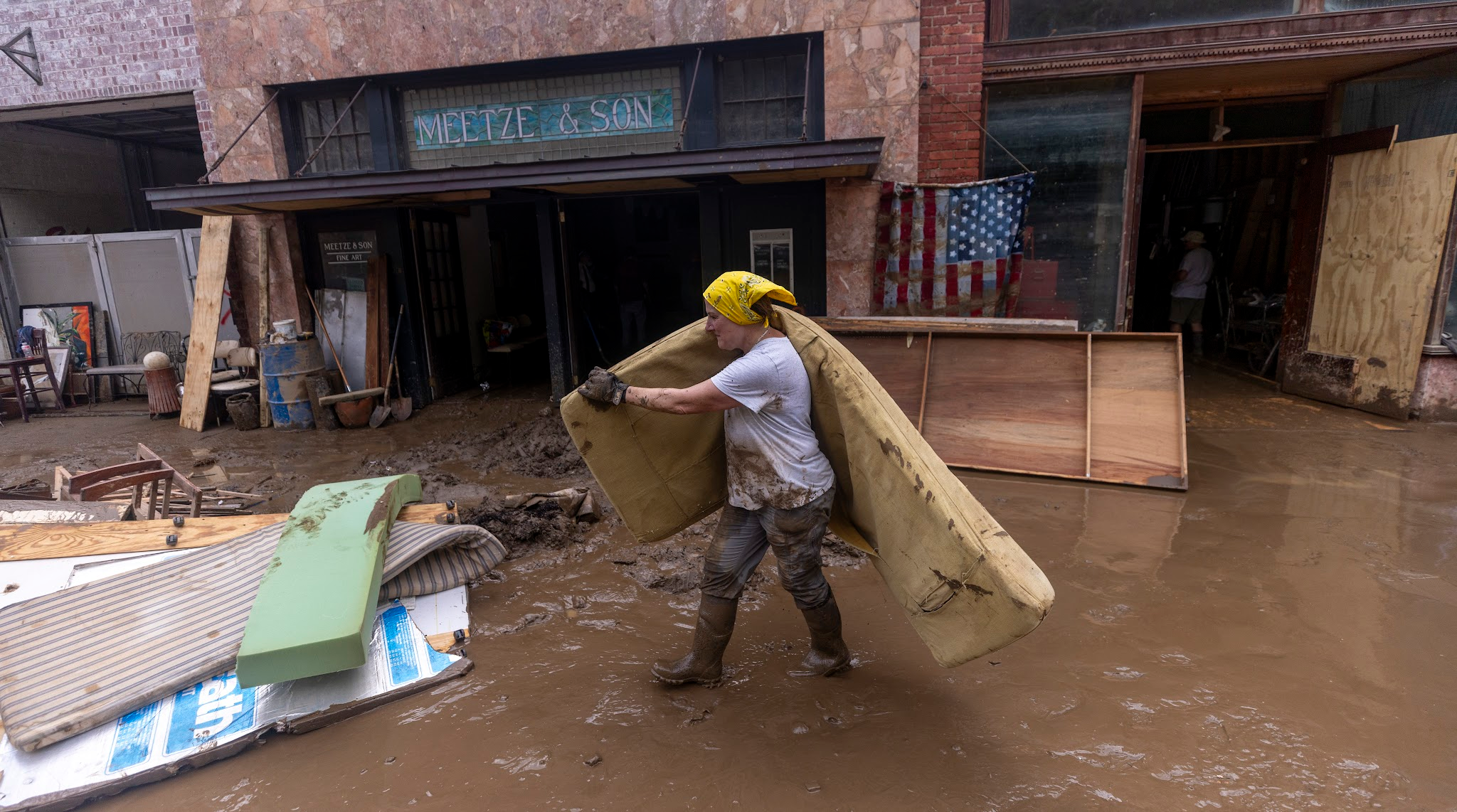


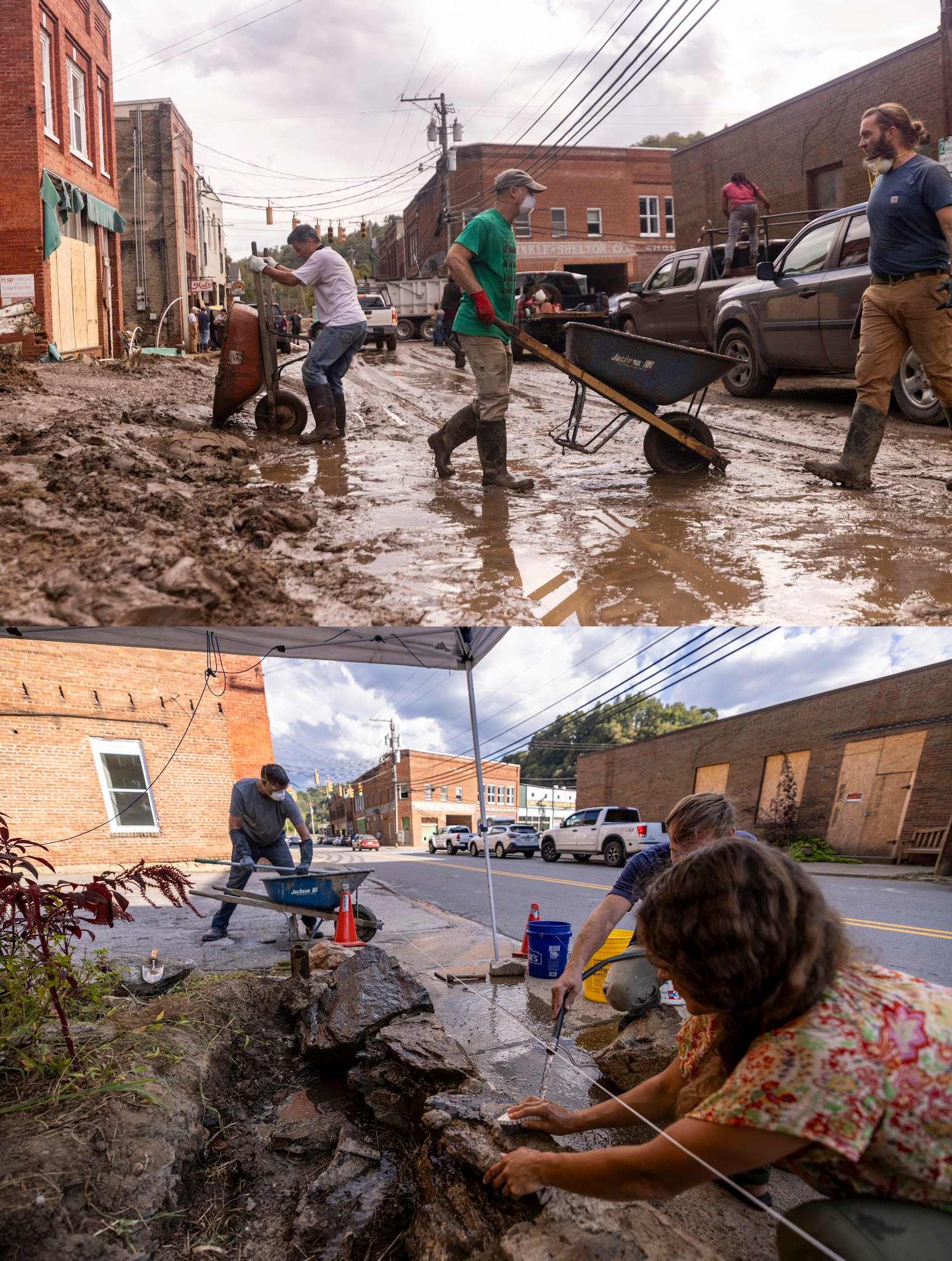
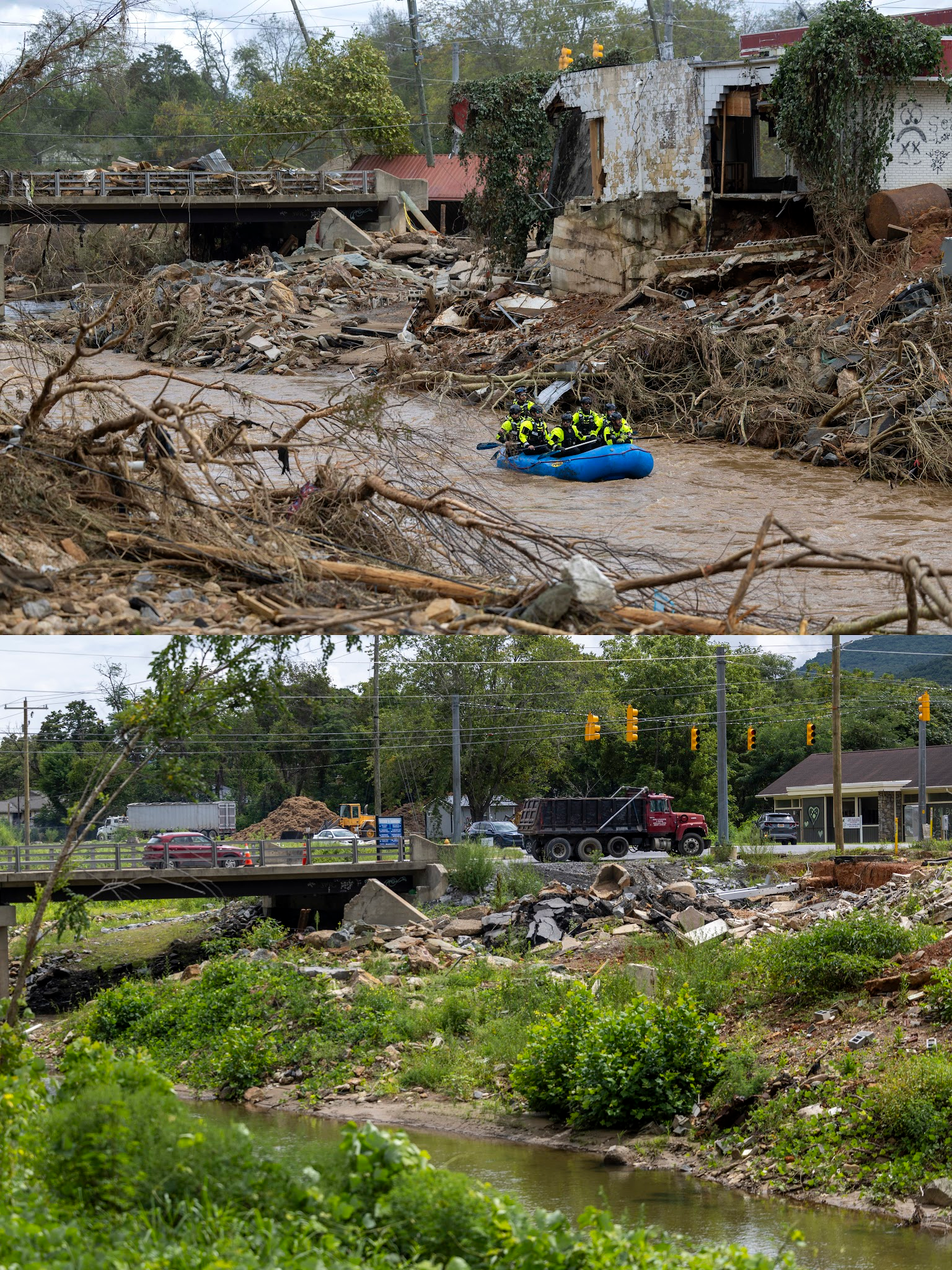
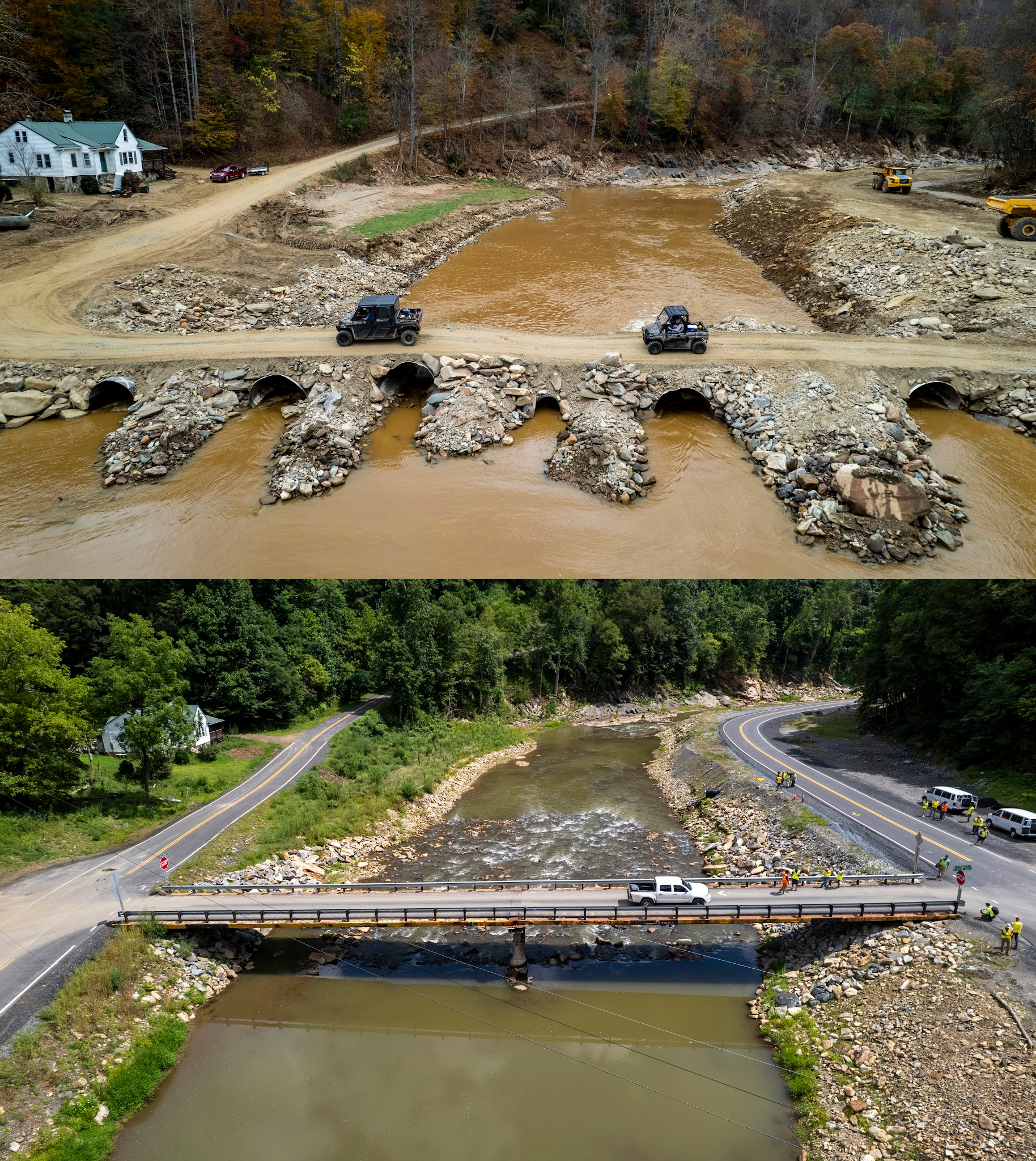
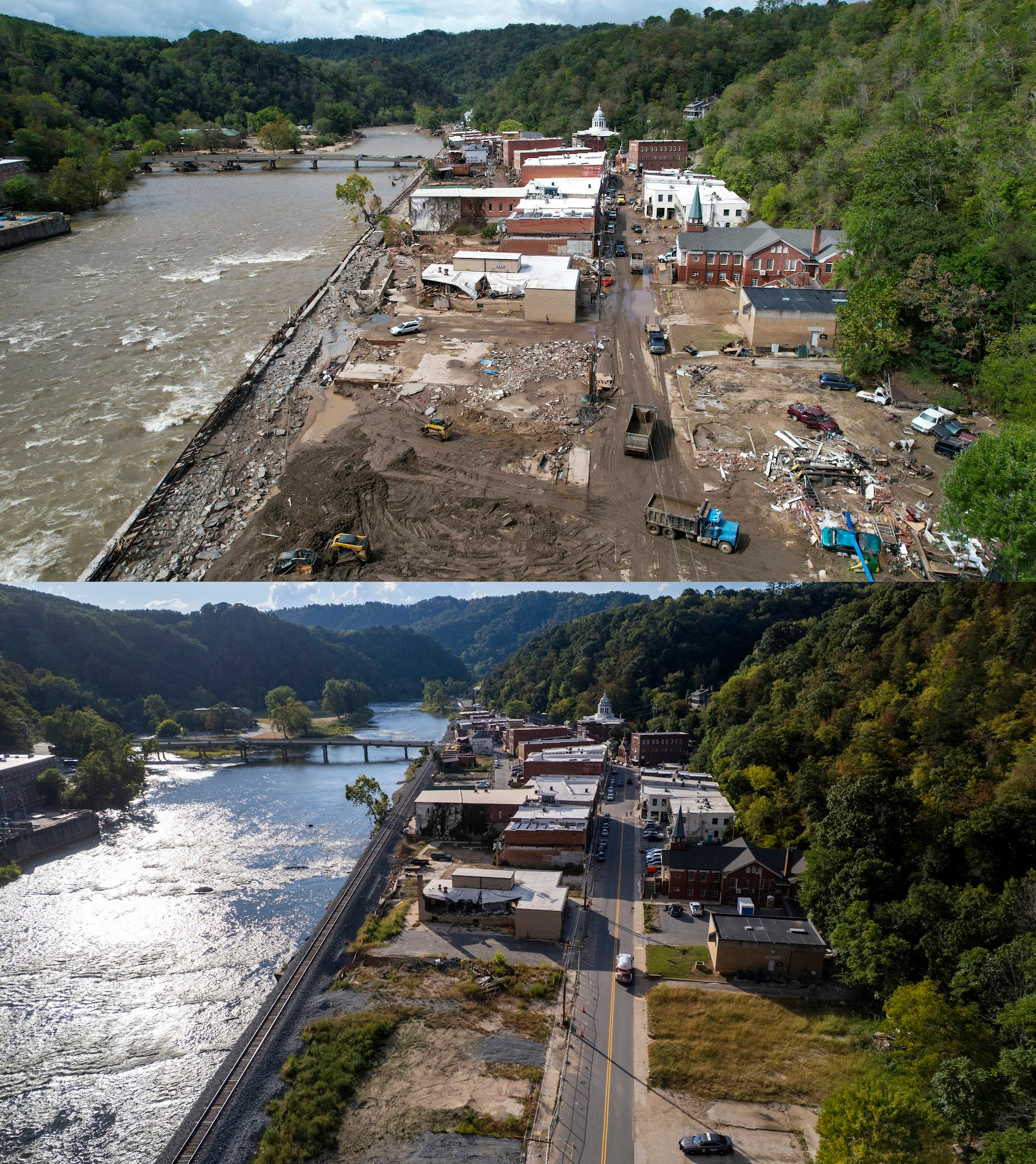
“I’ve covered around 20 named storms over the years.
But Hurricane Helene — or really, the remnants of it — was different.
Not because of the wind.
Because of the water.
Water doesn’t just knock things down — it erases them.
It carves its own path. It reshapes entire landscapes.
And it leaves behind not just damage,
but devastation and disconnection.
In places like Swannanoa, Clyde, Crusoe, and Marshall, it was overwhelming.
The roar of creeks and rivers had grown into something else entirely.
The thudding of helicopters overhead.
The smell of mold hanging in the air.
And at night — total darkness. No power, no streetlights.
The kind of dark where you can barely see your own hand in front of your face.
I based my coverage for the News & Observer and the Charlotte Observer out of my home in Cherokee for 16 days.
No electricity or running water for the first nine.
I used a power inverter, a few lawn mower batteries, and a Starlink terminal to file my photographs.
Some of the first images from the mountains — from up here — went out through that little signal.
That’s how I reached my editors.
It’s also how the rest of the country started to see what had happened here.
What stood out most in those early days wasn’t just the destruction — it was the isolation.
So many of these communities are tucked deep into valleys, between ridgelines.
When the rivers rise, the roads disappear.
And when the roads disappear, people are cut off — from help, from each other, from everything.
Sometimes just getting to a community was my biggest challenge.
(I had forgotten just how much I’d come to rely on Google Maps.)
But what you’re seeing tonight — these photographs — they’re more than reminders of the trauma we experienced.
They’re stories of place.
Of people who stayed.
Or people who had no choice but to rebuild right where the water came up and changed everything.
There’s one scene I still think about.
A tractor trailer had been washed off the road and down an embankment in Black Mountain.
Folks figured out the truck was loaded with bottled water.
So they opened the back.
People started climbing in — just whoever was passing by —
and they handed out water
to anyone who needed it.
No questions. No system.
Just a chain of hands, giving what they had.
Some might call it looting.
I considered it resourcefulness in a time of unprecedented need.
It looked like something out of a disaster film —
but it also looked like something deeply human.
The moment itself was local.
Real.
Ordinary — and extraordinary.
I think it’s easy, when you don’t live here, to assume the story of a storm ends when the skies clear.
But for a lot of people in these mountains,
the long part only began after the news trucks left.
Living without power.
Without clean water.
Without a home.
Without a way to call your neighbor or check on your family.
that’s not just inconvenient.
It’s dangerous.
It’s lonely.
And yet, in that traumatic moment,
I saw some of the most generous acts I’ve ever witnessed.
Even people who had lost everything,
still offered hugs and handshakes
and shared their stories with me.
About five days in, my neighbor up the road — in Cherokee — got her power back.
She knocked on my door and said, “Come on, I’ve got hot water.”
I got to take a hot shower for the first time in days.
Did a little laundry.
Ate a hot meal.
It’s not the kind of moment that makes headlines.
But it’s the kind that sticks.
Because it reminds you: we recover with each other.
The photos you’ve seen tonight don’t tell you that everything’s okay.
They’re not meant to.
They tell you this: that there is growth after ruin.
That people stayed.
That neighbors helped neighbors.
That roads are being rebuilt.
That the lights came back on — at least for some.
There’s still a long road ahead.
And we can’t forget that 108 people lost their lives to Hurricane Helene in North Carolina alone.
These mountains are some of the oldest in the world —
worn down by water and wind over eons.
The people who have lived here, sometimes for generations,
have seen hard times before.
They know how to hold each other up.
I saw it.
And I hope you saw it too.”
BPR Senior Regional Reporter Lilly Knoepp spoke with Buncombe County Special Collections Hell or High Water Project Coordinator Emily Cadmus about the process of archiving items from the storm.
Participants can contribute to the project through audio, photos and videos. Knoepp said some of the oral histories archived in the program will air on the radio this week.
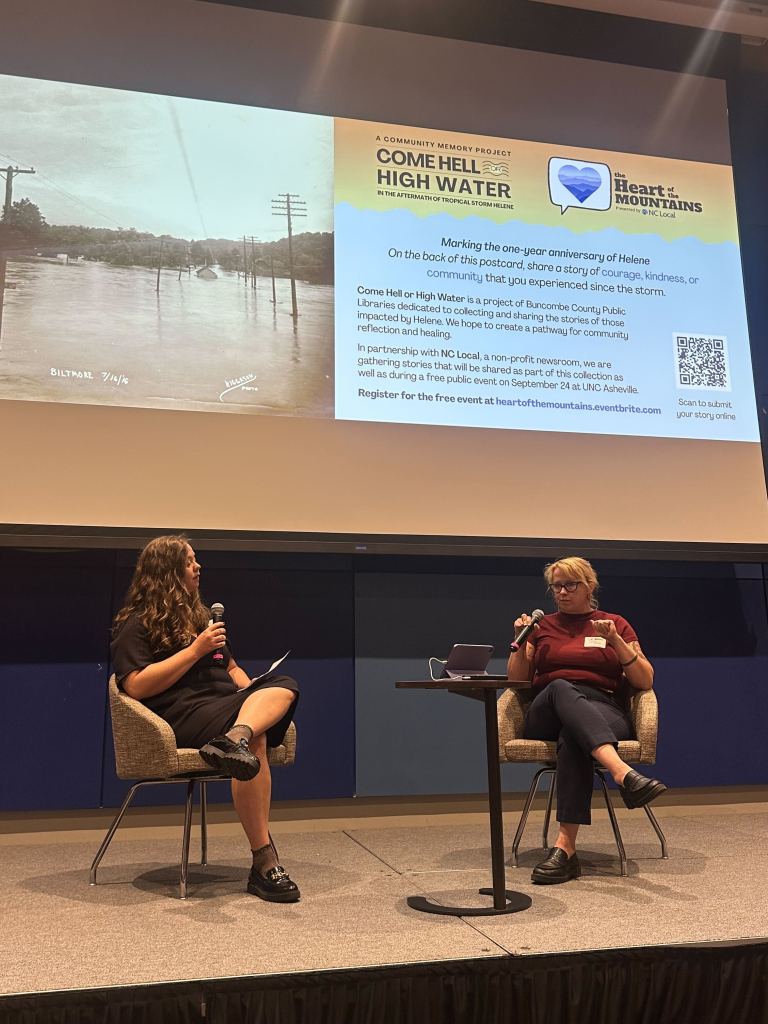
Want to share your story? Contribute to the Community Memory Project here.
Enlace Latino NC Western North Carolina Reporter Patricia Serrano shared one of the postcard submissions in Spanish before debuting a video featuring the work of the Tierra Fértil Coop.
Asheville Citizen Times Helene Recovery Reporter Jacob Biba interviewed Amanda Watts, a Yancey County nurse who organized a field hospital in the days following the storm.
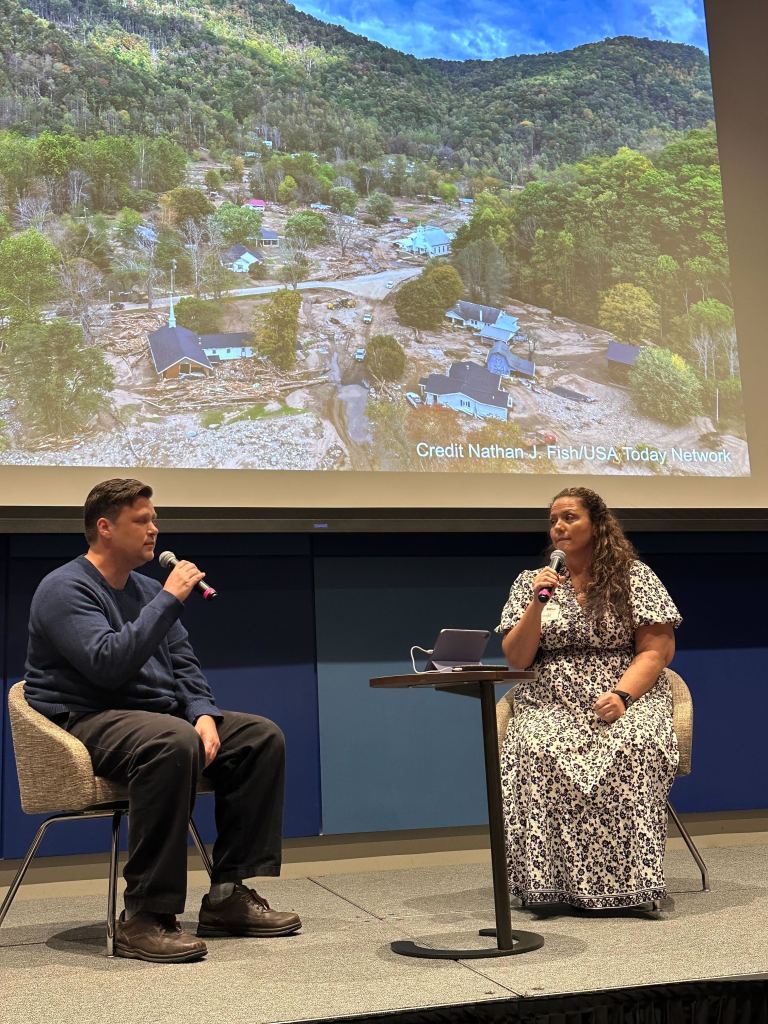
“We saw a lot. We treated a lot, over 500 to 600 patients at last count,” Watts said. “But we listened to a lot of stories and we held a lot of hands. And we took care of whatever their need was. We tried to holistically treat them while they were there.”
Watts said the field hospital wasn’t about heroic medical feats. Instead, it was about simple tasks like sweeping a floor or stacking a box, to help each other get through the difficult times.
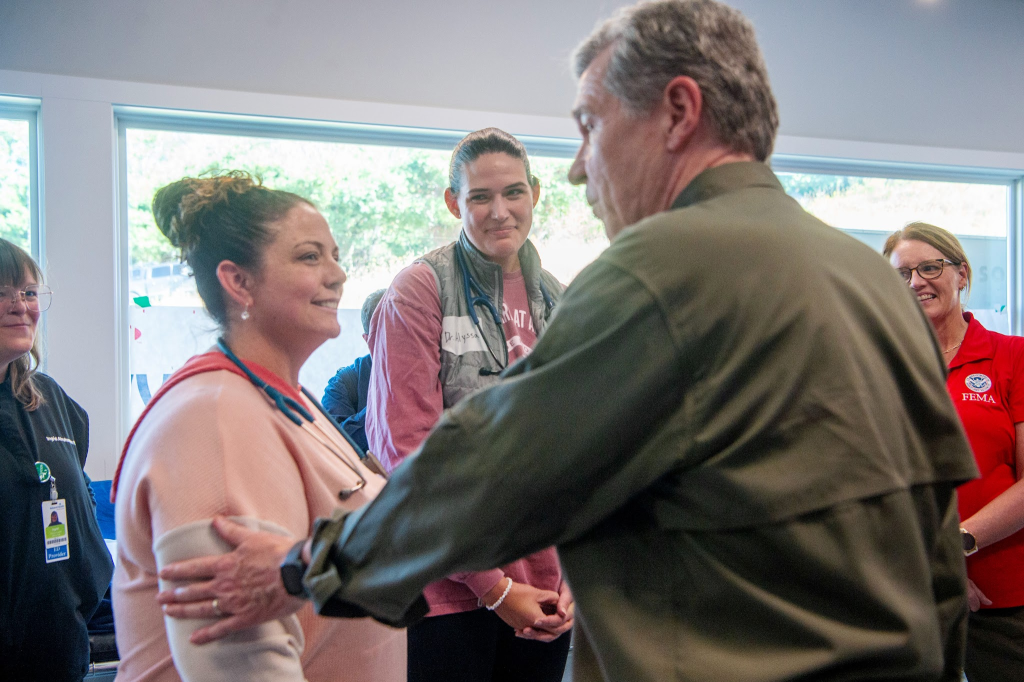
The Assembly’s Ren Larson documented the story of John Arndt, a Swannanoa resident who rescued families using his kayak.
Arndt said he used familiar landmarks, like the top of a basketball goal, to orient himself on the flooded streets.
Operation Gateway and Voices of Affrilachia Founder Phillip Cooper spoke with BPR’s Helene Recovery Reporter Laura Hackett about the ways community members stayed motivated under tremendous strain.
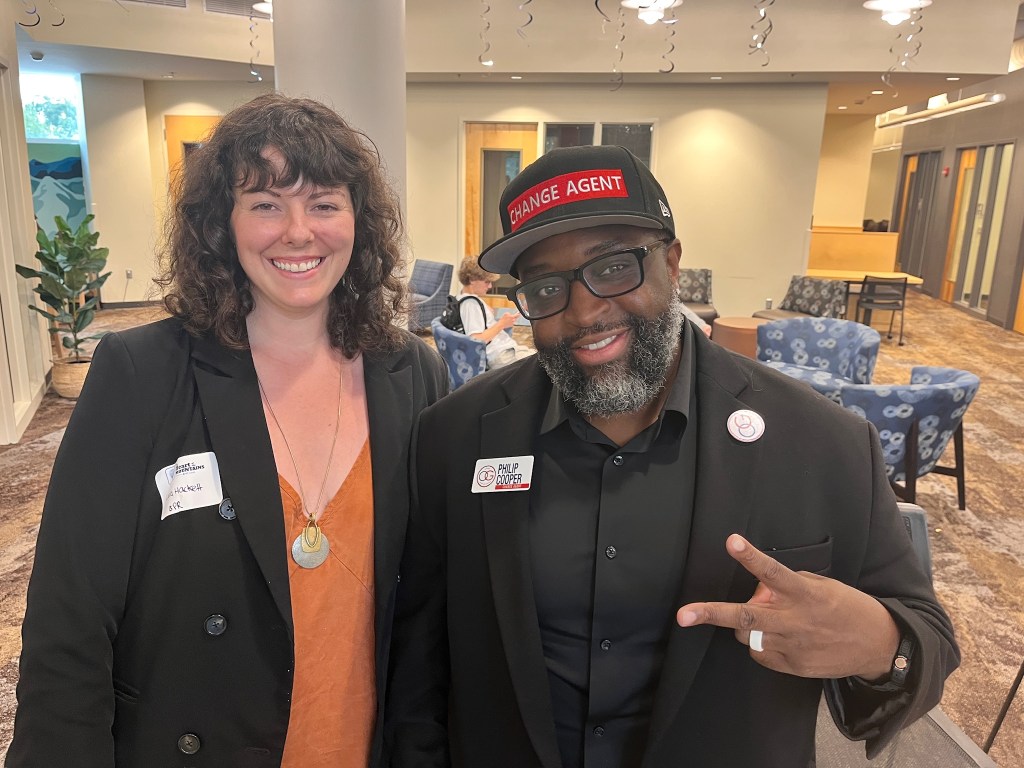
Cooper said the recovery efforts offered an opportunity for everyone — including people recently released from incarceration— to offer assistance.
“They went straight from being an inmate to now being an immediate change agent who is carrying a wagon full of supplies for a lady or going to somebody’s house to flush a toilet,” he said. “It gave them purpose and meaning.”
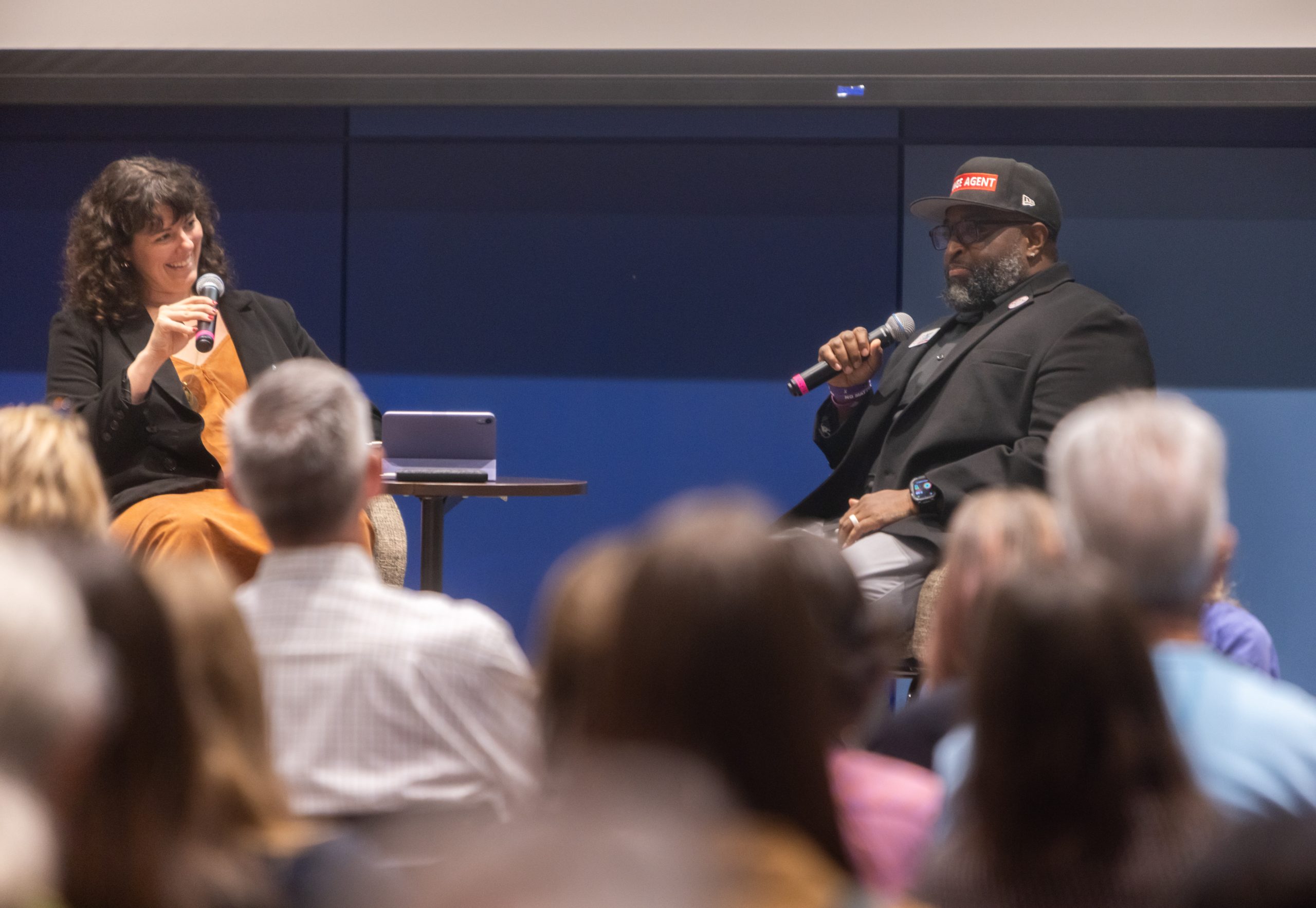
Cooper said volunteers came from all walks of life. “One time we got a trailer full of water with no forklift, and we burned out every single volunteer,” he told the laughing crowd.
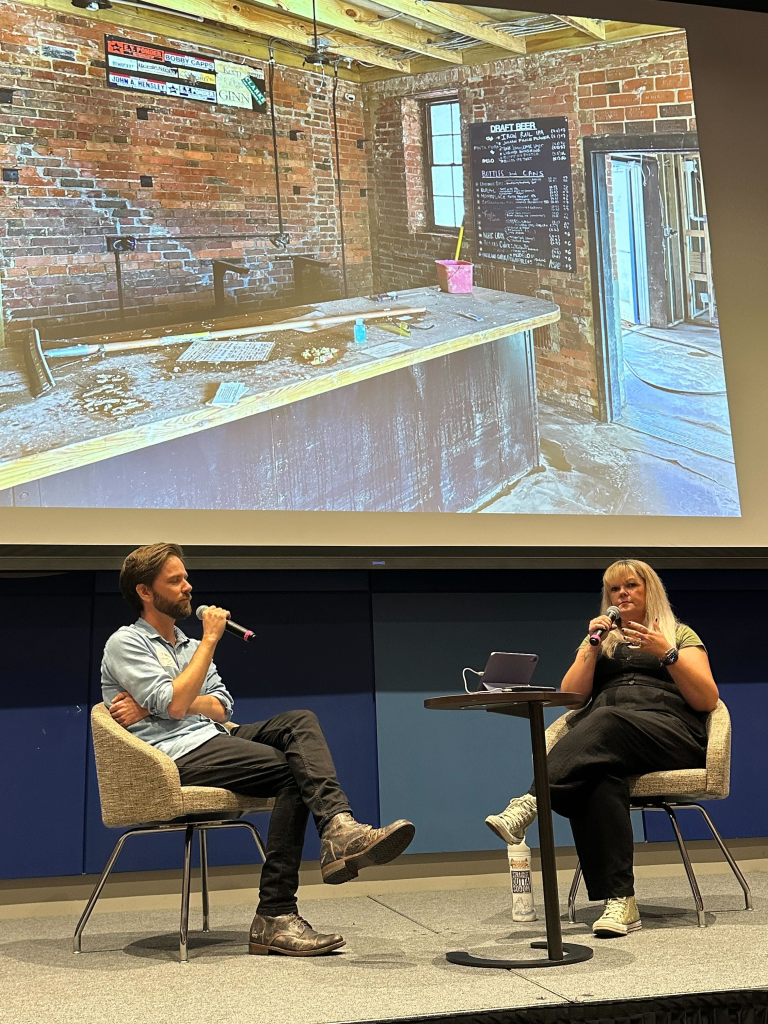
Beacon-Tribune’s Sara Murphy visited DayTrip, an Asheville bar that was completely flooded one month after their grand opening. DayTrip owners Brandon and Davie Davis talked about reopening the venture in a new location downtown after the outpouring of public support.
The pair said the tremendous community response — after being featured in the New York Times and on the Jennifer Hudson Show— offered a reminder of how important it is to carve out time to help others, even in ordinary times.
The evening concluded with a conversation between Mountain Xpress Managing Editor Thomas Calder and Donna Ray Norton, an 8th generation ballad singer from Madison County.
Norton described returning to Marshall just after the storm. “I have lots of words, all the time. I have lots of things to say, and I just could not even find words to say about anything. It is still hard for me to see these videos,” she said.
Norton recalled how she helped muck out parts of the town from the seemingly endless mud that filled the streets and building.
“It was slippery. It was heavy,” she said. “And I’ll never forget that smell.”
Norton performed “Fine Sally,” the same song she recorded as part of The Resonance Sessions, a collection of live recordings at the Old Marshall Jail following the storm.
The Heart of the Mountains was presented as part of UNC Asheville’s Post-Helene Symposium: “Remembering, Rebuilding and Reimagining.”
Watch the full event: