

Hundreds of Lego pieces spread across the floor of the Post family’s basement in their Burlington home. Colton, the youngest of three siblings, diligently constructed a distinctive, colorful city that spans half of the room. Cars on gray Lego streets dissected by buildings, houses and train tracks.
This Lego city was the latest iteration of the 9-year-old’s creation. His last city washed away – pieces scattered across the property – when flood waters from Tropical Storm Chantal rushed the Posts’ home in July of last year.
“He enjoyed sometimes pretending like they would get destroyed by a flood,” April Post, Colton’s mom, said. “In this case, a flood actually did end up destroying all of his Legos.”

The Posts’ home, though on a slight hill, stands adjacent to Service Creek, a tributary of the Haw River. Their backyard completely flooded, and approximately three feet of water entered the basement, destroying the playroom and their eldest daughter’s bedroom. Along with Colton’s toys, furniture, clothes and boxes full of family photos and memories floated in the murky water.
“You could not believe the damage that happened,” Post shared.
The Posts’ house was one of dozens damaged in Alamance County by the storm that redefined the region’s flood risk. Chantal flooding caused an estimated $4 to $6 billion in total damage and economic loss across the Carolinas. In North Carolina alone, initial damage estimates to public infrastructure exceeded $42 million.
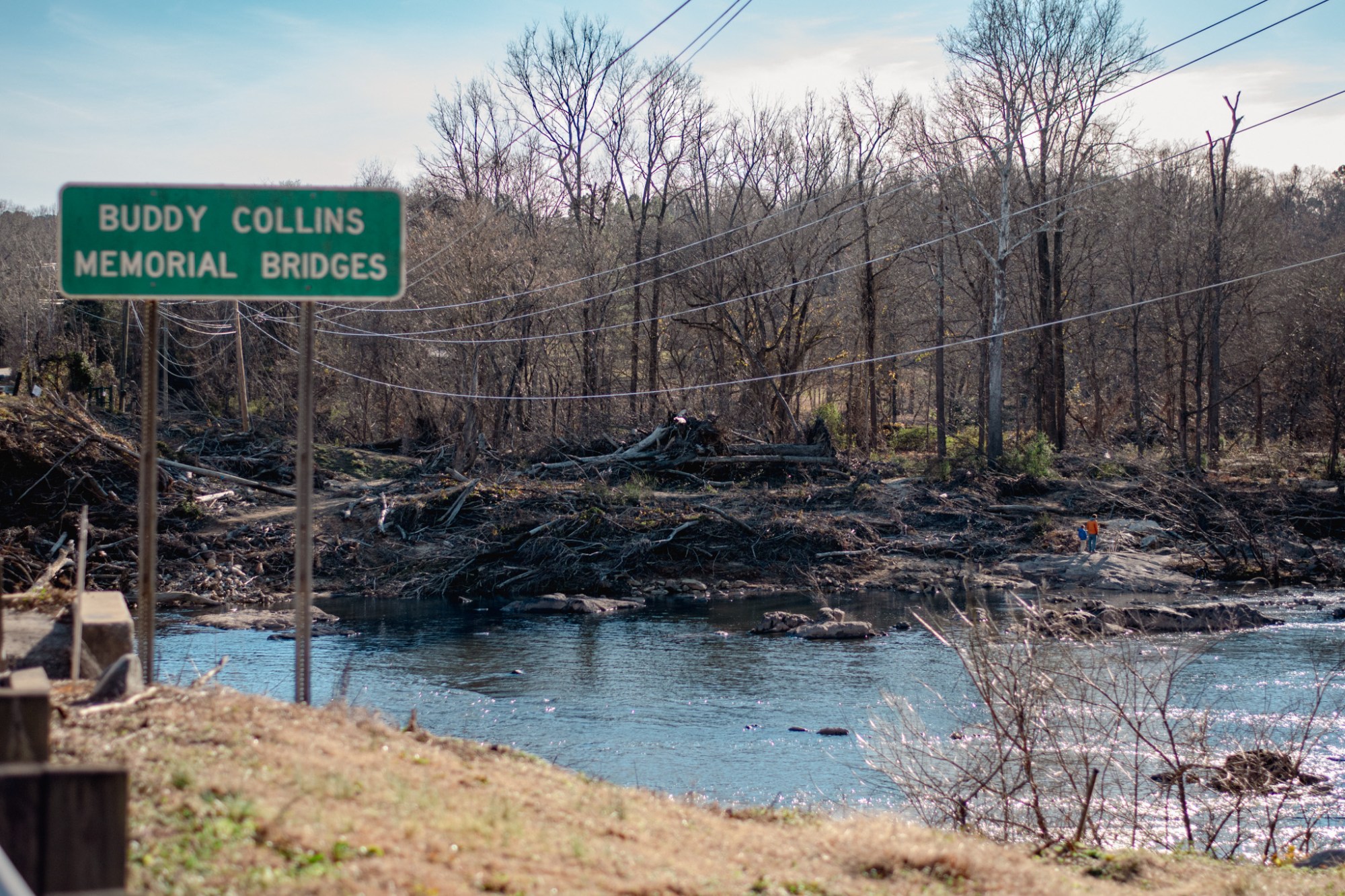
The Haw River crested at near-record levels, according to the North Carolina State Climate Office and local officials. Peaking at 32.5 feet, it was just 4 inches shy of the all-time record set by Hurricane Fran in 1996. Buddy Collins Memorial Bridge, the main bridge in Saxapahaw, was completely submerged, isolating the village and rerouting traffic for days.
Torrential rain drenched the region, pouring buckets on roadways. The Burlington airport recorded 5.75 inches of rain in a single day, its highest total since record keeping began at the site in 2001.
The storm’s destruction extended beyond power outages and damage to buildings and homes, claiming lives. State officials confirmed six storm-related deaths.
Two of the deceased were in Alamance County: 71-year-old James Michael Parcell of Haw River was found dead inside a submerged vehicle in Mebane, and 23-year-old Hajar Hassib was found dead after her car was swept into a pond in Graham.

The rapidly rising waters and severe destruction left many needing to take action just as quickly before the irreparable damage set in.
“If we had had to wait even a couple of days, the loss would have been devastating,” Post said. “Mold grows so quickly.”
For Post’s family, the first 12 hours were crucial. With the help of friends and neighbors, they moved out water damaged furniture, washed and sanitized surfaces, clothes and toys that were salvageable.
“So many people just showed up,” Post said. “The first time I cried was when all of the community just started coming around us to offer help and support.”
The Graham-Mebane Water Crisis
While families like the Posts dealt with the water flooding their basements, an infrastructure crisis unraveled at the Graham-Mebane Water Treatment Plant. It distributes between 3.36 and 4.5 million gallons of water daily, providing water for approximately 40,000 people across Mebane, Graham, Green Level and Swepsonville.

Floodwaters breached the plant’s perimeter, submerging its intake pumps and electrical gear under six feet of water. The failure paralyzed the area’s water supply.
The City of Mebane reported having less than two days’ worth of clean drinking water available. In response, officials implemented Stage V Water Restrictions, the most severe tier of rationing. Businesses were asked to shut down, and residents were told to use municipal water only for essential hygiene and medical needs.
The crisis was only averted through a massive regional operation, with the City of Burlington and the Orange-Alamance Water Authority diverting supply to the parched cities. Mebane city council has since allocated $140,000 just to reimburse Burlington for that emergency water.
The total financial hit to these municipalities is still being tallied in their balance sheets.
The City of Graham, for instance, received a $750,000 insurance payout just to cover damage at the Water Treatment Plant. Leaders in Mebane also set aside $250,000 for repairs.
Current efforts focus less on immediate clean up and more on ways to make the site more resilient long-term. State officials pledged $3.4 million to upgrade the plant and protect it against future storms.
Damage from the storm exacerbated the need for upgrades at the water treatment plant, reintroducing a conflict between the two cities. Last month, the City of Mebane filed a lawsuit against the city of Graham regarding cost-sharing and wastewater capacity, as first reported by The Alamance News.
The end-goal: Shifting from immediate repair to long-term “hardening” of infrastructure.
Navigating the Costs of Recovery
Much like municipalities, families in the area sought financial help from many sources, including state and federal assistance programs. For individual applicants of disaster relief assistance the windows were tight and the requirements specific.
Gov. Josh Stein declared a State of Emergency for 13 counties, including Alamance, on July 17, 2025. This gave the state the ability to qualify for federal funding.
A week later, the U.S. Small Business Administration approved an administrative disaster declaration, providing residents with low-interest loans of up to $500,000 for homeowners to repair structures and $100,000 for personal property.
Direct federal cash grants for impacted individuals still weren’t available on August 5, 2025, when Gov. Stein declared a Type I State Disaster. This activated state-funded grants for people whose insurance (if any) wasn’t enough to cover their losses.
Then, on September 11, President Donald Trump approved a Federal Major Disaster Declaration for Public Assistance. This didn’t send checks to homeowners but ensured that local governments in Alamance and six other North Carolina counties would be reimbursed for the cost of debris removal and repairing public infrastructure.
As of mid-January, FEMA has obligated a total $628,526.41 in Public Assistance funds for the seven counties. This amount is significantly lower than the Preliminary Damage Assessment of $42,297,750 for public assistance damages alone across the region.
The deadline for Individual Assistance through the state closed on in late September. While the deadline for physical damage loans has also passed, businesses in the county have until June 11, 2026, to apply for SBA economic injury loans.
A Unifying Landmark Turned Threat
The flooding in Alamance didn’t just damage buildings and homes. The floodwaters destroyed civic and cultural centers, altering daily life and culture.
In Saxapahaw, the Haw River is a landmark that drives both the village’s local economy and its eclectic culture. While it’s typically a unifying feature, its raging waters became a real threat to businesses and community groups.
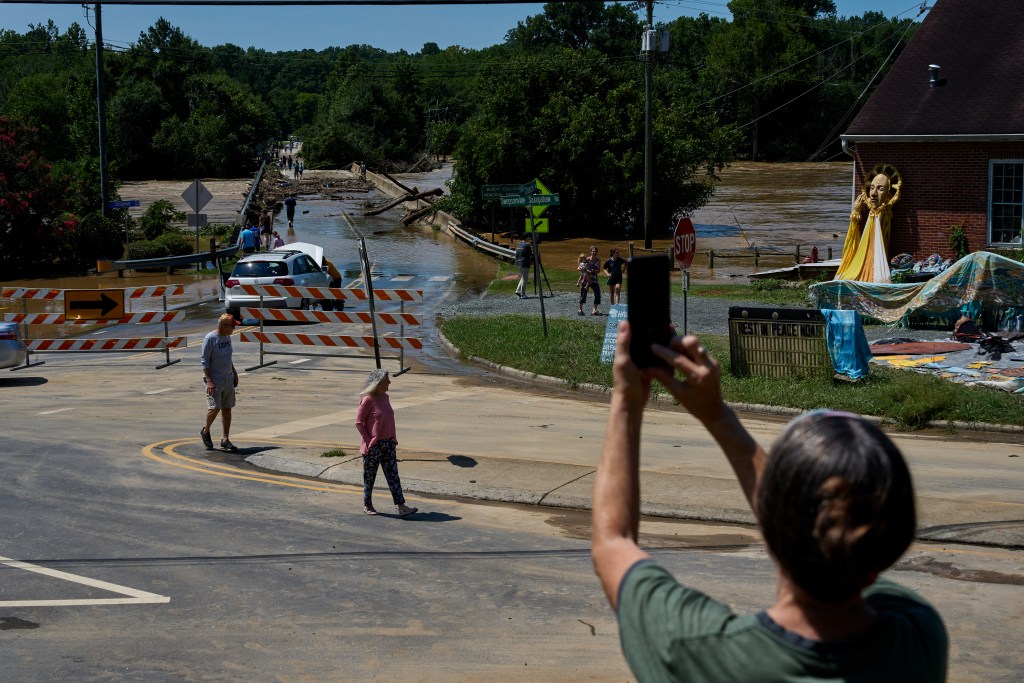
In the afternoons before the storm, Saxapahaw Island Park was a vibrant center of community life and a key starting point for the Haw River Trail. Families frequently gathered there, with children joyfully launching themselves down the park’s beloved 45-foot wooden fish slide.
Nearby picnic tables served as popular gathering spots for teens after school. The sounds of hikers’ crunching along the dirt trails, punctuated by the occasional barking dog, competed with the river’s rushing murmur.
The storm wrecked the park, disrupting the idyllic gathering spots and shuttering one of the community’s pillars.
Of all the county’s properties, Saxapahaw Island Park remains the “epicenter” of the remaining destruction, Alamance Parks superintendent Michael Scott said in a phone interview.
Scott recalled seeing a heavy picnic table lodged nearly 10 feet high on a tree during the cleanup at the park. “Don’t forget to look up” became an inside joke within the department, he said.
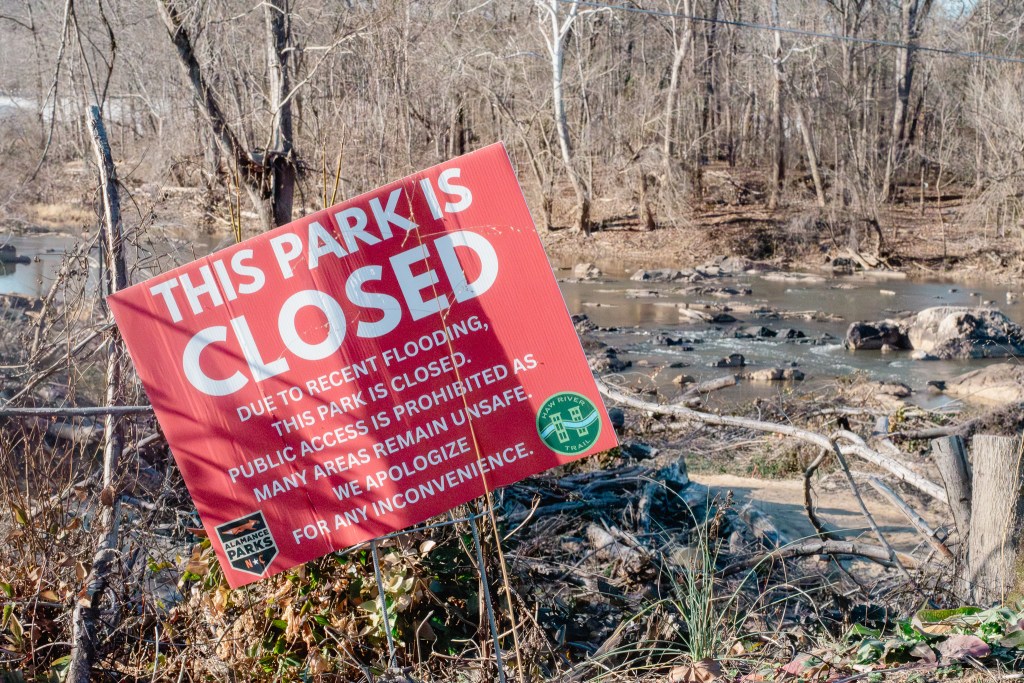
Six months later, it is the only county-managed area still facing a partial closure.
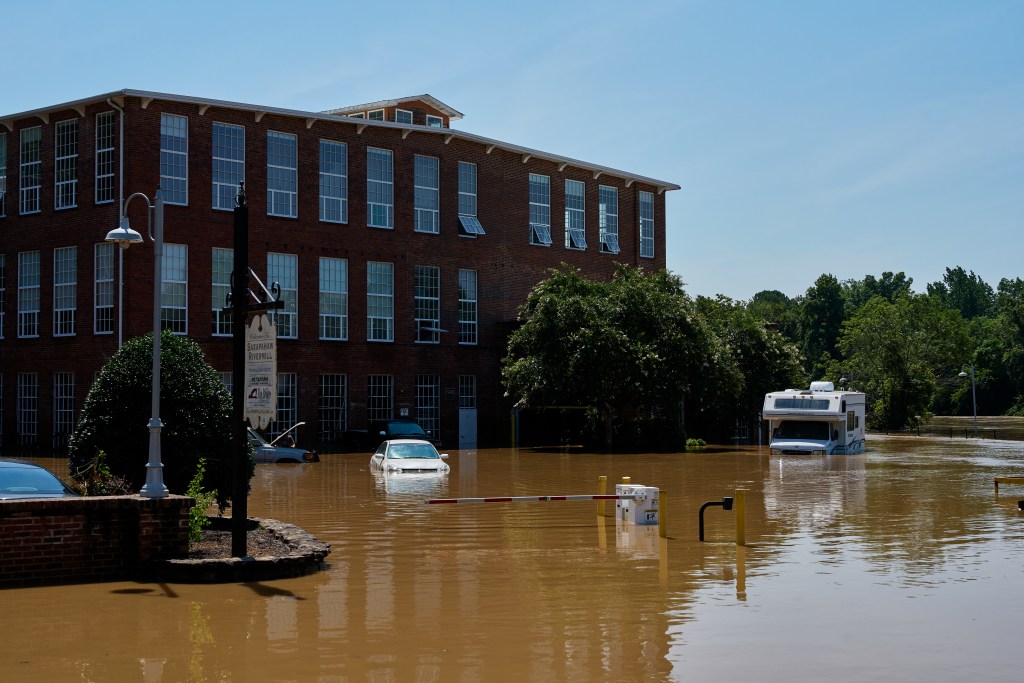
Nearby, tucked in the Saxapahaw Rivermill, The Bridge Wellness Center, owned and operated by Lauren Miller, is still closed.
Before Chantal hit, fitness lovers met every day at the well-known gym to lift weights, practice yoga and breathing techniques, and even get a massage. Some of the area’s smallest yogis learned their earliest downward dogs through Slinky Kids, a kids yoga group that used the studio.
“This space…” Miller said in an interview months later. “I didn’t realize how much it meant to me, personally, beyond just being an anchor for the community.”
After the storm, floodwaters made it impossible to enter the building for several hours. The center is hosting its first open house since it closed Jan. 31. Miller said she hopes the official reopening will mark a welcomed return of members, visitors and community partners the following week.
Continuing to rebuild
The day after the storm, community leaders met at the Haw River Ballroom to begin the long process of determining a path to recovery.
“At that point in time we’re like, ‘I don’t know what I need,’” Miller said. “I just stood there and cried.”
Mandy Sayers, pastor at nearby Saxapahaw United Methodist Church, attended the meeting.
“They had sheets of newsprint up on the bottom of the stage,” Sayers said. “One newsprint was titled ‘I Need Help’ and then the other [was] titled ‘I Can Help.’”

The church, another casualty of the floods, took on nearly three feet of water. In its recovery, the church is prioritizing the fellowship hall for community events and the daycare, Saxapahaw Village Kids, she said. The sanctuary – which has to be completely gutted – will take much longer to finish.
Until then, congregants gather for weekly worship services at Concord United Methodist Church in Graham.

For Sayers – who was supposed to host her first sermon in the church on July 7, 2025 – the “overwhelming response of community and love that followed” the flood was her first introduction to Alamance County and the nature of its community.
Sayers, Miller and her landlord are using a “lessons learned” approach to rebuilding, redesigning for resilience in case of another flood.
“We’re kind of keeping in mind not the question of will this happen again but when will it happen again?” Miller said.
Alamance County leaders also take a “lessons learned” in park management. The philosophy influences even small decisions, such as whether a bench should be put back in its original spot or moved elsewhere to avoid being washed out in the next high-water event, Scott said.
However, he admits there’s a limit to how much the county can prepare.
“You’re working with a living environment here,” he said. “This is not a static and stable space, especially on the river itself.”
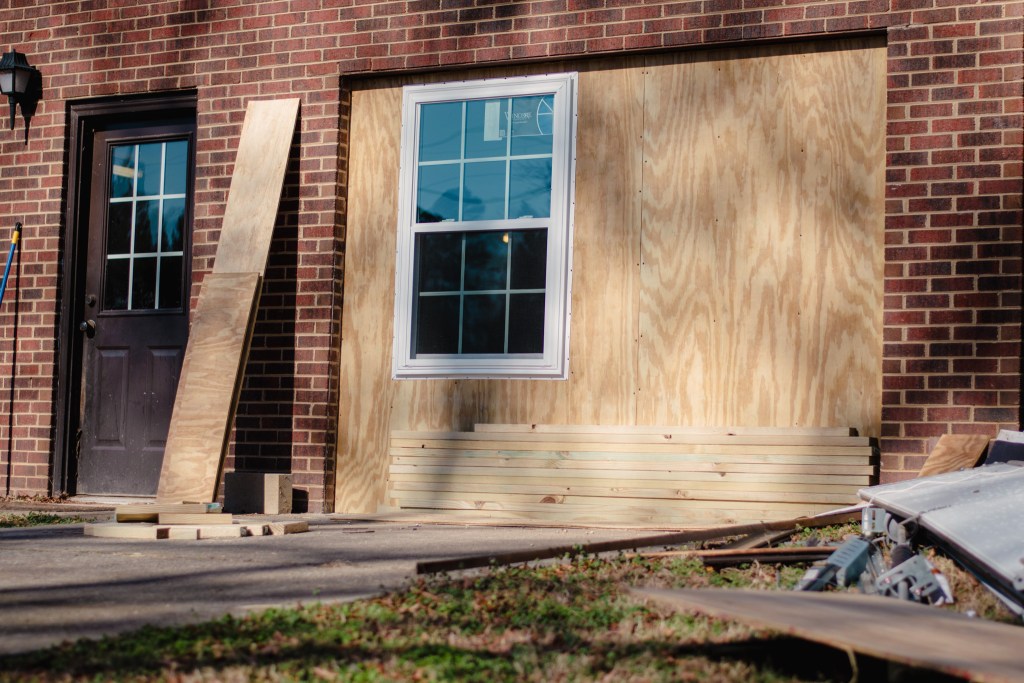
The Post family is also making adaptations for the future. Colton constructs his Lego village on the floor next to the final step in their rebuilding process: closing off the side basement door to prevent major flooding if the creek overflowed again.