
Overview
In response to the Trump administration’s aggressive mass deportation program, several North Carolina businesses and some municipalities are now Fourth Amendment workplaces. The designation means they’re trained to protect employees from unlawful federal overreach during immigration enforcement operations.
What is a Fourth Amendment workplace?
A Fourth Amendment workplace is a business, or worksite, like a municipality, with staff trained on constitutional protections, specifically related to unreasonable searches and seizures.
The Fourth Amendment states:
“The right of the people to be secure in their persons, houses, papers, and effects, against unreasonable searches and seizures, shall not be violated, and no Warrants shall issue, but upon probable cause, supported by Oath or affirmation, and particularly describing the place to be searched, and the persons or things to be seized.”
Emanuel Gomez-Gonzalez, a communications strategist for Siembra NC, an immigrant rights group that organizes Fourth Amendment workplace trainings, said approximately 250 businesses in North Carolina have signed on to become designated Fourth Amendment workplaces.
These businesses, Gomez-Gonzalez said, have “proactively trained their staff to uphold our constitutional rights against what are unreasonable searches and seizures, the same kinds of searches and seizures that are referenced in the Fourth Amendment — the text of the Constitution — especially in regards to immigration enforcement.”
Gomez-Gonzalez added that Fourth Amendment workplace employees are trained on how to assert other constitutional rights, like remaining silent, to protect themselves and the business’s customers. They also understand that federal agents must present judicial warrants — not administrative warrants — to access private areas, like employee breakrooms, that are otherwise off limits.
What’s the difference between a judicial warrant and an administrative warrant?
Simply, judicial warrants are issued by courts, like U.S. District Courts or state superior courts, and signed by a judge or magistrate. Judicial warrants are based on probable cause and “must be complied with.”
Administrative warrants are issued by U.S. Department of Homeland Security agencies,like Immigration and Customs Enforcement, U.S. Customs and Border Protection and U.S. Citizenship and Immigration Services. They’re typically signed by an immigration judge or officer and do not authorize searches, according to the National Immigration Law Center. They do not allow an agent to enter a home or a private area of a business.
When presented with an administrative warrant, the American Civil Liberties Union, or ACLU, provides this guidance:
“If ICE agents show you an administrative warrant, you don’t have to let them in. If they force their way in, say you don’t consent, but don’t try to stop them. And don’t answer any questions. Remember, in any encounter with ICE or other federal immigration officers, you always have the right to remain silent.”
How does a business become a Fourth Amendment workplace?
Fourth Amendment workplaces are businesses with staff trained to decline access to private areas by federal agents without a judicial warrant. Staff are also trained on how to document encounters with federal agents by recording.
Like other people, business employees also have a constitutional right to remain silent and refuse questions from agents.
Staff cannot help anyone flee from agents or physically impede agents, according to Siembra NC training resources.
“These things can be a little tricky, especially in a context when people with authority are neglecting to abide by their constitutional requirements,” Gomez-Gonzalez. “But trainings like this help get you prepared for that.”
Business owners who want to create a private space in their workplace may consider adding a door lock between the two spaces. Siembra NC suggested that any owners make sure any door locking protocols remain compliant with the state’s fire prevention code.
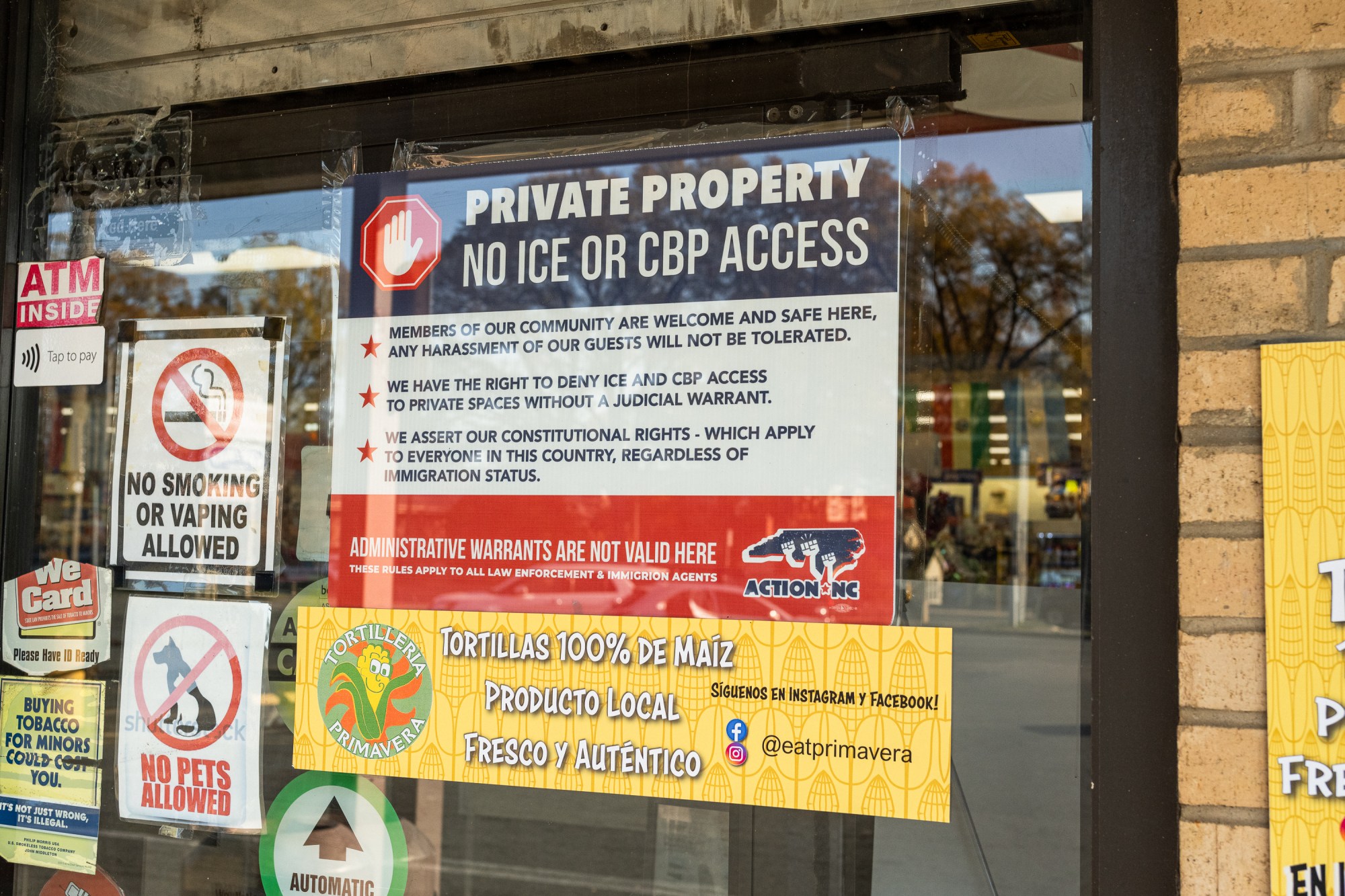
Fourth Amendment workplaces may also elect to post signage about their policies.
Are any North Carolina towns or cities Fourth Amendment workplaces?
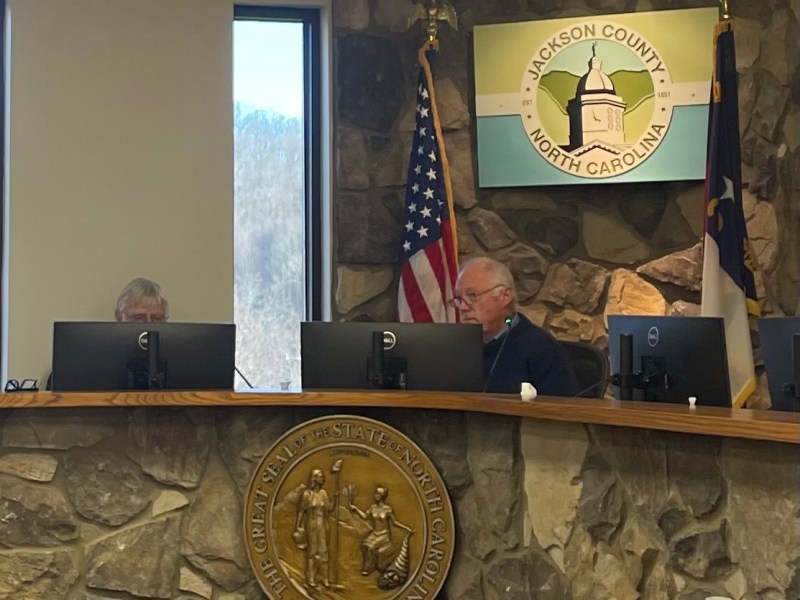
In May, Carrboro’s town council voted unanimously in support of a proclamation designating Carrboro a Fourth Amendment workplace, the first municipality in the state to do so.
“The Town of Carrboro can serve as an example of how local governments can advocate for the rights of all local taxpayers and discourage the overreach of Article II agencies in our communities,” the proclamation read.
Durham and Boone also passed resolutions for Fourth Amendment workplace designation.
Some members of Asheville City Council are also advocating an adoption of a Fourth Amendment resolution.
“Over the past week, I have met with community advocates, residents, and small business owners to hear their concerns about federal government overreach and to discuss meaningful, practical actions that are grounded in the United States Constitution,” Councilman Bo Hess wrote in a Jan. 25 post on social media. “At the center of these conversations is a shared belief that our community deserves clarity, protection, and education around our Fourth Amendment rights — the right to be secure from unreasonable searches and seizures.”
In December, students and faculty at Duke University in Durham called on the university to become a Fourth Amendment campus.
Read more
4thworkplace.org is a site for business owners and community members to find more information and materials on how to become a Fourth Amendment workplace.