
What you need to know
The roads are mostly thawed across Western North Carolina after last weekend’s snow storm left as much as 14 inches of fluffy powder on the mountains.
This storm did not cause widespread power outages like the previous week’s storm but NC Highway Patrol said there were more than 750 collisions on one day, Jan. 31. Over the weekend, three North Carolinians died in crashes on the road caused by the weather. Two were in the mountains in Rutherford and Cherokee counties.
Back-to-back winter weather has caused NC DOT to work extra hard, NC Department of Transportation Western Communications Manager David Uchiyama said.
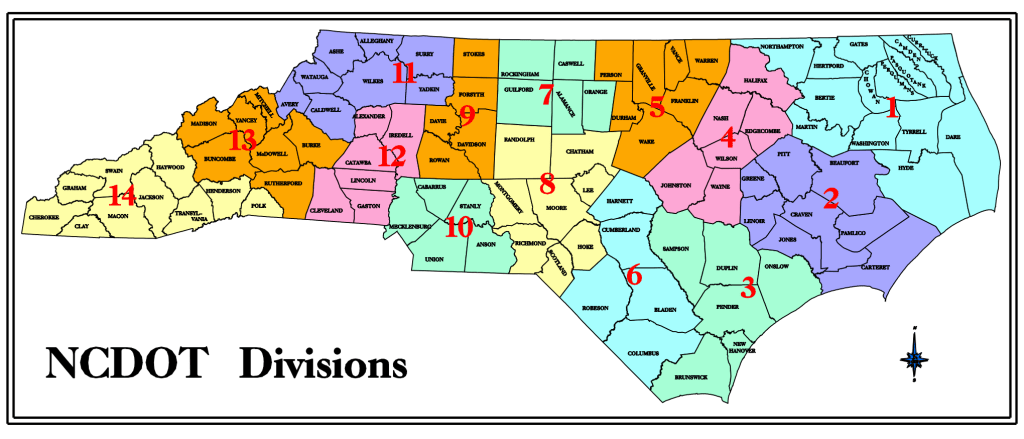
“This is the most consecutive work that they have put together since Helene. I mean we’re going on what 14 days ?,” said Uchiyama, who represents the 13th and 14th divisions covering Buncombe, Burke, Madison, McDowell, Mitchell, Rutherford, Yancey, Cherokee, Clay, Graham, Haywood, Henderson, Jackson, Macon, Polk, Swain, and Transylvania counties.
Courtesy of NC DOT
How are roads prioritized?
According to the NC DOT’s snow clearing policy, its primary responsibility is to interstates and four-lane divided primary routes essential to the movement of intrastate and regional traffic.
“I’ve described it at times as a circulatory system within the body. You have to take care of your heart before you take care of your fingers,” Uchiyama said.
Primary roads and “essential” secondary roads are the first on the department’s list of priorities. Here’s all of prioritization road clearing for NC DOT.
Roads are prioritized based on connectivity, traffic volume, trucking routes and major business avenues and importance to emergency services such as hospitals.
Here is a map of the primary roads that are prioritized for snow clearing. Find your road.
NCDOT budgeted $60 million for storm preparation and snow and ice removal, according to 2025 data. If the budgeted amount is exceeded, additional funds can be taken from emergency reserves so that roads can be cleared.
NCDOT can store up to 180,000 tons of salt and sand and 2.3 million gallons of brine at its storage facilities, according to its website.
How are the roads now?
“It really depends on where you are, but in general…all the interstate and major highways are looking really good,” Uchiyama said.
On Tuesday, local crews started to focus on secondary roads.
“So with all the attention off the interstates because those are so clear, our folks are on Monday kind of polished up and cleaned up most of the major highways like 23,74, 441, US 64,” Uchiyama said on Tuesday. “Today and for the next few days crews are going to be attacking the secondary roads.”
By Wednesday at 3pm, Uchiyama shared that 100% of interstates in both divisions were cleared along with 100% of primary roads and 95% of secondary roads in Division 13 and 95% for both primary and secondary roads in Division 14.
In Division 13, 250 people worked on the roads and 200 people did the same in Division 14.
Local governments also provided information on social media as conditions improved. For example, the Swain County Sheriff’s Office shared on Tuesday evening that All primary and secondary roads throughout Swain County are clear “for the most part at this time.”
“Motorists should use caution on Galbraith Creek Road and the end of Conleys Creek Road, where there is a small amount of slush present on the roadway,” Sheriff Brian Kirkland shared on Facebook. “NCDOT crews and deputies will continue to monitor conditions, and drivers are encouraged to slow down and remain alert, especially in shaded or higher-elevation areas.”
I heard there was a salt shortage. Is that true?
There were national reports about salt shortages on the east coast.
Uchiyama said state transportation authorities have sufficient supplies of salt de-icing supplies across the state but back-to-back storms “diminished” supplies.
After this weekend, Division 14 has now used half of its salt and Division 13 has used 40%, he specified.
He said that the goal is to have enough salt on hand for two or three storms.
“NCDOT has sufficient supplies to continue its work in the wake of this recent storm,” Governor Stein’s office said in a press release on Monday. It also confirmed that the agency is working to restock salt supplies and “making necessary adjustments to move supplies to areas of need.”
What about towns and cities?
Uchiyama explained that the NC DOT is “encouraging local governments, the public works department and emergency management agencies to coordinate directly with private suppliers or local vendors for their salt treatment needs.”
Cities and towns often follow a similar process as the state, prioritizing major thoroughfares.
The City of Asheville, for example, prioritized snow removal by major arterioles, and then minor through streets and residential streets. All City bus routes are first priority streets, according to the city’s snow plan. You can find your street on the priority map.
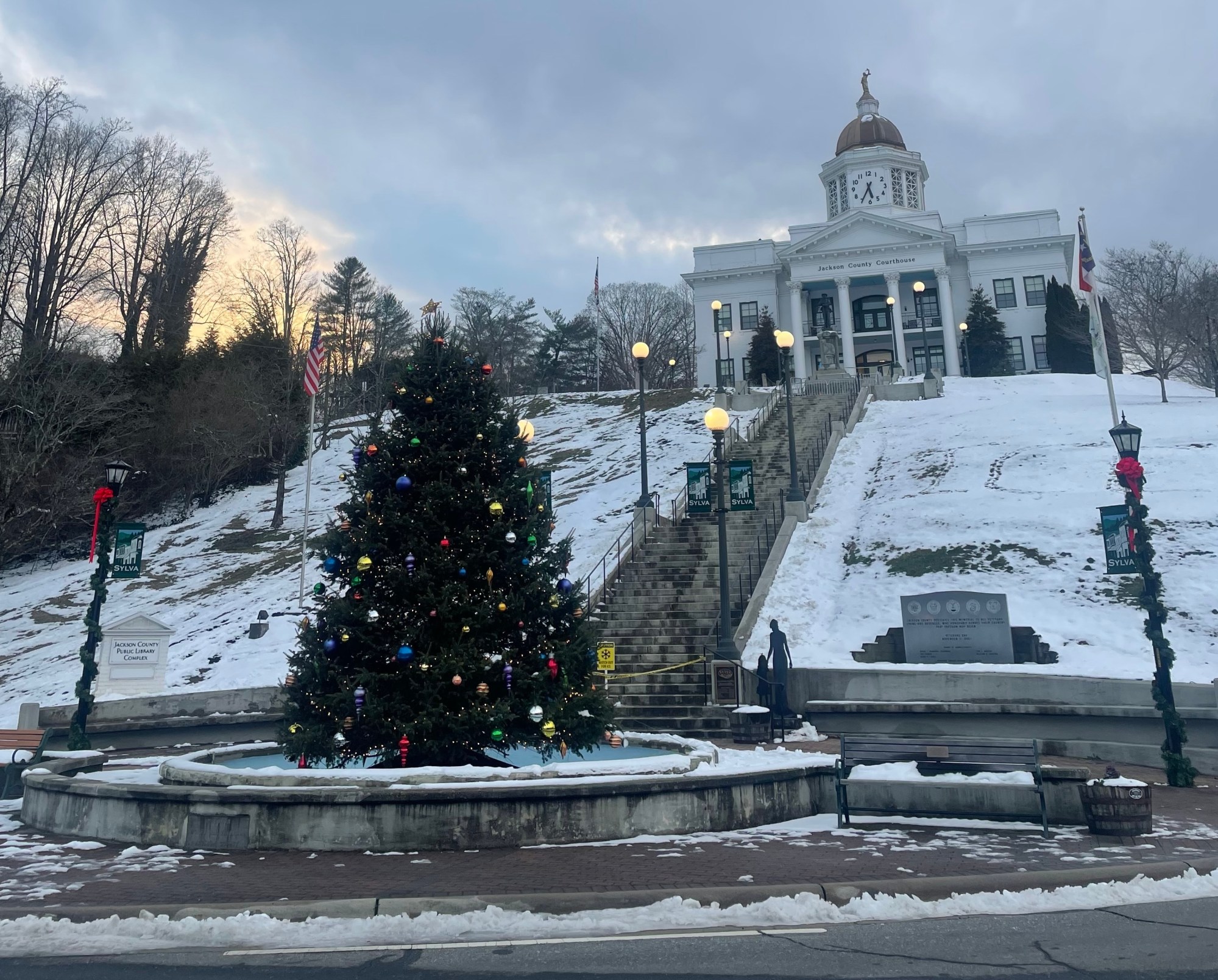
Sylva Town Manager Paige Dowling said that on Thursday the town’s public works department was notified by NC DOT that they would not be able to share any additional salt. Sylva got between 8 and 11 inches of snow across the town, Dowling said.
“As [your] driving through you can see snow piled up in parking places and between the cars and the curb but it’s in much better shape than it was right after the event.”
The Town of Sylva put out a statement on Jan. 31 saying that the town would only be salting roads to aid emergency services.
“Due to widespread salt shortages throughout the region, NCDOT has limited salt to use for emergency situations only. Effective immediately, Town of Sylva Department of Public Works is only able to salt roads as aid to emergency services,” the statement read, also advising community members to “please make every effort to stay off roads, if travel is necessary, use extreme caution.”
The town relies on the state for salt for the roads but that the town has bags of salt for the sidewalks. The town prioritized emergency services such as the hospital and fire station with salt. They also focused on plowing in order to keep a reserve of salt, she said.
“We were able to salt during most of the actual snow event, so the slippery spots now are from a little bit of melting, refreezing and what wasn’t cleared,” Dowling said.
“I do really want to give our public works department credit for working round the clock to clear the roads and keep them in the best condition they could.”
She clarified that the salt shortage did make the snow stick around longer but that low temperatures the salt wouldn’t have had a big impact.
“Salt wouldn’t have made a difference because the temperature is too low for it to be effective. It’s easier to drive on the snow than it is on the ice. That’s true for a snowplow too,” Dowling said in an email. As cars drive on snow, it packs down into ice. That’s why officials ask folks not to drive unless it is necessary during clean up.
This shortage wasn’t the case for all Western North Carolina towns.
Franklin Town Manager Amie Owens said the town orders its own salt, sand and chat (tiny gravel) in the fall to take care of snowy conditions.
“Then as we need it during the winter months, we have it in stock and we can take care of things,” Owens said. Then the town follows its snow removal plan to prioritize main connecting streets.
“We know that DOT will always come through and run and scrape the main arteries. Then we prioritize neighborhoods that have a lot of individuals in them,” Owens said. “And then lastly, we prioritize sidewalks and municipal parking areas, things of that nature.”
Owens explained that the municipality brines, salts and clears its own roads. She says that the same thing happened when she was working for the Town of Waynesville.
The county, in this case Macon, isn’t responsible for clearing additional roads.
“Most of the roads in the county are DOT-state maintained, so they’re either primary or secondary roads. So there’s not a lot of road maintenance at all that is done countywide. They maintain the areas at their buildings. But they don’t maintain streets at all,” Owens said.
Here’s how to prepare
- Know your surroundings. This means think through how steep your road is, where there might be shady spots and how water moves down the road. Check to see if you are on a primary road and if not, what routes exist to access a primary road.
- Consider public transportation if work or other obligations require you to be on the road in a storm.
- What supplies do you need for 72-hours at home? Here’s a storm prep timeline from the National Weather Service.
- Dress warmly. NC Emergency Management says, “Once the temperature drops below ‘I can see my breath,’ fashion goes out the window.”
- Visit drivenc.gov for real-time traffic information.
- Here’s more tips from NC 211.