
Overview:
Overview: In January, the state notified local officials that extremely high levels of chemicals, called PFAS, were found in a well at the Eli Whitney Volunteer Fire Station. The testing was part of a statewide firefighting research program passed by the legislature in 2023. As part of this program, the North Carolina Collaboratory tested water wells at 411 rural fire stations across the state. The well in Eli Whitney was one of the first nine wells tested and one of the first sites to request a public meeting. Here’s what residents in the potential contamination radius can expect and what it means for other parts of the state facing the same challenges.
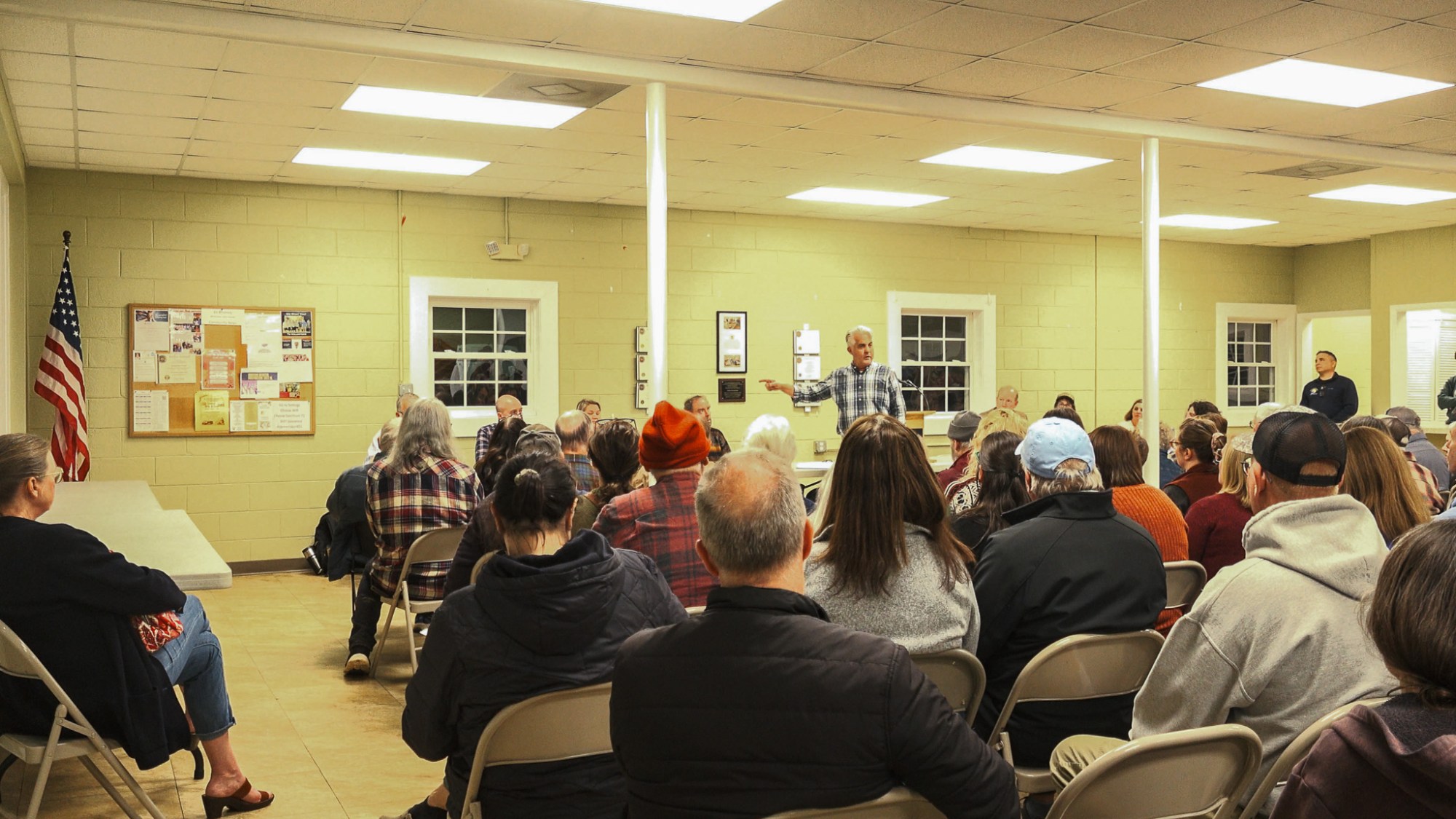
Dozens of concerned citizens packed the Eli Whitney Community Building in February to learn from state officials and experts about the health risks of “forever chemicals” found in a local well. Testing of the well, which serves both the community building and the local volunteer fire department, found levels of per- and polyfluoroalkyl substances (PFAS) higher than the Environmental Protection Agency’s stated safe level.
The cumulative PFAS level found in the well was 4,173 parts per trillion. In contrast, the maximum levels set by the Environmental Protection Agency range between 4 to 10 parts per trillion, depending on the chemical.
Related: Forever chemicals explained: What are PFAS? Why do they matter?
Tanked food-grade water has temporarily replaced the well at the fire station and community building to support all water use needs, the county shared in a press release.
Jeffrey Warren, a geophysicist and the executive director of NC Collaboratory, said the testing was in its early stages, so it was hard to say for certain where the PFAS came from.
But Duke University civil and environmental engineering professor Lee Ferguson said one culprit was likely.
“The abundant compounds we have seen are indicators of firefighting foam,” Ferguson said.
Fire stations stock and use aqueous film forming foam, also known as AFFF, to put out highway fires and burning oil.
“When this stuff gets out in the environment and out in the ground water, it does not take much,” Ferguson said.
Here’s how impacted Alamance County residents access state-funded testing, filtration to protect their health and homes and secure safe drinking water.
What are PFAS and why are they dangerous?
Chemicals called PFAS are widely used in consumer, commercial, and industrial products, and may be found in drinking water systems across the country. They can appear in water, food, air and soil, NC Local previously reported.
PFAS stands for per- and polyfluoroalkyl substances, and they are called “forever chemicals” because they take a very long time to degrade in nature.
Exposure to forever chemicals have been linked to health issues, like increased risk of certain cancers, liver and kidney damage, and reproductive issues for people who are pregnant. Research is ongoing about how these chemicals might affect human health.
Who is eligible for state-funded testing?
At this stage, 39 properties near the fire station are immediately eligible for free private well testing.

Letters have been sent to these properties’ owners, according to the county. If you’ve received a letter, you must complete the waiver and return it to the DEQ to begin the process and get a sampling date.
Testing will begin mid to late February and results should return by mid-March, the environmental advocacy group Haw River Assembly shared.
If the sampling area increases, additional letters will be mailed to those affected, according to county officials.
I live outside that radius but I’m concerned. What are my options?
If you’re near the affected area but your property is not on the map for the first round of testing, you can contact Vincent Antrilli at (919) 707-8353 or Vincent.Antrilli@deq.nc.gov, or fill out the request form online so they know you are interested.
Residents with wells outside the affected area can have their wells tested privately by labs across the state at their own expense. Here is a list of labs and other resources from NC DHHS.
The DEQ says it can review the results of a private PFAS test. Visit NC DEQ PFAS treatment system and assistance program or contact Antrilli for more information.
For concerns about health effects of PFAS exposure, contact Kennedy Holt at (919) 715-2632 or by email to Kennedy.Holt@dhhs.nc.gov.
What if my drinking water isn’t safe?
If elevated PFAS levels are found in the homes tested, NCDEQ will provide potable water to the homeowner until the state can provide and install a point-of-use (POU) water filtration system at the state’s expense, according to Neighbor Notes, a civic information-sharing initiative of the community group NeighborUp Southern Alamance.
These systems, which can cost $3,500, are usually installed under kitchen sinks. If you want a different or whole house filter, you must provide the details about that filter to NCDEQ. If it qualifies as a reputable filtration system, $3,500 will be provided to supplement the cost of the system, according to Haw River Assembly.
What are people in Southern Alamance saying?
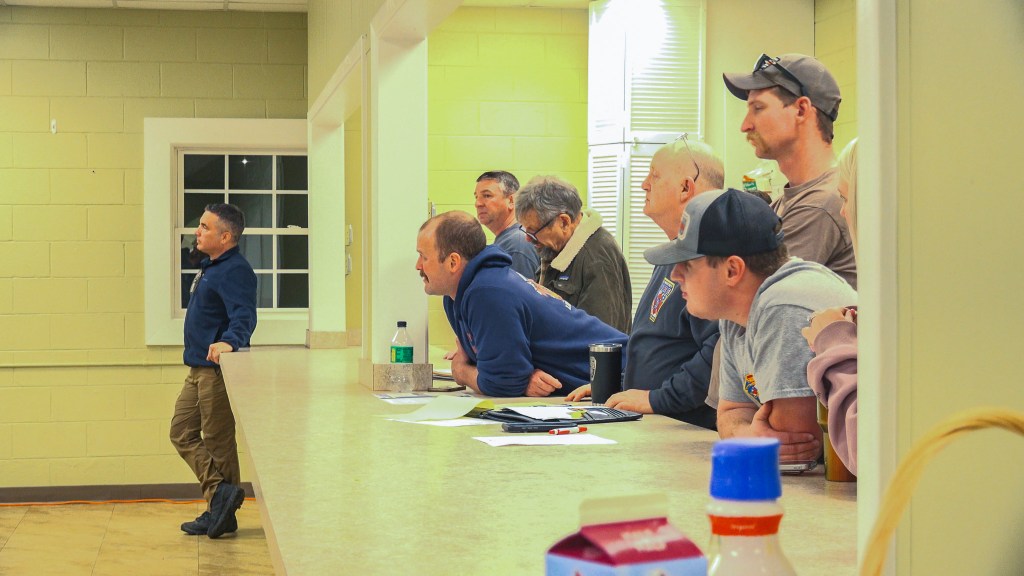
Citizens who attended the meeting asked questions about the testing results and their impact.
County commissioner Pamela Thompson, who grew up in Eli Whitney, asked if the PFAS in the wells will affect the way of life in the community and make filtration systems the norm.
“People come here because it can be like the Garden of Eden,” Thompson said.
Warren replied, emphasizing the singular PFAS data point.
“We are going to know more in the months to come,” Warren said, “And I think then the question can start to have a clear answer, but right now there is no answer to it.”
Miles Andrews lives close to the Community Center where wells could cross-contaminate, according to a guide by the EPA.
“Somebody had to get rich off of this,” Andrews said. He said he felt the fire foam companies should be held accountable, especially those that did business in North Carolina.
Further testing is planned to determine if the chemicals have actually spread to other nearby wells, according to Warren.
Jo Anna Grubbs lives right outside of the initial testing radius. Like many, she will have to wait until the testing zone reaches her doorstep. Still, she said she’s optimistic about the authorities’ response.
“I’m happy we have such a team of people that are here,” Grubbs said.
How do I stay up-to-date on this issue?
This is a developing issue. The Alamance Fabric will share new updates, including upcoming public meetings, in future articles about the state of PFAS levels in local water sources.
In the meantime, here are some important links:
- Eli Whitney PFAS Information/Q&A’s (Alamance County)
- PFAS Treatment System Assistance Program (NCDEQ)
- PFAS Detected in Eli Whitney Fire Station Well: What You Need to Know (Haw River Assembly)