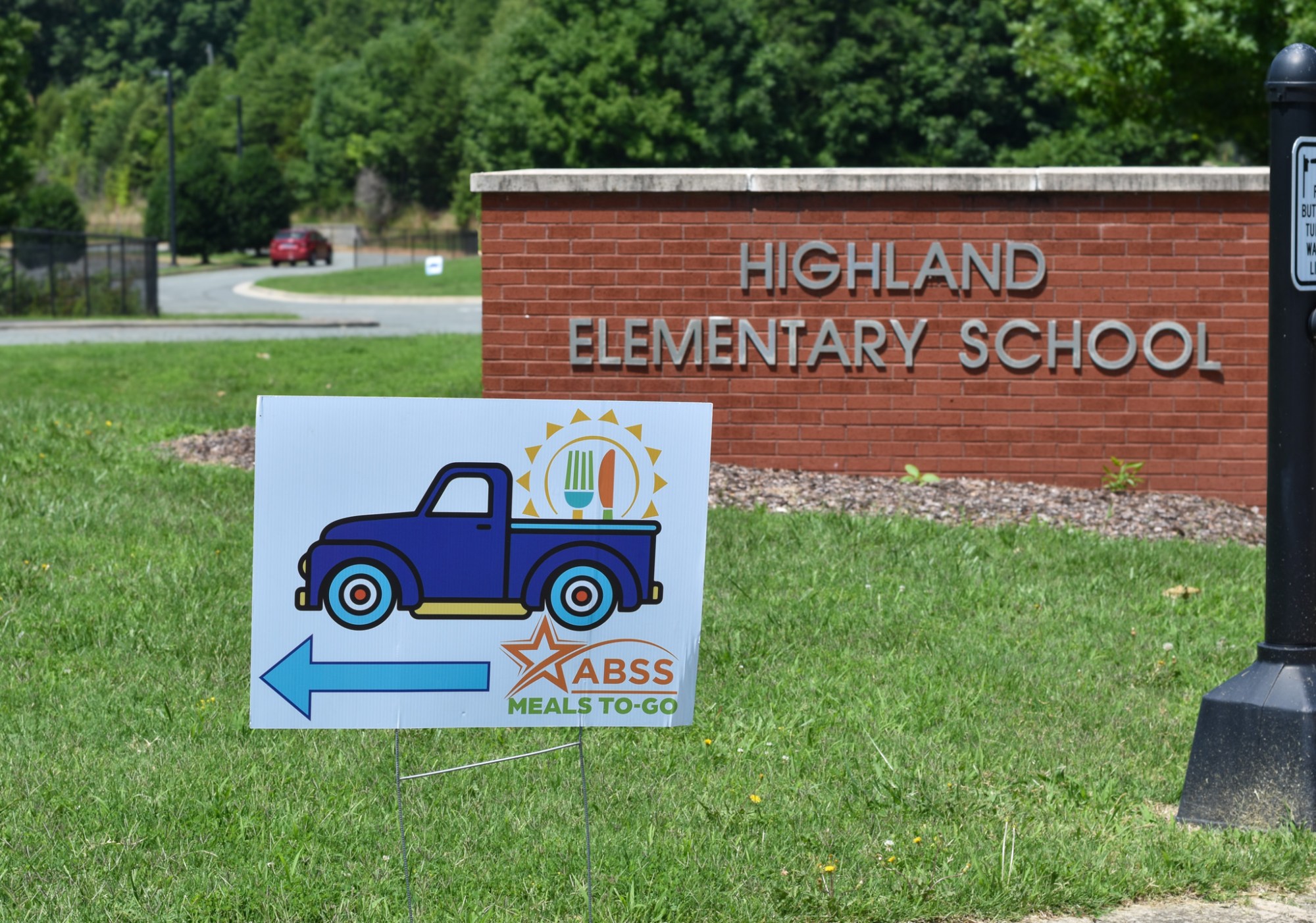
At the back of Highland Elementary School on a hot Thursday morning, a handful of families were already lined up waiting in their cars for summer meal pickup.
Deborah Oxendine is the manager of Alamance-Burlington School System’s summer non-congregate meal program, also known as Meals-To-Go. She stood under a bright red umbrella, checking people’s names off a list as they drove through the carpool line. Then, she yelled out the number of children in the household to her teammates.
For each child, staff grabbed a kit with seven days worth of shelf-stable breakfast and lunch food and seven days worth of frozen breakfast and lunch food. They put them in boxes and loaded them into cars.

One of the carpoolers picking up food was Oxendine’s own daughter, Racheal, a local third grade teacher at Andrews Elementary School. Her 5-year-old son will start kindergarten at Highland in the fall.
“As a teacher, we don’t make a lot of money,” Rachael Oxendine said. “The fact that my son is able to get food throughout the summer – no questions asked and free – is awesome.”
Overall, nearly one in five children are food insecure in Alamance County, according to data from Feeding America. At least 26,400 or 15.1% of residents here face food insecurity, 7,230 of them being children. The summer break exacerbates the challenge.

In ABSS, more than half – about 60% – of its nearly 23,000 students are eligible for free or reduced meals, School Nutrition Executive Director Spencer Brown said.
Unlike during the school year, households with children under the age of 18 — whether they’re enrolled in ABSS or not — are eligible for either weekly Meals-To-Go and the daily on-site meals.
When the school year ends, the North Carolina Department of Public Instruction estimates more than 850,000 children in the state lose access to their main source of food, including more than 13,000 in Alamance County.
“We’re currently serving almost 9,000 breakfasts, over 13,000 lunches and 2,500 snacks on average a week,” Brown said. “During the school year we serve around 16,000 lunches a day and probably 8,000 breakfasts a day total, plus any snacks.”
ABSS isn’t the only one stepping in to keep children fed during the summer months in the county. Complementing these efforts are grassroots community groups and nonprofit organizations that create a patchwork system to address local food insecurity.
Some organizations like Fruit Tree Ministries in Burlington and First United Methodist Church in Graham partner with the school system as daily congregate meal sites – places where children are served free meals to eat with others. Others, like SAFE Alamance, have their own summer feeding program in addition to their regular food pantries and other free food distribution resources.
Even with the large number of food initiatives in Alamance, reaching vulnerable communities this time of year has hurdles.
“It’s a lot harder to reach a good portion of the children [in the summer] because everyone congregates in schools,” N.C. Cooperative Extension Office Family and Consumer Science Agent Sara Roscoe said in an interview.
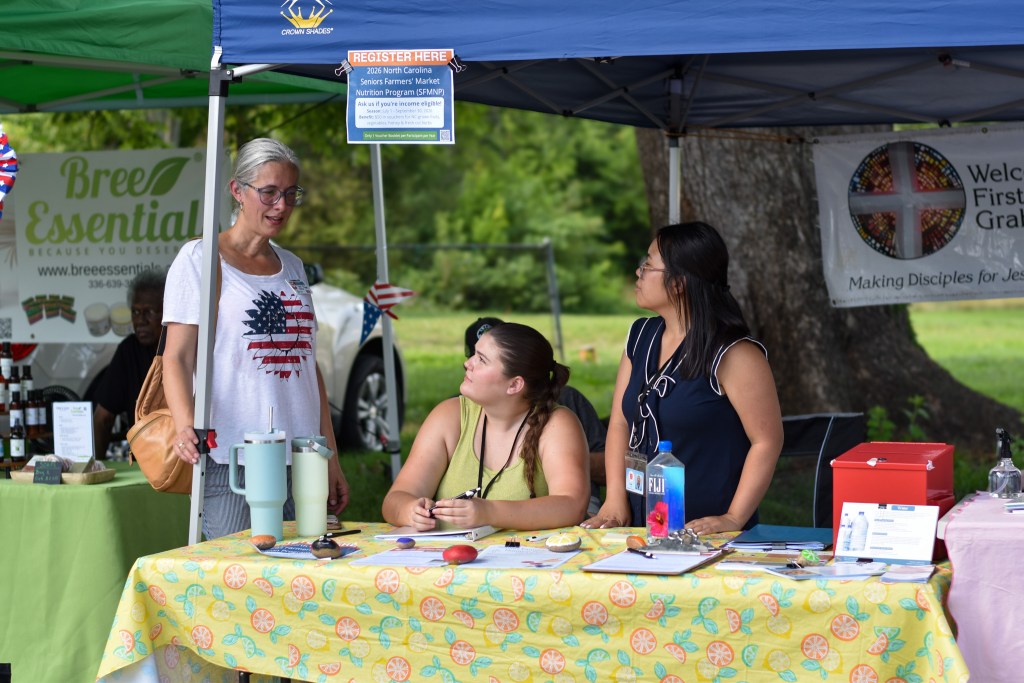
“Parents are working, trying to manage childcare for younger siblings or older parents, or whatever is happening in a family structure. But we want to make sure they still have access to good food for their kids.”
Despite a strong base of year-round food resources in Alamance County, accessibility remains an issue. People in rural parts of the county and families with work obligations during operating hours may struggle to find food options.
The United Way’s Alamance County Resource Map is a visual representation of where year-round food resources are clustered, mainly in Burlington and Graham. This leaves gaps in the northern and southern parts of the county where people might not have reliable transportation.
“Many challenges in our community stem not from a total scarcity of resources, but from systemic barriers to information and accessibility,” United Way Alamance County executive director Shereá Burnett said in an email to The Alamance Fabric.
Burnett and her staff, in partnership with the N.C. State Extension and local community foundation Impact Alamance, developed an initiative called the Food Providers Network. It’s a collective of community leaders, nonprofits, churches and other organizations dedicated to fighting food insecurity to coordinate efforts and maximize reach.
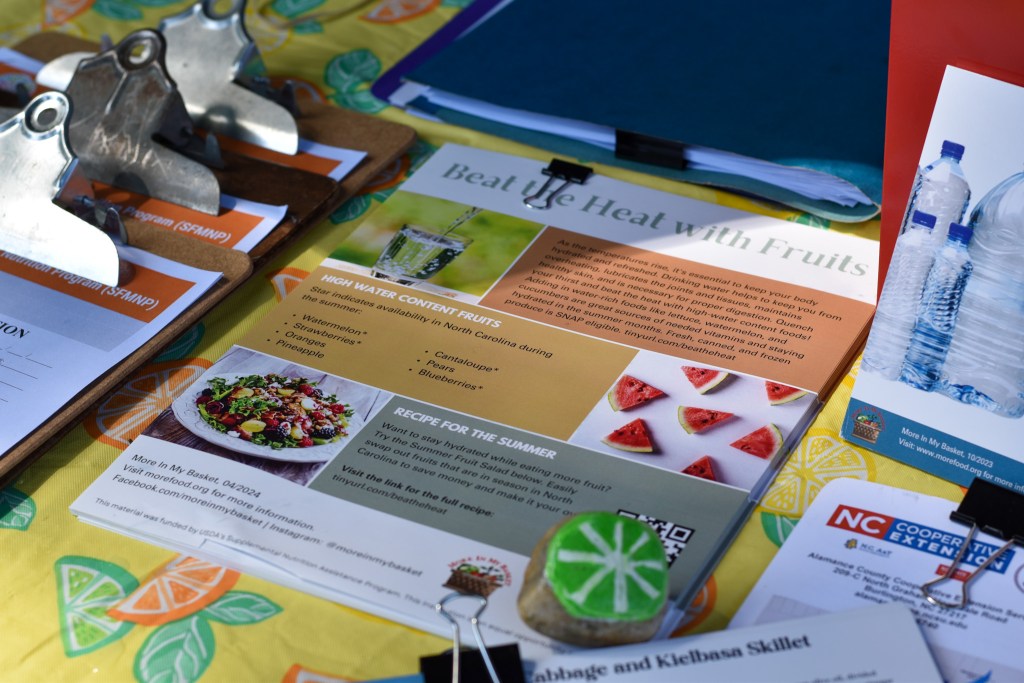
The goal of the new network is to foster collaboration, information-sharing, and partnerships between these free food providers – registered organizations, grassroots groups and individual citizens alike. It creates a space where they can coordinate things like locations, mobile routes, types of food, dates and times.
“Because most local pantries existed before this network was established, our focus is not on launching new pantries, but on preventing duplication in already saturated areas,” Burnett said. “We hope aspiring organizers will connect with us early so we can share existing resources and strategically coordinate efforts.”
Alamance County families searching for immediate access to food this summer can use the map below to find free food available now through August 24. The map can also be used by community members seeking to donate money and volunteer their time, or wanting to understand where gaps in food access are and who is filling them.
About this map
- Sources: Alamance-Burlington School System, United Way Alamance County; N.C. Cooperative Extension, Alamance County; nc211.org; safealamance.org; Alamance Community College
- Did we miss a resource or have the wrong address or hours? Please email laura@alamancefabric.org and let us know.
- Editor’s Note: AI was used in the completion of some of the data fields (such as address and hours) for this project. See NC Local’s AI policy for more information.