
Growing up in the textile mill town of Stanley, newspaper boy Michael Bradshaw delivered copies of The Gaston Gazette to neighbors. He would collect his customers’ subscription money, then take the dimes he earned from his delivery route and donate them to a special cause: buying a battleship.
In 1961, Bradshaw and other schoolchildren across the state donated their dimes to buy the battleship North Carolina from the US Navy. The effort was a crowdfunding campaign before crowdfunding was a thing.
“I’m sure I’m sent in half-a-dozen, eight, dimes packages,” Bradshaw said.
Thousands of students raised more than $330,000—about $4 million in today’s dollars—to help purchase the ship.
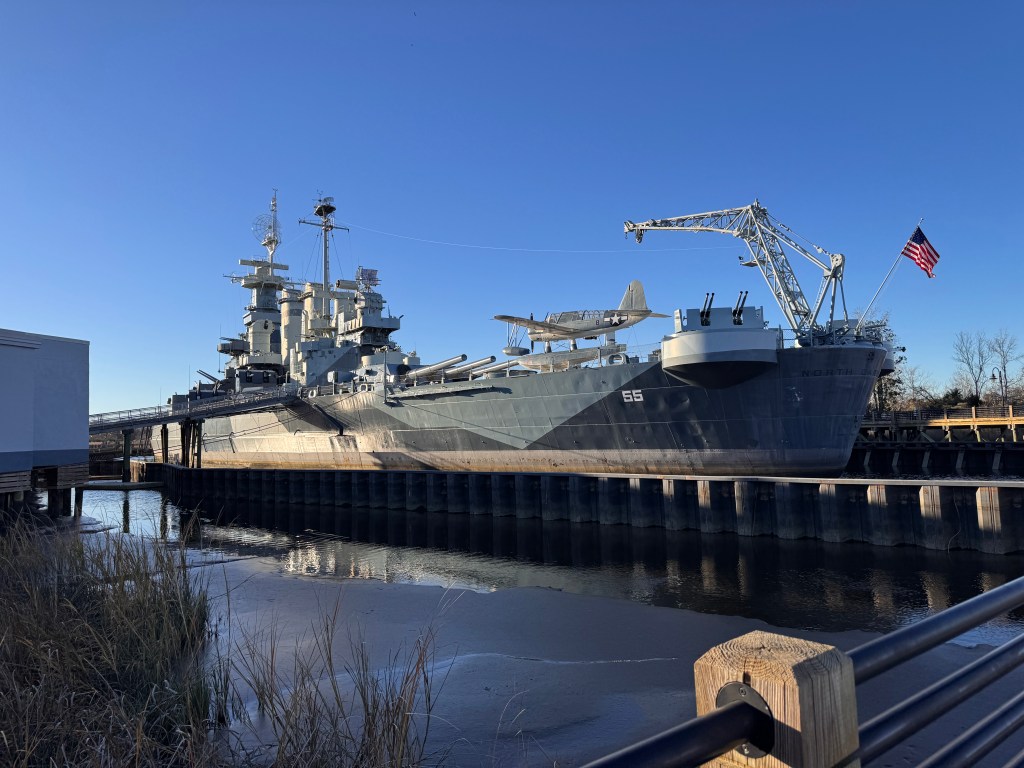
Six decades later, the battleship crew is looking to reconnect with those original donors and to honor them for their efforts to give the ship a new life.
Battleship Executive Director Jay Martin took over managing the ship in 2024. He said the dimes campaign was a recurring theme during trips as the new ambassador for the ship.
As part of his efforts to curate and preserve the history of the ship, Martin and the crew began asking for the stories from those original donors.
“People would tell remarkable stories about how they raised money for the battleship,” Martin said.
Because if it wasn’t for those donors, the state wouldn’t have the battleship as the state’s memorial to the 11,000 men from North Carolina who died in World War II.
‘Save our ship’
The USS North Carolina was the workhorse in the Pacific Ocean during World War II. The first of a new class of fast battleships, she protected aircraft carriers and amphibious landings. She was at every major campaign of the Pacific War, earning 15 battle stars–the most of any American battleship in the conflict.
But after the war, the Navy began drawing back the fleet. The battleship served as a training ship for a time, then the Navy deactivated her, and sent her to New Jersey, laid up in mothballs. In reality, she was waiting to be broken up.
A Wilmington veteran, James Craig, found out about the scraping plan, and sprung into action. In 1959, he organized a committee of fellow veterans at his local American Legion post to figure out a plan to save the ship from the scrap heap.
Craig enlisted the help of then-Gov. Luther Hodges to create a committee to work on saving the battleship. Following guidance from the state of Texas, which purchased the USS Texas to save as a museum ship, the committee went to New Jersey to meet with the Navy and inspect the ship.
By 1960, Gov. Terry Sanford was asked the Navy not to scrap the North Carolina. The General Assembly created the first-ever battleship commission, led by famed photographer Hugh Morton. He took on the task of leading the fundraising effort.
And the dimes donors led the way.

In 1961, the commission began the “Save Our Ship” campaign, sending out envelopes and cans to collect dimes and nickels from schoolkids, with the goal of getting schools from all 100 counties to participate.
Martin said, the campaign not only connected with the school children, but with their parents who served or lived through the war.
“What was particularly remarkable about it wasn’t just the number of people who said they gave money to save the battleship, it was the innovative ways they came up with to raise money and the sacrifices they made to save the battleship,” Martin said.
Martin said many kids either had jobs or came up with jobs to allow them to raise money.
“We had one donor who told us that her father asked her to sing a song, and when she sang a song, he gave her a dime,” Martin said, “and then he took her to the neighbors and to the relatives, and she made quite a bit of money.”
Others worked in farm fields and sacrificed money for school clothes and supplies to donate to the cause, Martin said. Some families even sent extra money with their kids so others who couldn’t afford to give felt included in the effort.
Sharon Wicker Johnson, who grew up in Lee County, remembered how her father, Rep. J. Shelton Wicker, a state House member, was part of the legislative effort to save the ship.
“It was a big effort in our house,” she said.
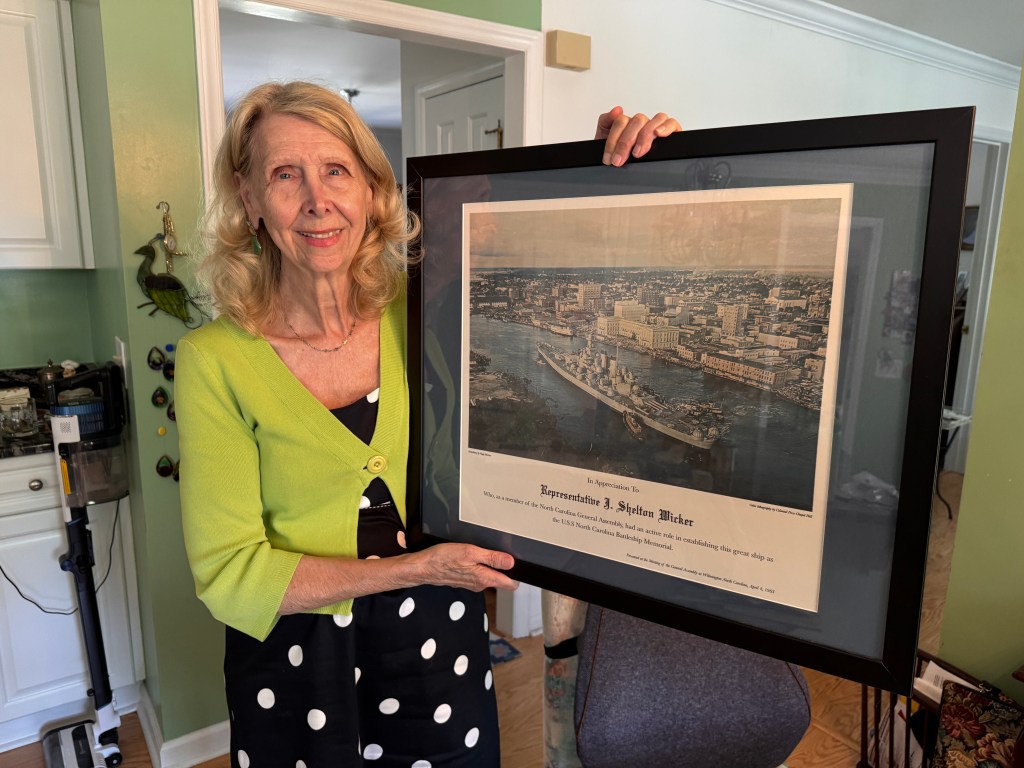
Johnson has a photo, taken by Hugh Morton, of the battleship being towed up the Cape Fear River in 1962, that hangs in her beach house. Sharon’s brother, Dennis, followed his father into public service, serving as the state’s lieutenant governor.
A major impact on their lives
Bradshaw, now a retired banker, didn’t end his support of the ship with his paper route contributions. He went on to serve the vessel in another capacity: As chairman of the USS North Carolina Battleship Commission—a full-circle moment. He stepped down from the commission in December 2025 for health reasons.
Bradshaw said it is important to reconnect and recognize the original donors who are still around in a meaningful way.
“The motto we had as a commission was we are preserving the ship for our grandchildren, our great-grandchildren, and our great-great-grandchildren,” Bradshaw said.
When Martin and the crew started collecting the dimes donors’ stories in 2024, they discovered a throughline: The lasting impact the effort had on those people’s lives.
Of those who sent in their story, about 60 percent said it was one of the greatest things they accomplished in their lives, Martin said.
“I’m fascinated by how significant an event this had to be for North Carolinians of that age group…that it’s still the kind of thing that unites them even today,” he said.
The battleship celebrates its 65th anniversary of being a memorial and museum ship. The crew is hosting a “berthday” party on Oct. 2-3 and they are inviting dimes donors to join the celebration.
Were you a dimes donor? Share your story at the battleship website.
Disclosure: McNeely is a member of the Friends of the Battleship North Carolina.