Tucked into North Carolina’s recently enacted budget is a $3.2 million allocation to the Alamance-Burlington School System. But the funds won’t help solve the district’s present budget needs.
Instead, the money, which was rejected by New Hanover County Schools last year, is designated for a new artificial intelligence school safety pilot program.
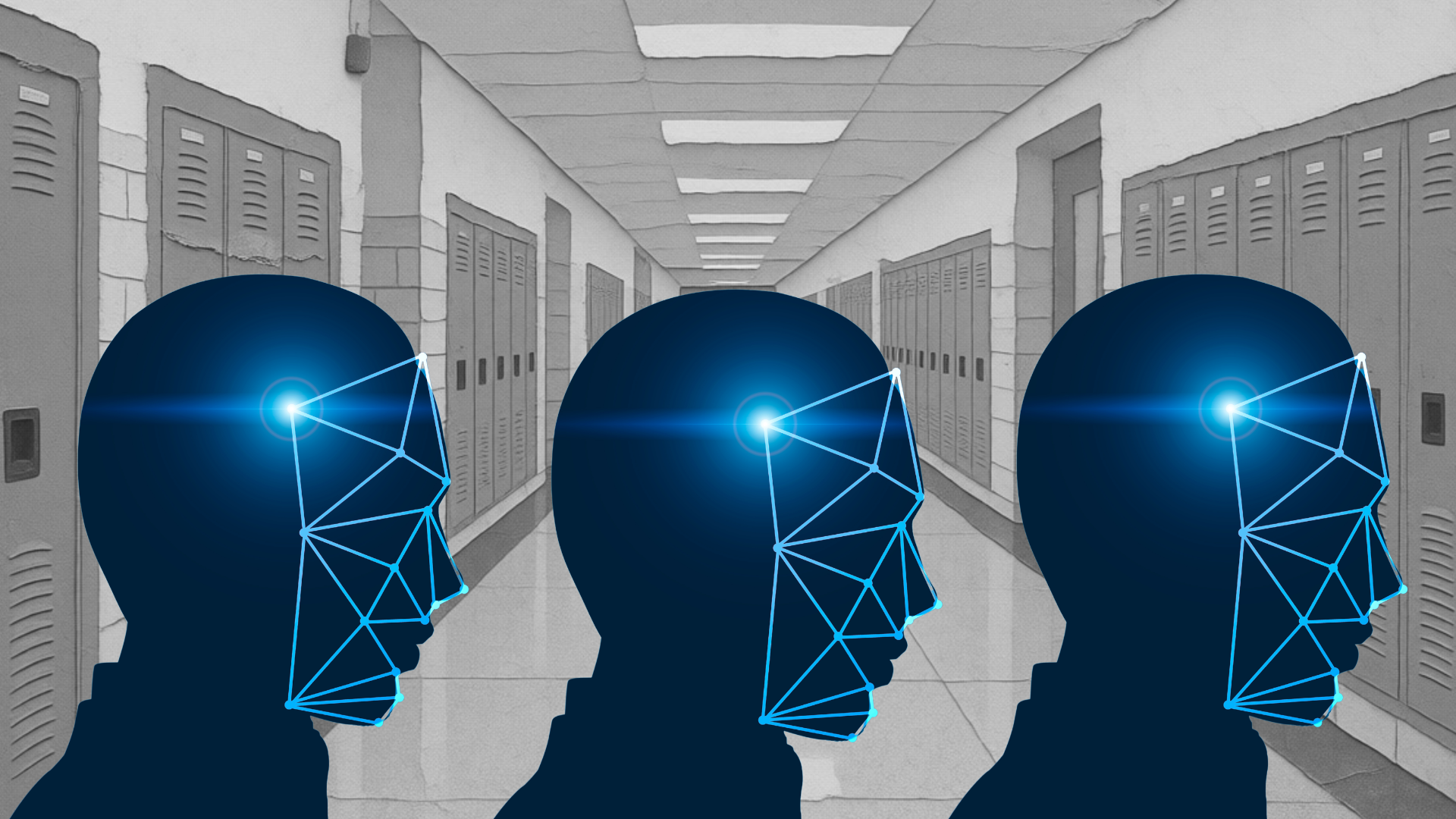
The program, operated by French tech firm Eviden, would incorporate AI software into schools’ existing surveillance cameras, video management systems and alerting protocols. Its safety features include threatening object detection, intruder detection, facial recognition and license plate readers.
Eviden has yet to present the program to the school board, according to ABSS spokesperson Emily-Lynn Adkins.
“We are still in the very early exploration phase with the company,” Adkins stated to The Alamance Fabric via email. “This has not been presented to the Board of Education at this point. We are continuing to gather information, and discussion with the Board will be in the next steps.”
If the ABSS board votes to accept the funding, the school district would become just the second system in the state to participate in the pilot, joining Davidson County Schools.
Davidson and New Hanover diverge on pilot funding
The state budget measure, first passed by the legislature in 2023, allotted $2 million to Davidson County Schools and $3.2 million to New Hanover County Schools.
Lawmakers later added a requirement that both systems contract with the same vendor and stipulated that the vendor would be determined by “the first public school unit to enter into a contract for a school safety solution.”
Davidson County Schools approved the AI pilot program by a 4-1 vote in February 2025 and awarded the contract to Eviden, according to reporting by WFDD. Davidson County Board of Education member Sherry Koontz represented the lone vote against the program.
Speaking with the Alamance Fabric, Koontz cited this year’s nationwide security breach of the educational platform Canvas, used by all 115 North Carolina public school systems, as evidence that students’ personal data is under constant threat. Koontz said she has no faith the AI software provided by Eviden will adequately protect the very sensitive data it collects on students, faculty and staff.
“I don’t trust that AI will be able to secure private information from people who intend to use it in a harmful way,” Koontz said. “The AI [pilot program] will be using live tracking and monitoring of our students, which could lead to consent issues.”
Davidson County Schools Executive Director of Operations Chris Johnston declined to comment on the pilot program.
The New Hanover County Board of Education also split over the decision but ultimately rejected the funds in March 2025, WHQR reported. Libertarian David Perry joined Democrats Tim Merrick and Judy Justice, along with Republican vice-chair Melissa Mason, to defeat the measure by a 4-3 vote.
Perry told The Alamance Fabric he objected to the no-bid contract given to Eviden and held deep concerns about the loss of personal privacy for the district’s students, teachers and administrators in the district. He also questioned how biometric data would be managed.
“At some point, you have to draw the line and say, ‘I don’t want to live in George Orwell’s 1984,’” Perry said.
The state budget passed earlier this month substituted ABSS for New Hanover County Schools. The bill’s two sponsors, Mike Lee (R-New Hanover) and Steve Jarvis (R-Davidson), did not respond to requests for comment.
Other school systems in the state have also wrestled with how to balance safety needs and privacy concerns.
In May 2023, Durham Public Schools Board member Millicent Rogers was part of a majority that voted to cancel the district’s contract with Gaggle, AI software used by school systems to monitor student activity on school devices.
Rogers said the board’s decision was based on the erosion of trust and a culture of surveillance.
“If a student had a suicidal ideation and wrote about it in a book, a poem or essay, [Gaggle] would alert law enforcement to go immediately and knock on that door,” Rogers said. “In the past, if something had happened at school, we would get a social worker involved. But with Gaggle, we had no control over that.”
Experts weigh in on pilot’s potential issues
Emily Wenger, a professor at Duke University’s Pratt School of Engineering, pointed out that North Carolina currently has no legal guardrails to prevent a third-party vendor from owning and potentially profiting from a child’s biometric data. The AI pilot program also doesn’t include a way for people to opt out of data collection.
“How do we give people a choice over whether they are or are not enrolled in AI systems?” she asked. “And there is no agency here for kids or whoever is in the orbit of the school and has to be enrolled in this system, which may or may not be the most accurate.”
The multiparty alliance that defeated the measure in New Hanover County may not be unusual. Jolynn Dellinger, a senior lecturing fellow at the Duke University School of Law, said personal privacy in the digital age has largely become a bipartisan issue.
“There are a lot of people who, when they truly understand how their data is being collected and possibly used to the benefit of a third party like a company, and possibly to their detriment, they are more of a privacy fan than they thought,” Dellinger said. “The problem when it comes to the collection of this data is it’s often opaque; it’s obscure.”
Dellinger said AI tech firms like Eviden should be transparent when working with local school systems because its software collects children’s biometric data. While she understands the desire of government leaders to make schools safer, she believes that effort shouldn’t come at the expense of basic freedoms.
“It’s scary to think about sending your kid off to school and that some horrible thing could happen,” Dellinger said. “But I think that also means there’s a market and an audience for these kinds of technologies that can be exploited.”
Eviden did not respond to requests for comment.
Wenger said AI technology is often used as a cudgel to address fears surrounding school violence but isn’t as effective as a carefully thought-out solution to the problem.
“School shootings are a massive tragedy, and we should do as much as we can to prevent it, but I’m not convinced that these are the solutions that will actually solve that problem,” she said.
Anupam Das, an assistant professor of computer science at N.C. State University, said facial recognition software has traditionally yielded significant false positives, especially among marginalized groups.
Das cited a 2018 study, conducted by researchers at the Massachusetts Institute of Technology, that concluded facial recognition technology misclassifies Black women almost 35 percent of the time. The error rate for Caucasian men was less than 1 percent, which Das said is evidence of racial biases built into facial recognition algorithms.
Districts like ABSS should ask tough questions of vendors regarding the handling of biometric data before proceeding, he said.
“Ideally, the school district would have a privacy-preserving setup where the data stays localized,” Das said. “So the school can own some of the [data storage] equipment. Then, have the algorithms locally run instead of being kind of tunneled into clouds or other countries where they might be used for other purposes.”
Correction: This story was updated to reflect the party affiliations of New Hanover board members.