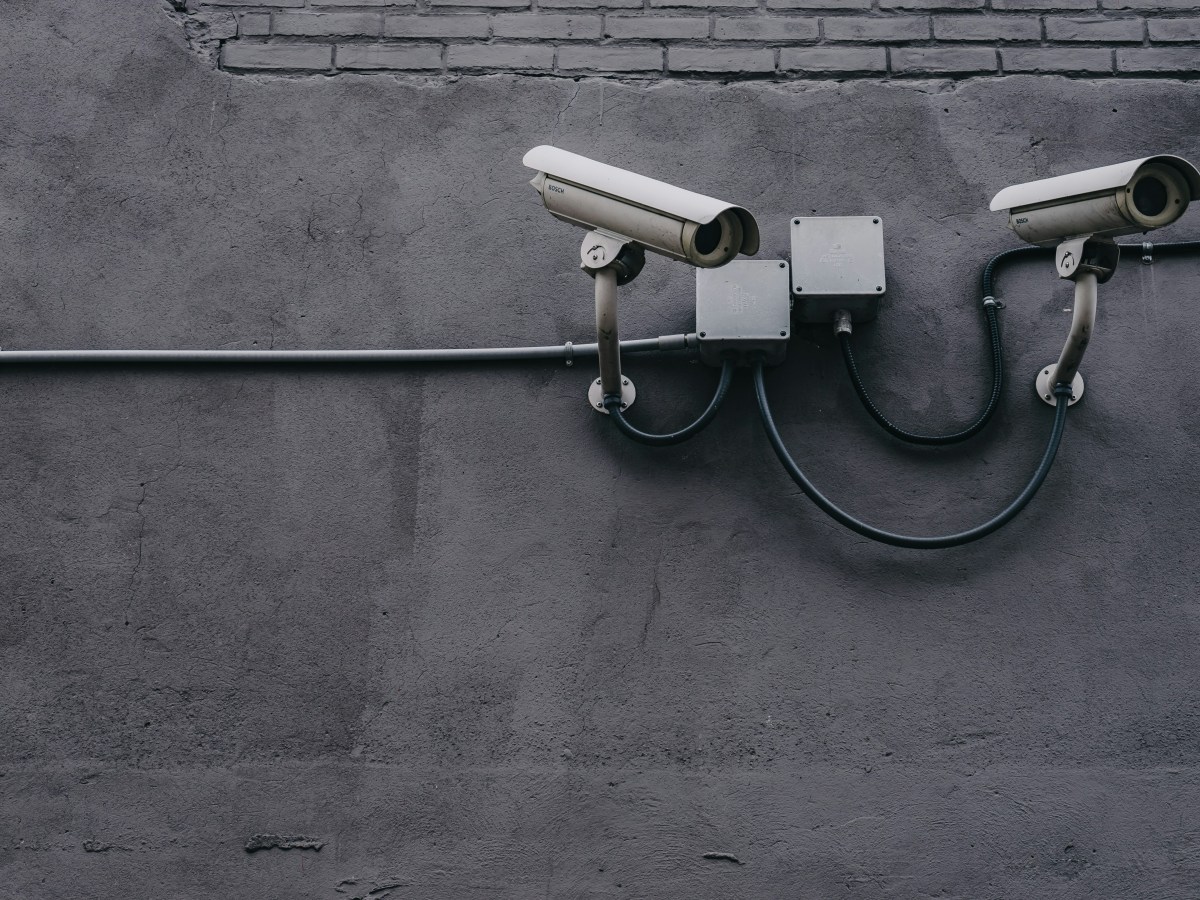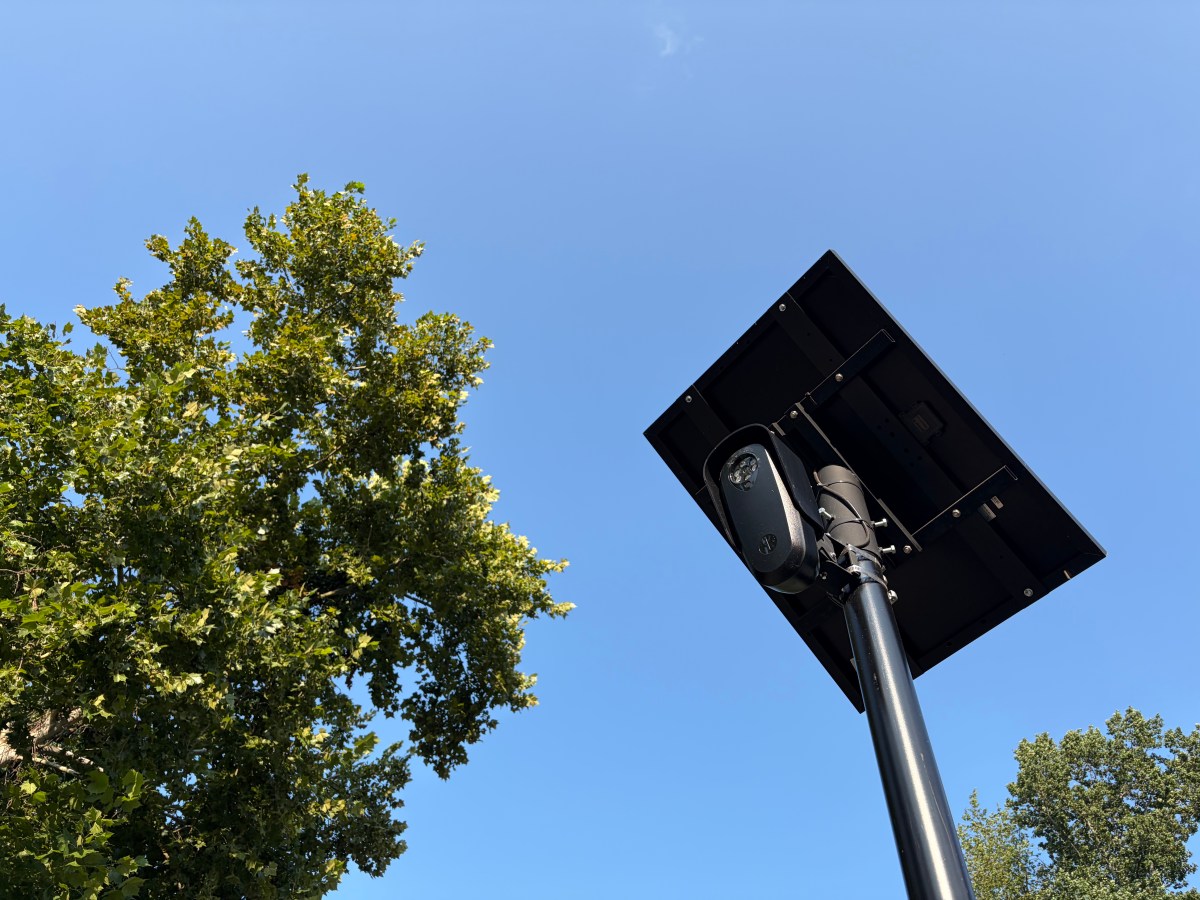

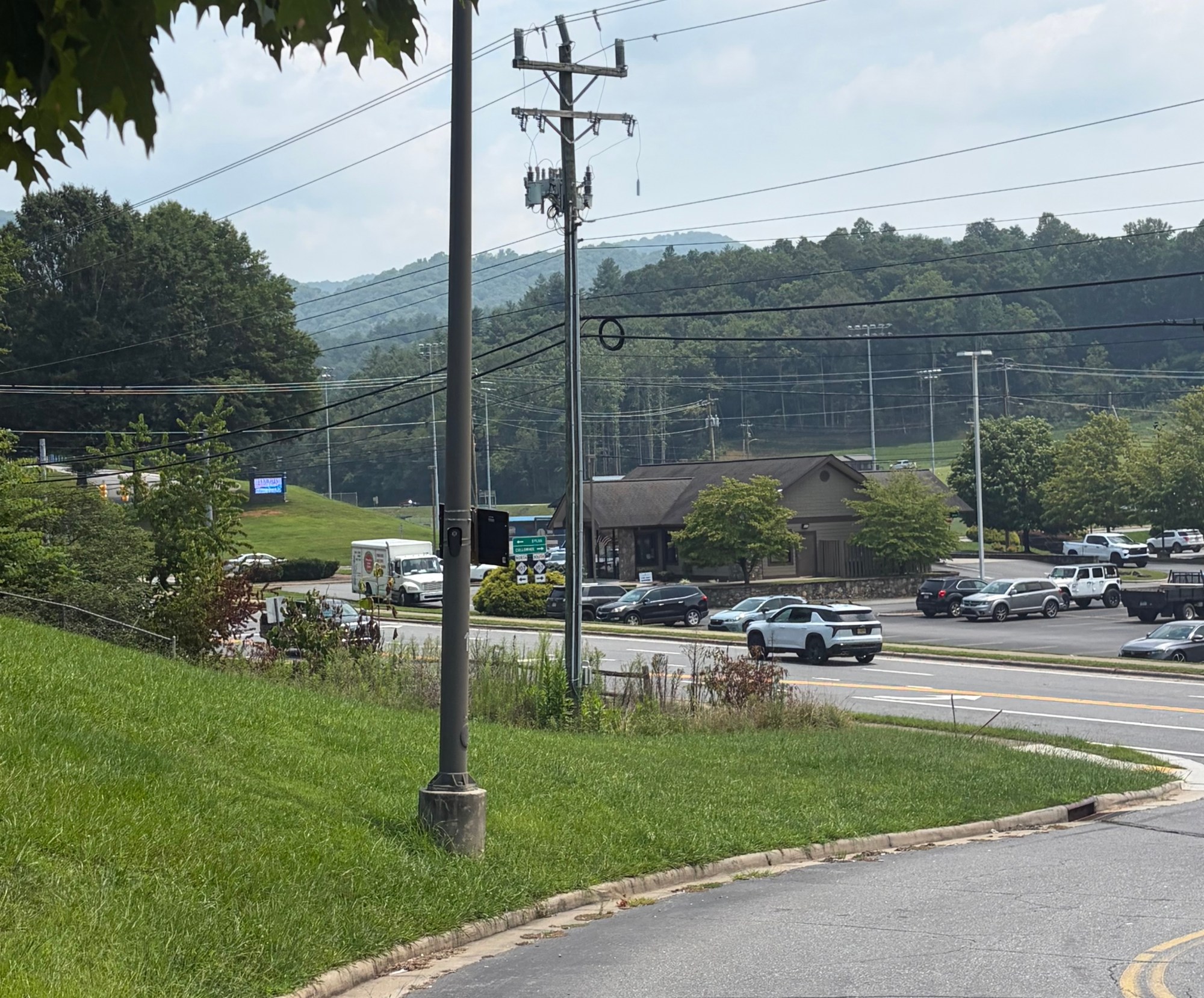
The idea of surveillance cameras in Western North Carolina is causing a ruckus — even in places where no cameras are installed, underscoring the heated controversy around video surveillance tactics by law enforcement agencies.
Last week, the Town of Franklin issued a public plea to stop threats to public officials over Flock cameras. But the town doesn’t have any of the cameras installed by the company Flock Safety, Franklin Town Manager Amie Owens confirmed in a press release. Owens also said the town council has not budgeted for any in the future.
“Specific threats made to individual officials are very rare, and I’m not aware of any previous ones in the town of Franklin since I’ve been town attorney,” John Henning Jr., who has served as town attorney since 2006, said.
The threats may have been backlash against automatic license plate reader cameras in Macon County, where Franklin is located.
Macon County commissioners recently voted unanimously not to renew a contract with Flock Safety for the 12 cameras operated by the Sheriff’s office following a lengthy public comment session where residents expressed privacy and cost concerns.
At the meeting, Sheriff Brent Holbooks said the cameras free up officers’ time for other work.
One public commenter, Nicole Miller, underscored the importance of her privacy, noting that she didn’t want to share her phone location with her mother.
“To tell you the truth, I love my mother, but I’m 45. I don’t want my mother to know exactly where I am at every single moment of the day,” Miller said. “I love my government, but I don’t trust you as much as I trust my mother.”
“I love my government, but I don’t trust you as much as I trust my mother.”
Nicole Miller, Macon County
Flock representative Alex Guth spoke at the meeting to address questions around data ownership and protections against system abuse.
“At the end of the day, we protect the data and how it’s accessed. You own your data. You can choose how you manage and who accesses your data completely, it’s your right to do that,” Guth said.
Commissioner John Shearl, a staunch libertarian, remained unconvinced.
“I don’t mean any disrespect, but you are like a car salesman,” Shearl said.
“Don’t tell me the American people are protected from your system, sir, because we’re not. And it’s a shame that we have to sit here and argue with people that we trust and we respect to keep our rights,” Shearl said.
The commissioners deferred to school system leaders on the question of whether license plate readers will remain on school grounds.
What kind of surveillance technology is used in NC?
In public discourse, “Flock” has become a catch-all term for a variety of surveillance cameras including those with facial recognition ability, automatic license plate readers (ALPRs) and other biometric capabilities.
Flock Safety is a Georgia-based company valued at $8.4 billion that has built a network of more than 120,000 cameras across 49 states, according to CNN. The company makes a variety of cameras, automatic license plate readers and other electronics that “combines video, gunshot detection, and investigative software.”
Cities and counties across the country contract with Flock and its competitors to allow law enforcement to use video footage and license plate tracking to investigate crime. These private companies install cameras and other technology which is made accessible to law enforcement.
Critics say the cameras may violate civil liberties and create privacy concerns.
Liz Barber, public policy director at the North Carolina ACLU, said the technology needs to be limited in order to protect people’s rights.
“It’s a pretty core civil liberty principle that people shouldn’t be tracked, followed, cataloged, analyzed by the government without individualized suspicion,” she said.
“And so just like one for enforcement can’t put a tracker on your car without a warrant, they shouldn’t be able to log into a computer system and essentially track you and get the same information that they’d be able to get from placing a tracker without a warrant.”
A Flock spokesperson told NC Local that their license plate readers capture “still, point-in time images of vehicles in public view.”
“More than 40 courts across the country have determined that fixed license plate readers do not violate the Fourth Amendment and cannot track [the] whole of individual’s movements,” a spokesperson wrote in an email.
At the federal level, agencies such as ICE and Border Patrol have used data obtained from Flock technology to arrest immigrants, according to the ACLU – a claim which the company denies.
ICE does not have direct access to “Flock cameras, systems or data,” but the company has “federal customers” like the National Parks Service which share with other law enforcement agencies, according to its website.
Critics have expressed concern about the ability of law enforcement to access footage and information from other jurisdictions.
Flock hosts a partnership network and has a “National Lookup” feature which allows agencies to search cameras across the country. In June 2025, Flock updated the tool to remove California, Virginia and Illinois because these states no longer allow organizations outside of the state to access their systems.
A Flock spokesperson told NC Local that the partner network is optional.
“Customers control their own sharing settings through the Flock platform. These sharing relationships are opt-in and can be changed or revoked by the agency at any time,” a spokesperson said in an email.
In January 2026, Flock updated its settings so that any law enforcement agency can now turn off all Federal Sharing “with a single toggle in Admin Settings,” according to its website.
Assessing the access by different agencies remains challenging, according to a study conducted by the University of Washington.
“Discrepancies between Flock audits and other documentation make it impossible for independent researchers to determine the current scope of local organizations’ access and exposure to searches by other Flock users nationwide,” the study said.
This week, the State Bureau of Investigation arrested a Charlotte-Mecklenburg police officer, alleging he ran an unauthorized query of an NC license plate registration. Officer Seth Elliot is being investigated for illegally accessing a government computer which investigators said he did through Flock Safety and another technology.
Elliot joins nearly 30 officers across the country who have faced repercussions for misuse of Flock in the last two years, according to Mother Jones.
How are surveillance cameras being used across WNC?
While Macon County is the most recent jurisdiction to assess the use of Flock technology, tensions around surveillance technology are cropping up across the region.
In nearby Madison County, commissioners faced scrutiny from community members including a group called Madison for Privacy about Flock camera funding. The county has 15 Flock cameras, according to the Asheville Citizen Times.
Neighboring Haywood County has used Flock technology since 2024, according to WLOS.
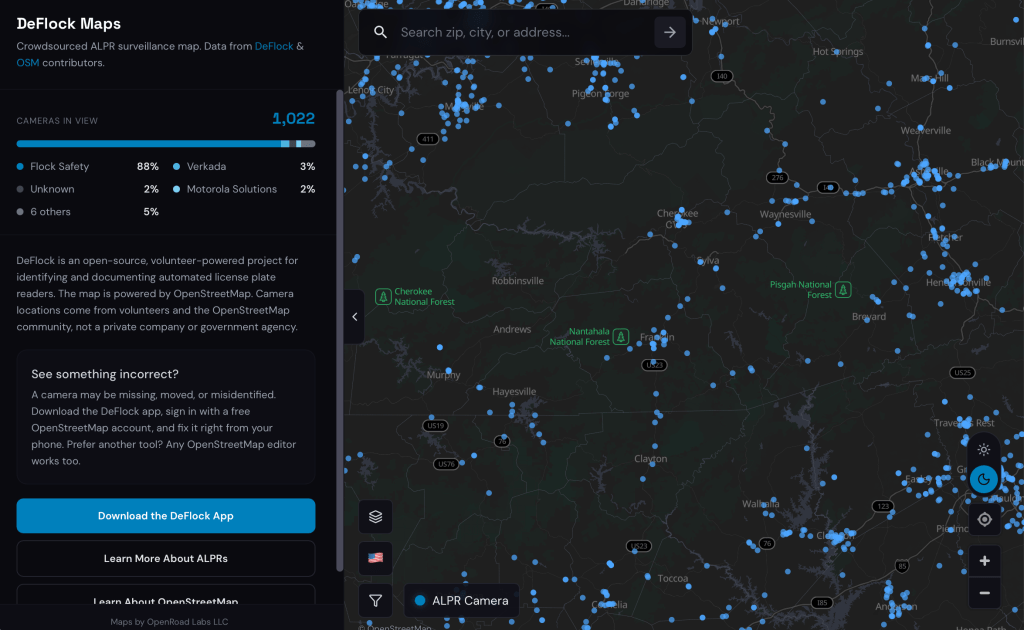
Sites like Deflock show crowdsourced data on the location of license plate readers. In the Western North Carolina region, there are more than 1,000 Flock cameras, according to the data.
The process for contracting with Flock or other similar companies may differ by county, UNC School of Government professor Jeff Welty explained.
In Clay County, for example, county commissioners deferred to the sheriff on the decision to use the surveillance technology.
“The sheriff is vested with the authority and responsibility to establish law enforcement policies, supervise personnel, and conduct criminal investigations. We do not set law enforcement operational policy, supervise deputies, direct investigations or tell the sheriff how to conduct criminal investigations,” Commission Chairman Rob Peck said, according to the Clay County Progress.
This designation between the sheriff and the county is murky, Welty said in an email. The commissioners are able to enter into contracts on behalf of the county or may delegate authority to other county officials.
“When the sheriff is involved, things can be even more complicated, because the sheriff is an independent elected official with some measure of inherent authority over law enforcement matters. The statutes simply don’t lay out with great clarity how the sheriff’s authority and the county’s authority relate to one another,” Welty said.
“As a practical matter, I suspect it is common for major contracts involving law enforcement expenses to be signed by the sheriff and approved by the county government. But different counties may have different practices, and even different ordinances or formal processes,” he said.
While local governments are divided on whether to install and use Flock cameras,the North Carolina state government is allowing more surveillance.
The 2026 state budget included a new provision to allow license plate readers on state-maintained roads across North Carolina. Previously these types of cameras weren’t allowed on major highways and other state-maintained roads, according to WRAL. The budget did not include any funding for these operations.
Barber of the NC ACLU said these cameras on state-maintained roads expand coverage and could be more complicated to remove.
“I think it’s going to be harder for people to advocate, right? The people in Macon County were able to get rid of the Macon County ones because it doesn’t align with their values,” Barber said. “However, it’s going to be hard, if not impossible, for the folks in Macon County to organize to get the SBI to cancel the contract.”
The SBI submitted a report to the legislature in April detailing the total number of license plates captured by the 17 agencies with 140 camera locations. These cameras were installed in state rights-of-way as part of the program.
The agencies from WNC that were part of the program:
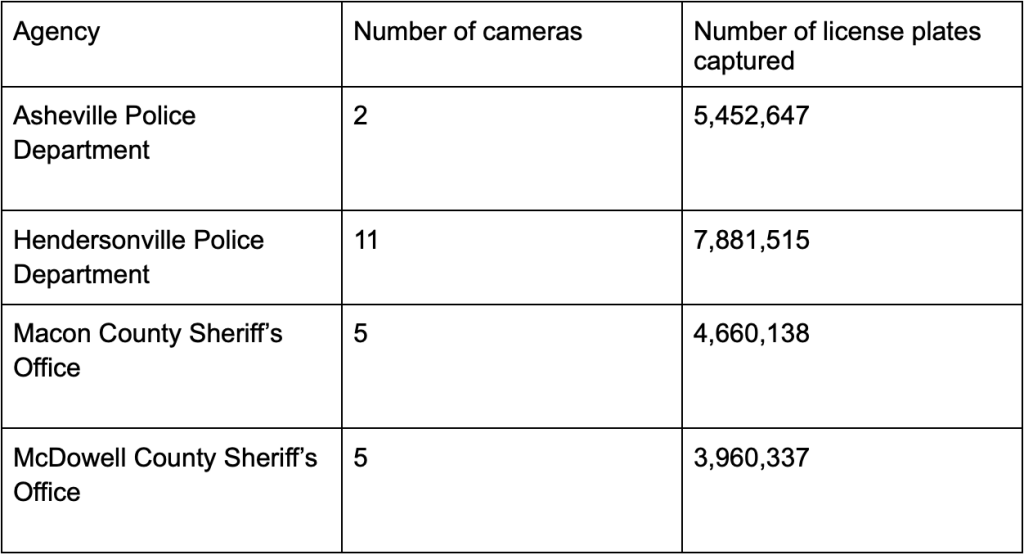
The report requested $225,000 in recurring funding for the SBI “to purchase database access to data from various vendors who sell ALPRs to law enforcement in North Carolina.” The current pilot program agencies are working with a total of four vendors, according to the report.
Next: While WNC county governments debate camera use, Asheville leaders expand surveillance technologies.