
Election Day is just around the corner on Tuesday, Nov. 3. While candidates are trying to win your vote, polls are a way for the media, researchers and campaigns to track the opinions of voters during election season. This information is regularly used in the media and by campaigns to understand candidates’ chances and the political climate. So how do you know if a poll is a trusted source?
1. Who conducted the poll?
The most important piece of information to find out is who conducted the poll. This will tell you about the intention of the poll. Chris Cooper, political scientist at Western Carolina University, explained that university or college polls are informational while internal polls for candidates often are used to support their positions.
“Somebody like Catawba College, for example. They just want to learn what people are thinking. But if it’s run by a certain campaign, guess what? They want to get and show the best outcome for their candidates,” Cooper said.
Check for disclosures about who sponsored or paid for the poll as well as who conducted it. Look for nonpartisan firms and academic institutions with a track record in polling. For more tips, check out this video from Pew Research Center: How to spot a good poll vs. a bad poll.
2. How is the poll conducted?
Polls used to be predominantly conducted through phone interviews, Centerline Research and Strategy Founder and Principal Natalie Jackson explained. As communication habits changed, pollsters have added phone automations, online surveys and text polls.
“It’s just a lot trickier to get answers and to ensure that those answers are really in line with what people think,” Jackson said, referring to online surveys.
Polls are still conducted via phone but these are more expensive, Jackson explained. The American Association for Public Opinion Research (AAPOR) also recommends looking at what questions were asked, in what order and when. For example, AAPOR said a question about gun policy might receive different responses if it’s asked in the days following a mass shooting.
Who is surveyed is also important in a poll. Cooper explained that the sample of people surveyed should be representative of the population or the total group whose opinions or attitudes are being studied.
3. What’s an exit poll?
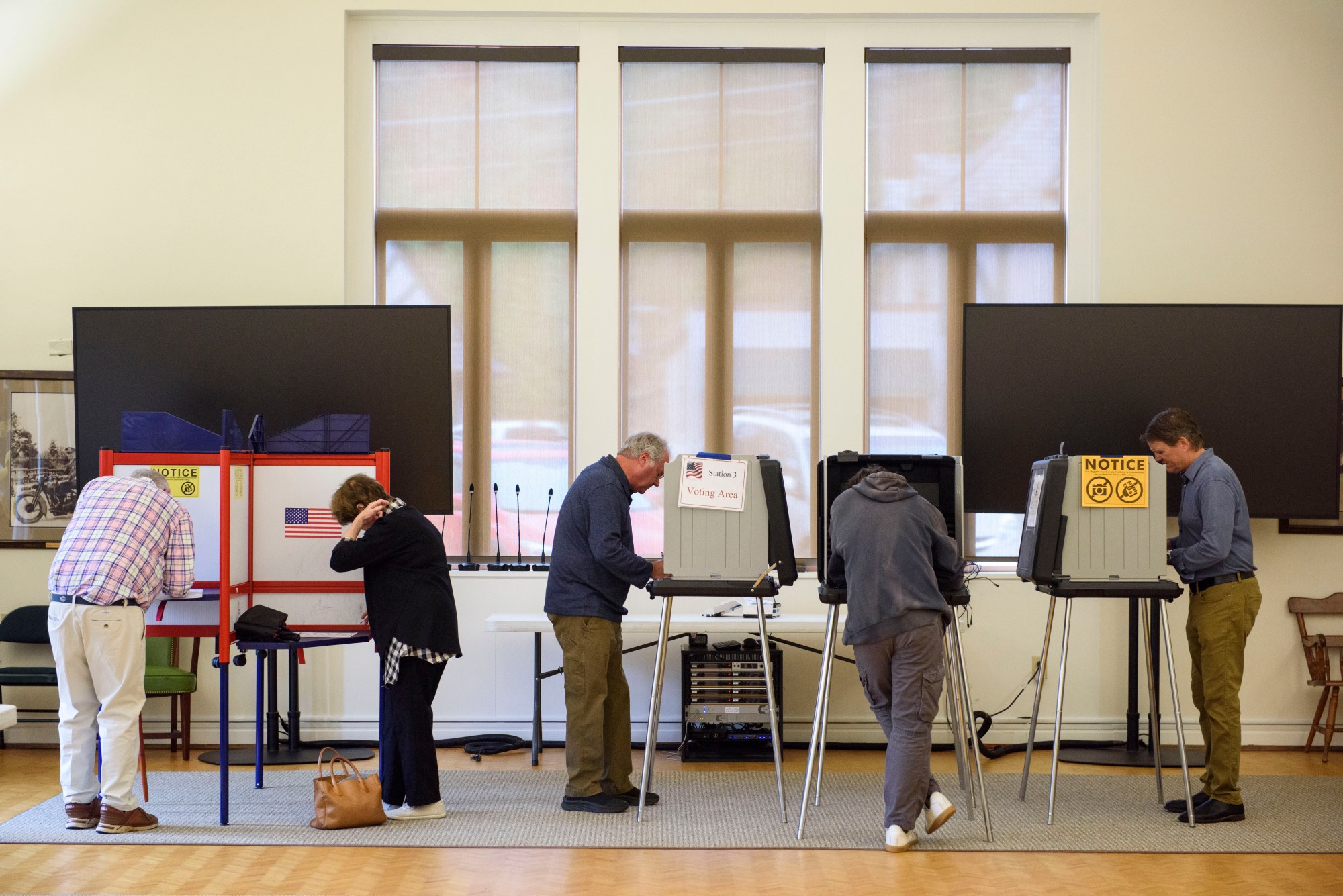
Exit polls are interviews with voters just as they are leaving the polls. These polls can give additional insight into the election such as demographic information and details from voters about why they chose certain candidates, Jackson explained.
“It’s not a predictive tool. It does go into some of the calculations on election night,” Jackson said.
Exit polls — along with the demographic and political make up for a district — can help the media make early calls for an election. However, the certified results of the election ultimately determine the winner.
4. How can you tell if a text poll is a scam?
During this election season, you might have received a text asking for your opinion with a link. These polls can look like phishing expeditions — and some of them are. Jackson warns that true polls will clearly disclose what organization is conducting the poll and how the information is being used. Most importantly, legitimate polls do not ask for money.
“If any part of [a poll] is asking for money, get out. Don’t answer it. The ask for money might be from a real place, but that means it’s not a real poll,” Jackson said.
5. What else should I look at in a legitimate poll?
- Methodology: A reliable poll should include a breakdown of how the information in the poll was collected, such as how many people were surveyed, how and where the surveys were done and how the information was analyzed. If this information isn’t available, then it is probably not a poll that you should trust.
- Weighted polls: In polling, the surveys are often weighted to account for unequal probabilities in the selection so that the poll will more accurately reflect the population, according to AAPOR. For example, some demographics might be less likely to take a survey so the result may be adjusted to match the population. This is important to understand because in some cases this can give more weight to just a few responses.
- Margin of error: The margin of error is the percentage that the poll might be inaccurate based on the way that the poll is calculated. For example, if one candidate is ahead by 2% in the poll but the margin of error is 5%, then their lead isn’t meaningful. Here’s more information on how to understand the margin of error in election polls from the Pew Research Center.
- Sample: The sample of people who are surveyed for a poll should be representative of the population that the study is trying to understand.