
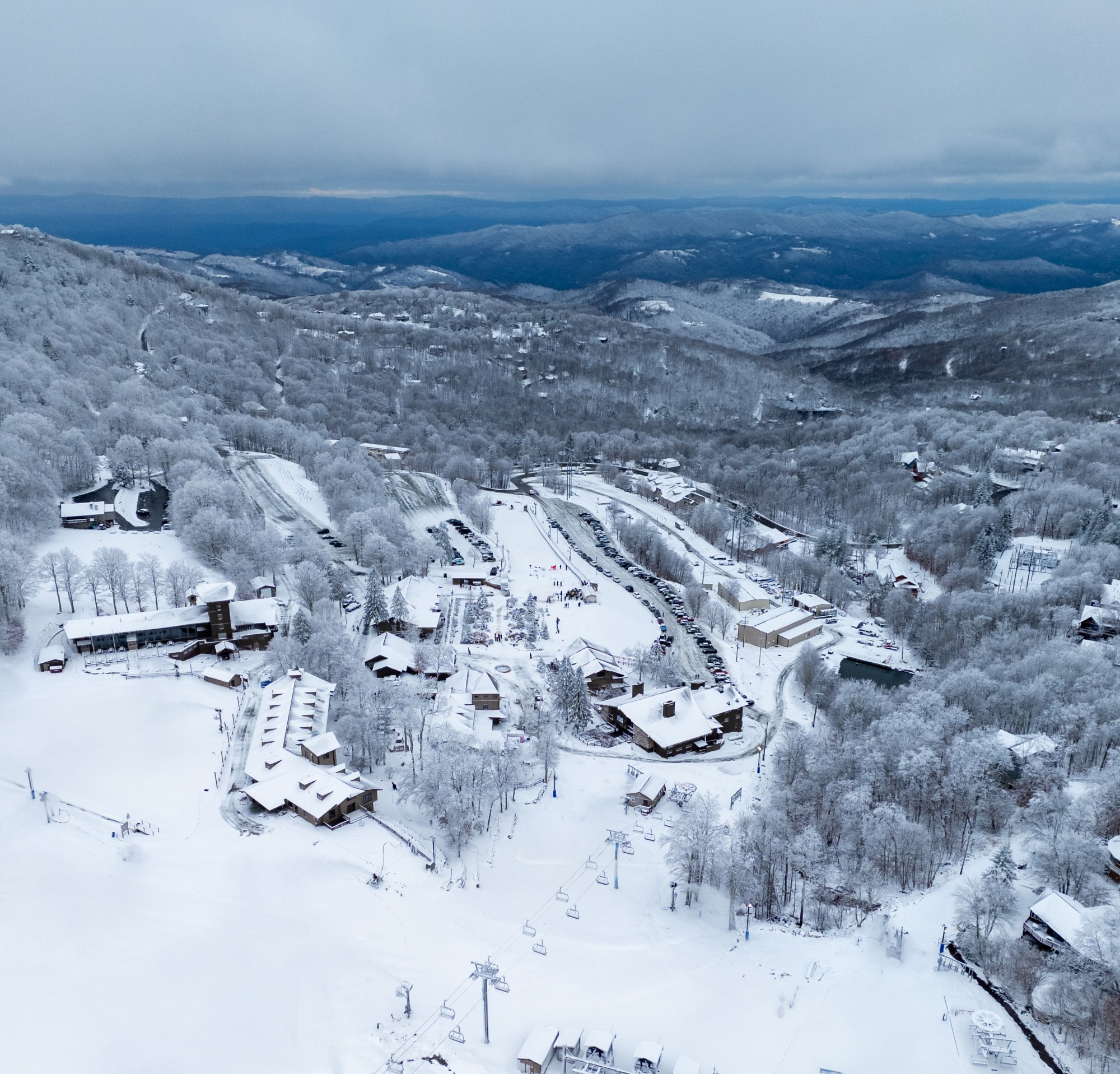
With the first flakes having already fallen in some parts of Western North Carolina, a new ski season brings hope for a much-needed economic boost to the region.
A strong El Niño system this winter could deliver heavier-than-normal snowfall totals, but there’s a troubling trend beneath the region’s tourism recovery from Hurricane Helene: Visitors are returning, yet lower spending means those economic benefits aren’t reaching everyone.
“Despite the fact that our visitor counts are relatively steady and people are here, they’re just not spending as much,” Boone Area Chamber of Commerce President and CEO David Jackson told NC Local.
That distinction matters in a region where tourism supports thousands of jobs and where many small businesses are still struggling with the financial aftereffects of Helene and the Covid pandemic.
In North Carolina, the ski industry contributes more than $244 million to the economy and attracts more than 780,000 visitors across the state’s six ski resorts each year, according to the most recent report from the N.C. Ski Areas Association. Four consecutive years of below-average snowfall — plus Hurricane Helene-related damage and closings — contributed to a decline in visitor spending of more than $300 million in the 16 most-impacted counties in 2024, according to the NC Rural Center. In 2025, visitor spending picked up but there was a loss of 2,000 tourism jobs, the center’s Helene outdoor economy report explained.
Marlise Taylor, director of tourism research at Visit NC, explained that when she examines tourism impact she considers both visitor spending and jobs.
“We want to make sure that individuals have jobs that can be sustained by visitor spending,” Taylor said. “When you have visitor spending, that is new money coming into an economy.”
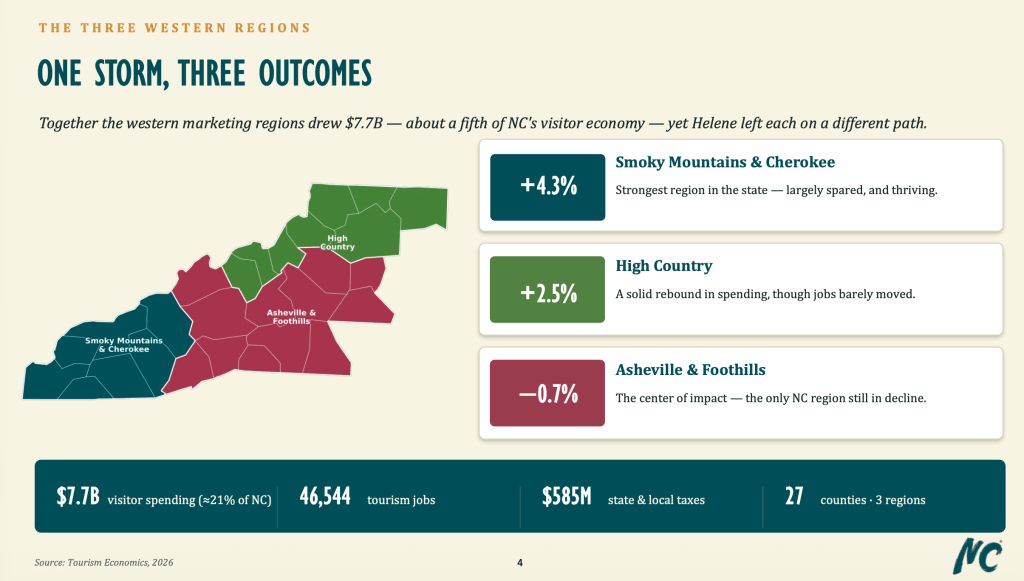
Visit NC, part of the Economic Development Partnership of North Carolina, divides the state up into 11 marketing regions – including three in the western part of the state. The year after Helen’s 2024 impact, 10 out of the state’s 11 regions experienced visitor spending growth. Helene hit the Asheville area and the Foothills region of the mountains the hardest, making it the only region to see spending decrease in 2025. The High Country saw a 2.5% increase in visitor spending, but no increase in jobs.
On top of that, the employment picture for most of North Carolina hasn’t fully rebounded from the Covid pandemic. Continuing economic headwinds in 2026 haven’t helped, Taylor said; many visitors, for example, have been opting for less expensive recreational options or traveling during off-peak times.
Small business face steep burdens
Earlier this year, North Carolina’s ski industry reported difficulty hiring employees for the season. Jackson said resorts such as Beech Mountain have largely been able to meet their staffing needs through established recruiting pipelines. For example, Beech Mountain employs about 450 people during the winter season and works with Appalachian State University and Lees-McRae College to staff seasonal employees.
“Those relationships provide a strong pool of seasonal employees, many of whom return year after year,” Talia Freeman, Beech Mountain Resort’s marketing director, said.
But the employment picture is more difficult for smaller businesses that depend on winter tourism, Jackson said. Many still struggle with reduced spending, thin profit margins and depleted financial reserves after weathering both the Covid pandemic and Hurricane Helene in the last six years. He shared Taylor’s concerns about the economic pressures facing the region.
“We knew that would be something that we’d grapple with for these few years after Helene, and we are still seeing evidence of it here,” he said.
Matty McDaniel, the manager at The Beacon, a sustainable fine dining restaurant in Boone, said every aspect of the business felt Helene’s impact.
“The local economy and people’s individual ability to spend money like fine dining definitely took a hit,” McDaniel said. “We definitely experienced some turnover in our staff due to the lack of customers coming in.”
The Beacon’s restaurant has about 30 people on staff. McDaniel said the restaurant started to see renewed visitor spending last summer. Even so, it’s been hard to maintain staff in Helene’s wake – plus dealing with rising food prices and gas prices from distributors on top of already tight margins.
“As a small business, we can only afford to have people staffed in the restaurant when people are coming to eat in the restaurant,” McDaniel said.
This month’s early snow, then, is a strong sign for the season.
“We experience a really difficult transition from October to November,” McDaniel said. “Every year, October is a boom for us in terms of how many people are visiting town and stopping in to the restaurant. November can be a bust at times so getting that winter weather out early is great.”
Jackson hopes to see more small business support in future federal recovery efforts.
“We are grateful that the governor’s office and the General Assembly have continued to prioritize small business support in the federal asks they’ve made, but we have been disappointed to see Washington not respond to that,” he said.
Extending tourism beyond ski season
Part of the solution for long-term economic recovery in Western North Carolina is an expansion of traditional tourism seasons to create a more sustainable, year-round industry for the mountains.
In the last decade, the ski resorts have also begun offering activities during the summer and fall months to extend profitability beyond the winter season, Jackson explained. Some venues offer space for weddings, corporate retreats and summer concerts.
Weather can also be a fickle industry driver. Snow in the forecast is good news for the High Country’s economy, Jackson explained – so long as icy roads don’t prevent travelers from making their way up to the powdered slopes.
“In this state, people pretty much don’t go anywhere when [snow] happens off the mountains,” Jackson said.
Over her 21 years at Visit NC, Taylor said she’s witnessed a growth in visitors during off-peak seasons. The popularity of shorter trips, fewer crowds and good weather are just a few reasons for the extended season, she said.
This September, Visit NC reported seeing revenue records across the state for both vacation rentals and hotels. Rentals revenues increased 23% compared to last September and were up 29% in the mountain region. It’s another good sign for the economy, Taylor said.
“Demand is up,” she said. “People are still traveling. But with the economic conditions, we’re still watching that. People are still being careful with what they spend.”
The prospect of more snowfall, though, is promising for this season in the High Country. Freeman, at Beech Mountain, said snow on the ground is a signal that “ski season is here.”
“Our phones start ringing,” she said, “guests begin making plans for winter, and there’s a noticeable increase in interest across the resort.”