
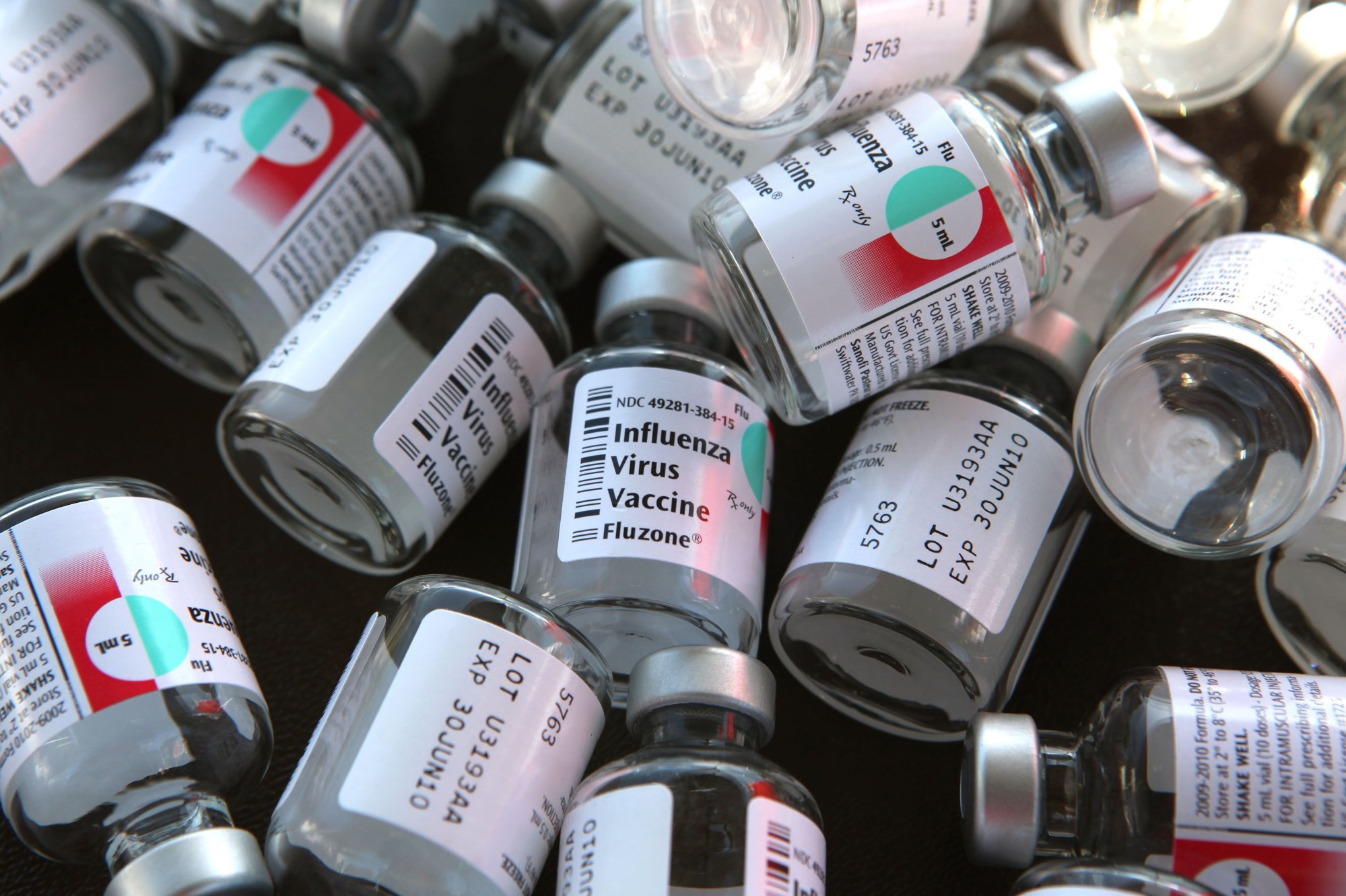
The future of flu prevention could look very different if medical researchers are able to create a universal flu vaccine, according to Dr. Cameron Wolfe, an infectious disease expert and professor of medicine at Duke University School of Medicine.
Flu vaccines have improved in the past few years, and researchers are working toward a universal shot that would eliminate the need for an annual vaccine. New updates are also making it easier for elderly patients to get more protection from the flu. Nasal sprays allow some children and needle-phobic adults to bypass flu shots altogether.
So, what is the difference between the flu and a cold? They are caused by different viruses, according to the U.S. Centers for Disease Control. The flu often causes fevers, chills, cough, sore throat, runny and stuffy nose, body aches, headaches and fatigue. Colds are typically milder and do not result in serious health problems.
In the second of our two-part series on flu season, Wolfe shares some of the breakthroughs in flu prevention and the important warning signs to know you need to see a doctor. This interview has been edited for length and clarity.
The future of the flu shot
NC Local: What is the future of flu shots? Are there any new breakthroughs on the horizon with preventing the flu?
Wolfe: There’s actually now better ways of vaccinating people. Most people can still go and get a regular flu shot. You’re going to get three different substrains of virus, and it’s one needle and you’re done.
But if you’re over 65, there is an enhanced vaccine that is available for you, a higher dose that’s been the preferred and recommended choice for a few years that every pharmacy and most doctors’ offices will have available.
Basically, the older we get, the less efficiently our immune system responds to the vaccine. So the way around that is to give them a slightly stronger dose, and then you build their response up to the same as what it might do for you and I, who are otherwise healthy.
Secondly, for people who are the most high risk, there’s now an mRNA flu shot, [mFLUSIVA]. The same technology that gave us effective COVID vaccines now exists for flu, and that’s a winner for two reasons. Number one is, on paper it looks more effective at preventing flu. But secondly, flu vaccines often run into problems of missing their match each year because it takes so long to get them ready. Whereas mRNA techniques, you need a matter of a few weeks, not multiple months [to prepare the right mix for a vaccine].
- New mRNA Flu Vaccine Makes This Flu Season ‘One to Watch’ (Johns Hopkins Bloomberg School of Public Health)
We’re certainly trying to find what’s called a universal flu vaccine. So the idea there is, can you target a different piece of the virus that doesn’t mutate every year? So that way, I could give you one vaccine now and reasonably expect it would last multiple seasons, as opposed to continuing to redo it every year. That’d be great if we could get there, but we’re not there yet.
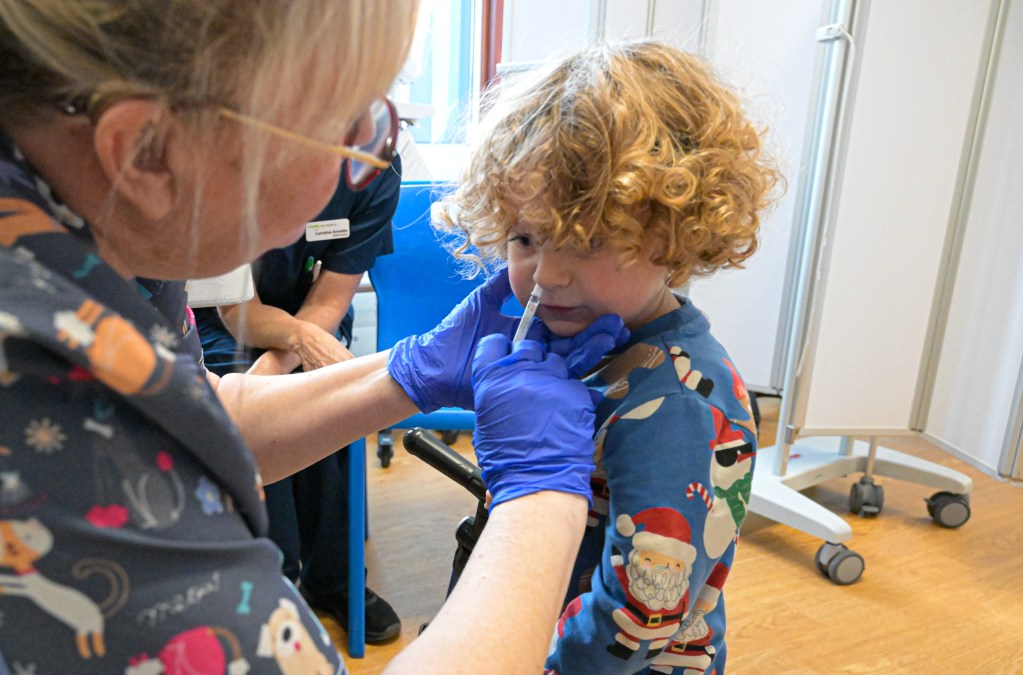
The other one that I should mention is FluMist, which is available now for anyone who gets needle phobia or young kids who don’t like needles. There’s actually a nasal spray that you can go online and they’ll send it to your pharmacy. It’s a self-administered nasal spray in the pharmacy. It’s just as effective as a needle and for anyone [ages 2-49] that’s approved. It’s approved for most people, except the most immunosuppressed or older adults.
What the flu shot can and cannot do
NC Local: What common myths do you hear about the flu?
Wolfe: It’s a great question, and yes, there are common myths, for sure. I think the first one is that the vaccine gave me the flu. Biologically, that just can’t happen.
[Editor’s note: As your body builds an immune response to the vaccine, mild, short-lasting side effects are possible. Typical side effects can include soreness, redness, and/or swelling where the shot was given, headache, fever, muscle aches, nausea and fatigue, according to the CDC.]
There is this misperception that you get the vaccine and some people get the flu anyway. That certainly happens. It is not 100% effective. We’ve not had perfect flu vaccines in that regard, but for the average season, we tend to run around about 40% protection.
What that means is 40% of people who would have gotten sick don’t because of that vaccine. So let’s put that in the context of my emergency room. I might get 1,000 visits over each winter from people who’ve had the flu, and if we did a better job at vaccinating our community, I could save 400 people from needing to come to the emergency room. That’s a big deal.
Like COVID boosters, similarly, we think of it as not being perfect, but they’ll reduce 50% of acute illness. If I can reduce 50% of people needing to come to the emergency room, that is an enormous help to emergency rooms that are busy at a tough time.
I think the third thing that I would say is there’s absolutely decent data that says even if you’re one of those unfortunate people who get the flu, despite the vaccine, it will not, on average, be as severe. So when we look through people who come to our intensive care, like critically ill with the flu, the proportion of people who are unvaccinated in the ICU is through the roof.
Serious symptoms mean it’s time to see a doctor
NC Local: How do you know when you need to see a doctor?
Wolfe: Some of the need to go and see the doctor is offset by the fact that we can actually walk into pharmacies these days and just buy nasal swab flu tests. That saves you having to turn up to the urgent care and surround yourself with other sick people.
Most doctors’ offices these days will accept either a short video visit or an email to the nurse triage line or some way that does not involve bringing you into the clinic, but can still get you the antiviral that you need.
If you’re noticing that you’re getting more breathless doing simple things around the house or holding simple conversations, that’s a reason to come in. If you are noticing that the initial illness that you had that was fading away now starts to build back up again by day four, five, six or seven, that is the other worry.
When we look at old historic data of bad flu outbreaks and who died, the people who got critically ill got pneumonia. Flu clearly sets you up to get secondary bacterial pneumonia. Those people would often feel like they were getting better because the peak of the flu itself was fading away, but then things started coming back again.
So, if you’re feeling like you’re making a gain, feeling like you’re improving, and then everything just sort of heads back down the wrong direction again, that’s a visit to your doctor.
Emergency warning signs of flu complications
People experiencing these warning signs should obtain medical care right away, according to the CDC:
In children:
- Fast breathing or trouble breathing
- Bluish lips or face
- Ribs pulling in with each breath
- Chest pain
- Severe muscle pain (child refuses to walk)
- Dehydration (no urine for 8 hours, dry mouth, no tears when crying)
- Not alert or interacting when awake
- Seizures
- Fever above 104 degrees Fahrenheit that is not controlled by fever-reducing medicine
- In children younger than 12 weeks, any fever
- Fever or cough that improves but then returns or worsens
- Worsening of chronic medical conditions
In adults:
- Difficulty breathing or shortness of breath
- Persistent pain or pressure in the chest or abdomen
- Persistent dizziness, confusion, inability to arouse
- Seizures
- Not urinating
- Severe muscle pain
- Severe weakness or unsteadiness
- Fever or cough that improves but then returns or worsens
- Worsening of chronic medical conditions
These lists are not all inclusive, according to the CDC. Consult your medical provider for any other symptoms that are severe or concerning.
NC Local: How do you know when you’re no longer contagious and can return to school or work?
Wolfe: Most adults remain infectious for five to seven days, although your peak of how contagious you are is often within the first 24 to 48 hours of your illness. Technically, we’re contagious within about 12 hours of even knowing we’re symptomatic.
So the hard part there is if you don’t know you’re going to get the flu, you don’t do anything to protect the people around you. Usually by the time you’re symptomatic, you’ve already been shedding it for a little bit, unbeknownst to yourself.
Data shows flu vaccines prevent serious illness
NC Local: Is there anything else you want people to know about flu season?
Wolfe: I always like to be honest about what we don’t know. I don’t know how long this season will last. Some flu seasons have petered out quickly, and yet some linger for months. And I think that the possibility still remains that by the time we hit Thanksgiving and Christmas and New Year, and everyone flies and congregates and has dinner parties and whatnot, that actually flu can tend to linger for quite a while.
And I say that only because people shouldn’t have the message that, “Our flu is already here, and I’ve missed my chance,” because I think it’s likely to be here for a good few months still. And so, if you get the chance to pop into your local pharmacy, or you get the chance to go online and order yourself some of that flu mist, I think you’re actually in a good window to do it now and get yourself that chance.
Also, for the last 18 months, we have had people in high authority positions within our national health system who have been clearly pushing an anti-vaccine agenda, anti-vaccine discourse and natural approaches to health have become the main point of national topics.
People need to remember that there’s a lot of spin going on right now, and it is not data driven. We’re seeing it with measles, whooping cough, hepatitis B and countless other vaccines that, unfortunately, have suffered from conversations which are loaded with an agenda that is not data driven.
It’s actually been a little bit hard for people to trust where they get their news. It’s harder for even professionals to go onto the CDC now and say, “Do I really trust what this information is?” Generally, what they present is still accurate, but what they’re not presenting is part of the kicker.
All of the major professional societies that talk about kids’ health, family health, infectious disease and vaccinology have been very clear: the recommendations have not changed because there is no data to support concerns that are being raised by federal HHS officials.
People hear a lot of news about vaccine challenges, but they are not data driven, so be careful about where they get their facts from because it is not based on accurate science.
[Editor’s note: Flu vaccines are widely available. You can find locations for free or low-cost vaccines on DHHS’ website.]