
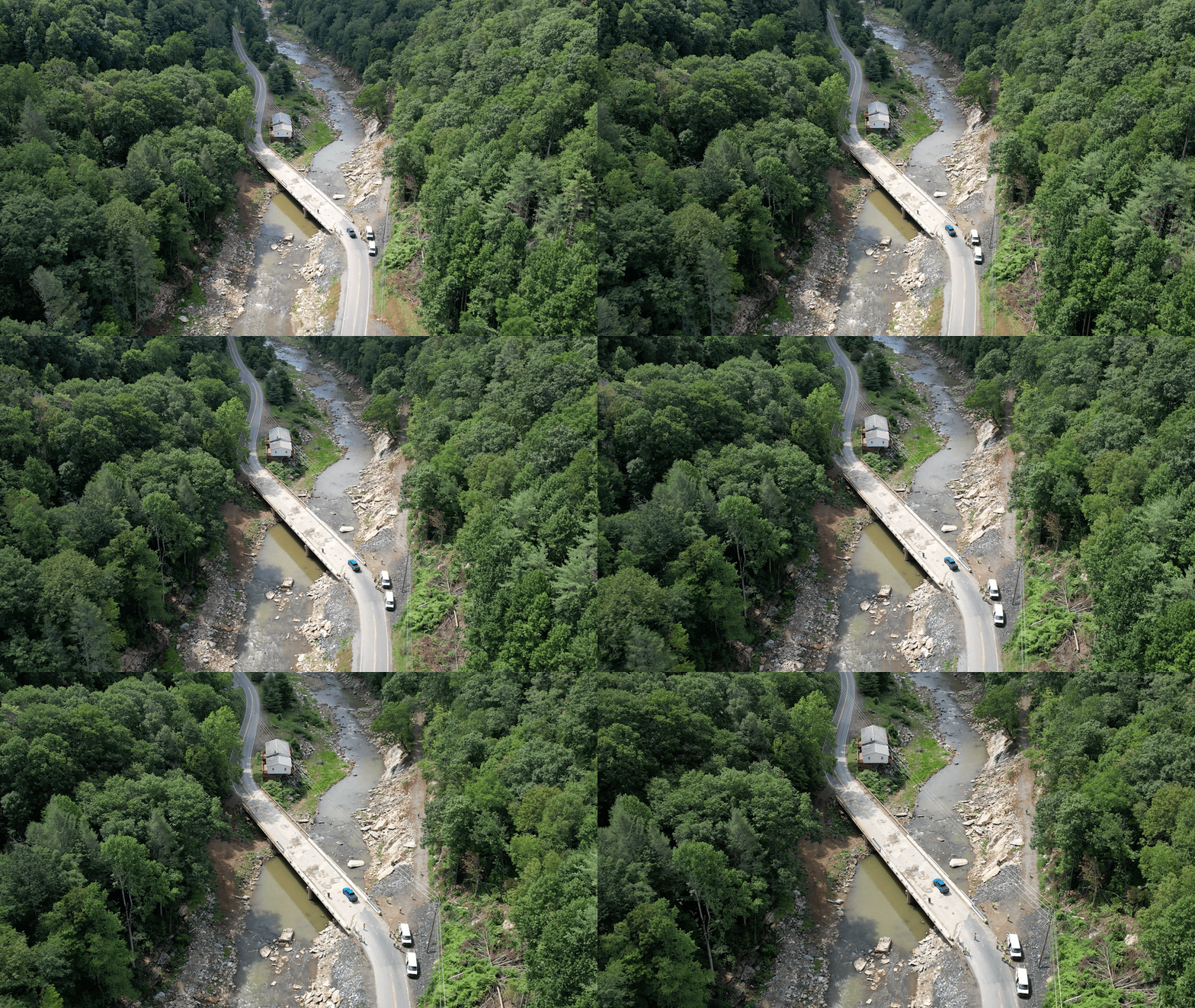
One year in, Western North Carolina’s recovery from Hurricane Helene shows signs of being as historic as the storm itself – with FEMA and other federal services facing unprecedented cuts, and North Carolina leaders worried rebuilding efforts will be hampered by so-far comparatively low cost-sharing by the federal government.
Part 1
Helene’s Destruction
Over a three-day period, the mountains of North Carolina – home to more than 1 million people – became ground zero of the most devastating natural disaster to strike in the state’s history.
1000-year storm
A literal atmospheric river assaulted the Western North Carolina region, beginning Sept. 25, 2024. Historic rainfall, even before Helene’s landfall, intensified flooding, unleashed unprecedented landslides, and resulted in what many called biblical devastation across Appalachia. Despite the early, dire warnings from meteorologists that proved to be tragically accurate, some residents say they should have evacuated – but alerts came too late, or not at all.
108
lives lost
In North Carolina, Helene killed 108 people – making it the deadliest storm in state history.
Bridge Street was badly damaged in Hot Springs, NC when the French Broad River flooded. Hot Springs Tourism and Welcome Center
7+
record-breaking floods
At least seven rivers crested above prior flood records, including the French Broad, South Toe and Swannanoa rivers.
The French Broad River breaks its banks in Asheville on Friday, Sept. 27, 2024. Travis Long | The News & Observer
2,000+
deadly landslides
Mudflows formed from multiple landslides in some areas – including in Craigtown, where first responders died while trying to save residents from back-to-back slides.
A landslide near Vilas, NC. Jonathan Godt | USGS
106 mph
gale-force winds
Atop Mt. Mitchell, the National Weather Service recorded the highest wind gust in the region.
A home post-Helene on November 1, 2024. Felicia Sonmez | BPR News
Towns Leveled
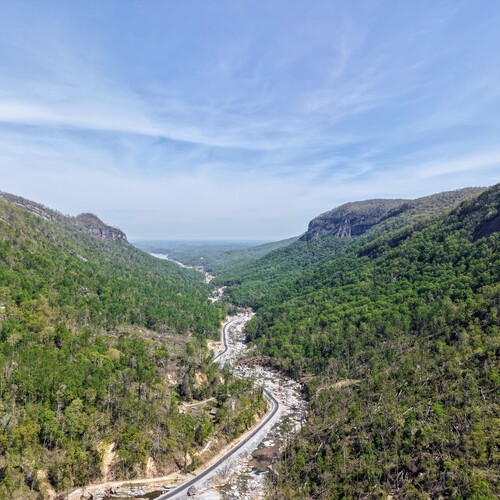
Thousands of WNC residents suffered major damage to homes and businesses. In places like Chimney Rock, entire streets were wiped away.
Survival, In Darkness
Region-wide infrastructure went down – from cell phones to electricity and water systems. In isolation, stories emerged both of everyday heroes and conspiracy theories. In Asheville, 100,000 people were without water service for almost two months. Thousands were also without power for weeks as electric service crews rebuilt decimated systems.

Weaverville Water Distribution Site on October 3, 2024. Credit: Amy Drever / Come Hell or High Water Community Memory Project 
Saving water in bowls on October 2, 2024. Credit: Amy Drever / Come Hell or High Water Community Memory Project 
Anheuser-Busch produced canned water during Helene. Credit: Michelle Nelson / Come Hell or High Water Community Memory Project
Part 2
Focus on Recovery
Amid a FEMA shakeup and deep cuts to federal agencies, many in North Carolina worry recovery will be slow and small compared to past disaster.
Editor’s note: Data on this page is current as of Sept. 3, 2025, and links to additional resources may show different figures as state and federal dashboards are continuously updated.
$60 billion
in damage
North Carolina leaders estimate Helene caused nearly $60 billion in damages to homes, businesses, roads and other infrastructure.
Hurricane damage in East Asheville. Mike Honeycutt | Come Hell or High Water Community Memory Project, Buncombe County Library Special Collections
8%
federal government cost-sharing
The federal government’s cost-sharing in recovery, which Gov. Josh Stein has criticized, saying it pales in comparison to America’s response to Hurricanes Sandy, Katrina and Matthew.
Soldiers deliver water, food, toiletries, and other aid to residents in the Soco Gap community in Maggie Valley on Tuesday, October. 8, 2024. Travis Long | The News & Observer
$208.3 million
FEMA individual housing assistance funds provided in the first year after Helene to North Carolina residents who had property damage.
FEMA generators powering laundry facilities. Russ Bauman | Come Hell or High Water Community Memory Project, Buncombe County Library Special Collections
$2.7 billion
approved
North Carolina lawmakers have approved nearly $2.7 billion in funds, most earmarked for public safety/emergency management, transportation projects and loans to local governments and businesses.
The remnants of a building from the River Arts District, a testament to the destructive force of the water. Casey Visco | Come Hell or High Water Community Memory Project, Buncombe County Library Special Collections
“This is an unprecedented storm, and it’s causing us to have an unprecedented response.”
Former Gov. Roy Cooper, September 2024
Part 3
WNC: Stronger Together
From climate change and disaster resiliency planning to community-based efforts to rebuild, even as publicly funded programs lag in distributing aid, stories on the ground in Western North Carolina show how residents and non-profits are charting a way forward.
A Deadly Warning
In Helene’s wake, many experts – and survivors – say the historic devastation in the mountains should be taken as a warning sign of climate change and the nation’s lack of preparedness.
“You can tweak zoning. You can talk about elevation … But a huge amount of that loss is the loss of structures and infrastructure that ultimately became debris. If you have less in the flood plain going forward, you have less to be damaged.”
RiverLink Executive Director Lisa Raleigh, on rebuilding resiliently
Hammers & Hearts
In Chimney Rock, volunteers are literally rebuilding nearly every business and structure along the historic Main Street. Here, close to 2,000 members of the Pennsylvania Amish Community relocated and helped lead recovery for nearly six months following the disaster.
Mitigating Future Risks
Throughout Western North Carolina, local leaders are re-evaluating emergency operations and planning – from flood-plain building regulations to evacuation methods and siren networks.
$322,000
economic disaster
The average loss of revenue by small businesses in Western North Carolina. Many leaders in the region have turned their focus to social support and business/tourism relief programs as unemployment remains high.
Rail cars lie twisted and mangled along the tracks amid storm debris near the Swannanoa River in East Asheville on Sept. 30, 2024. Colby Rabon | Carolina Public Press
24
billion-dollar disasters
The U.S. sees, on average, 24 storms or disasters each year that cause at least $1 billion in damage. The federal government and insurers have historically compiled this data to track financial risks. The Trump administration said it would stop distributing the data.
Part of a structure sits in floodwaters on a road in Canton on Friday, Sept. 27, 2024. Travis Long | The News & Observer
Less than 1%
insurance gap
In North Carolina, less than 1% of inland homes in flood-risk areas have property insurance that would cover flood damage, as was seen during Hurricane Helene.
Flooded homes in Fairview, North Carolina. Sheila Austin Jenkins | Come Hell or High Water Community Memory Project, Buncombe County Library Special Collections
9%
cost-sharing
Gov. Josh Stein has re-upped the state’s push for more federal funding to cover the estimated $60 billion in damage by Helene. So far, federal reimbursements are projected to cover 9%, far less than what states received after other hurricanes like Sandy, Katrina, and Irma.
A North Carolina flag lies in the mud in Clyde on Saturday, Sept. 28, 2024 after massive flooding damaged dozens of homes and businesses. Travis Long | The News & Observer