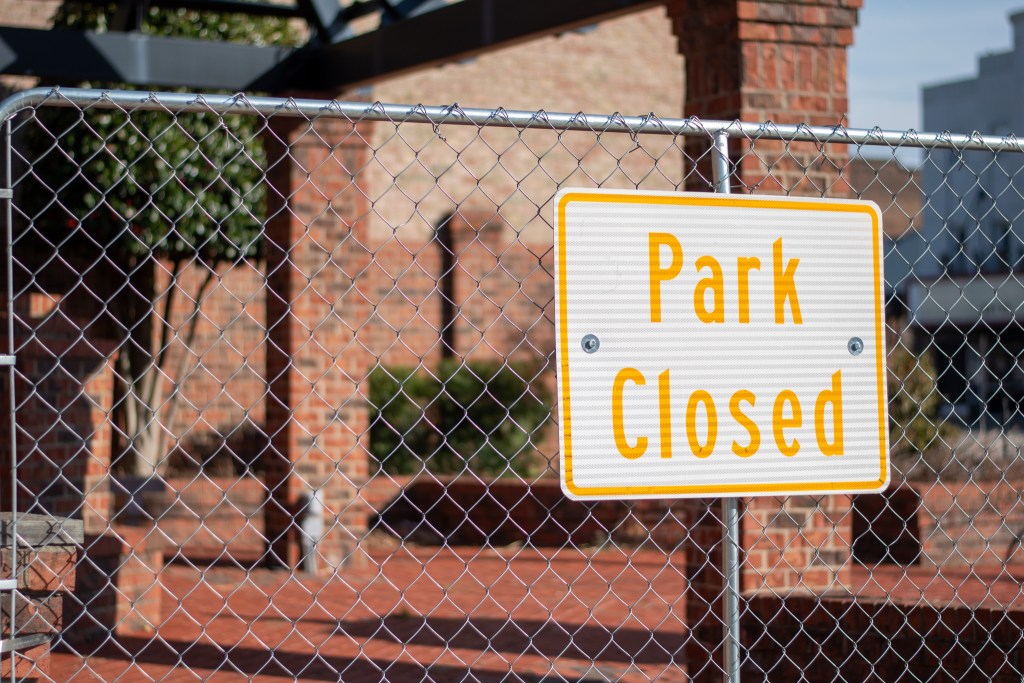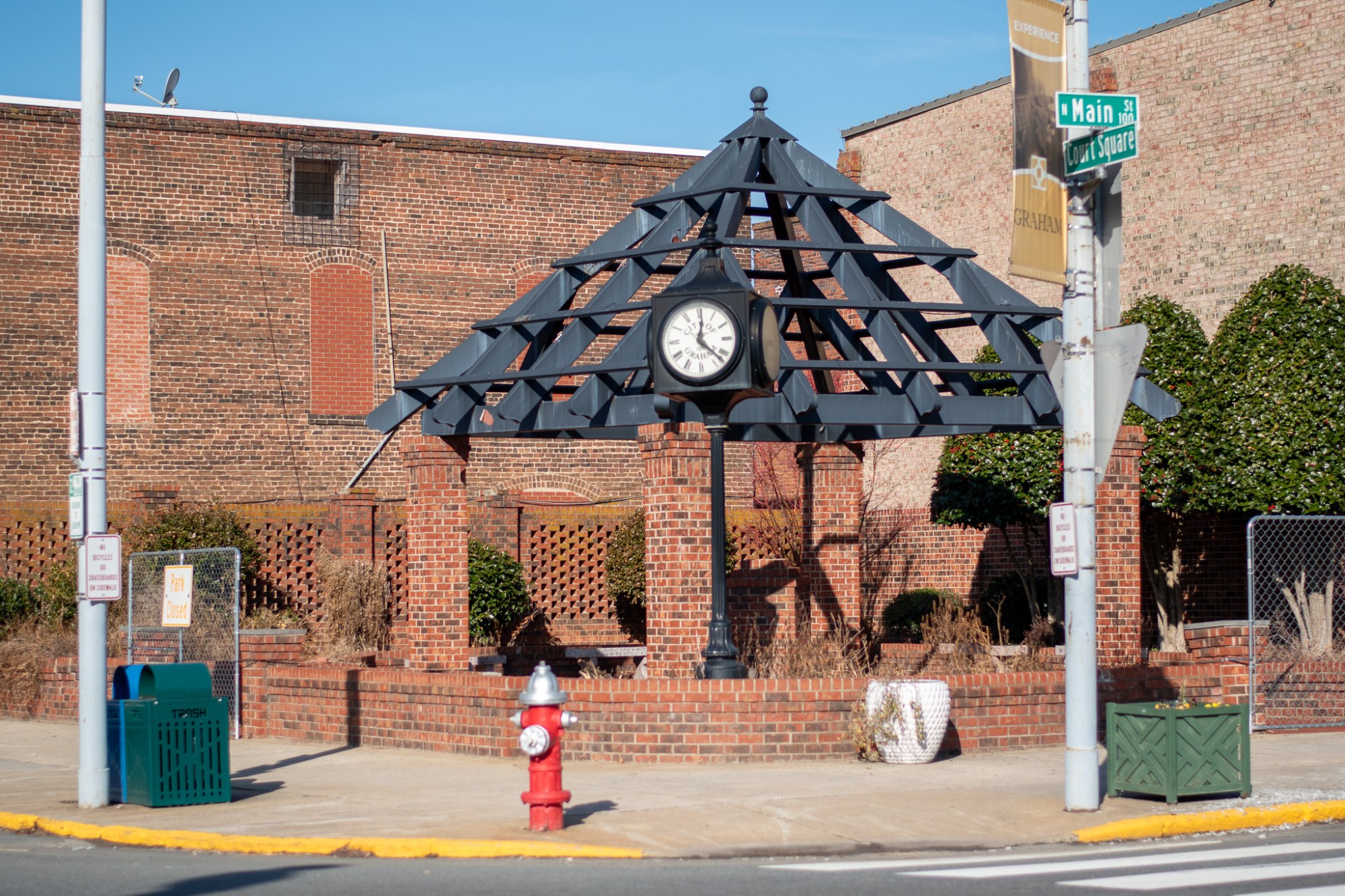
At a special meeting on Tuesday, the Graham City Council voted 3-2 to award a contract to a company that submitted an RFQ to move Sesquicentennial Park to a site behind the Graham Historical Museum.
Last month, city council voted 4-1 to move the park from Court Square due to safety concerns at the old site where the park has been sinking into what used to be the basement of a former building. The park, funded by community donations including memorial bricks, commemorates Alamance County’s 150th anniversary.
The council’s proposal and recent decision to move the park has been repeatedly met with resistance from residents, business owners and former city leaders alike. Those in favor of keeping the park in its current location believe it is a vital part of downtown Graham’s culture. It opened to the public in 2001 with community-fundraised memorial bricks and other hyper-local features. Others are concerned about removing nearly 25 parking spaces behind the museum which already lacks sufficient parking and how it’ll affect business and accessibility.
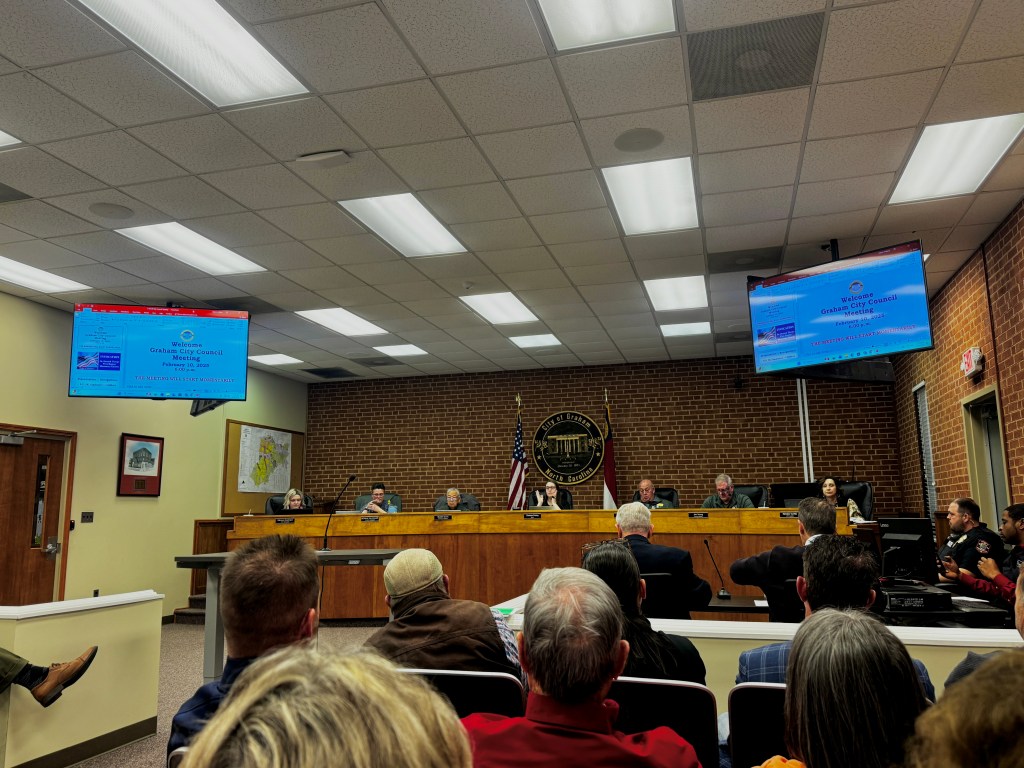
During the public comment section of the February council meeting, some citizens criticized the council’s unwillingness to rescind their decision. Others questioned the finances behind the cost of relocating the park compared to the cost of repairs. Citing state law, one speaker notably challenged the legality of moving or tearing down the park because it is memorial in nature.
Here is an overview of the park’s history, a timeline of the council’s decision to move it, the council’s options against state law, and what’s next for the park.
What is Sesquicentennial Park?
Sesquicentennial Park is a small public space located at the northwest corner of Court Square in downtown Graham. The park was completed and dedicated in 2001, following conceptualization that began in the late 1990s.
Established to mark the 150th anniversary (sesquicentennial) of Alamance County’s founding, it was largely community-funded, notably through the sale of commemorative memorial bricks. Residents purchased the bricks for $100 each to engrave with their names or those of loved ones.
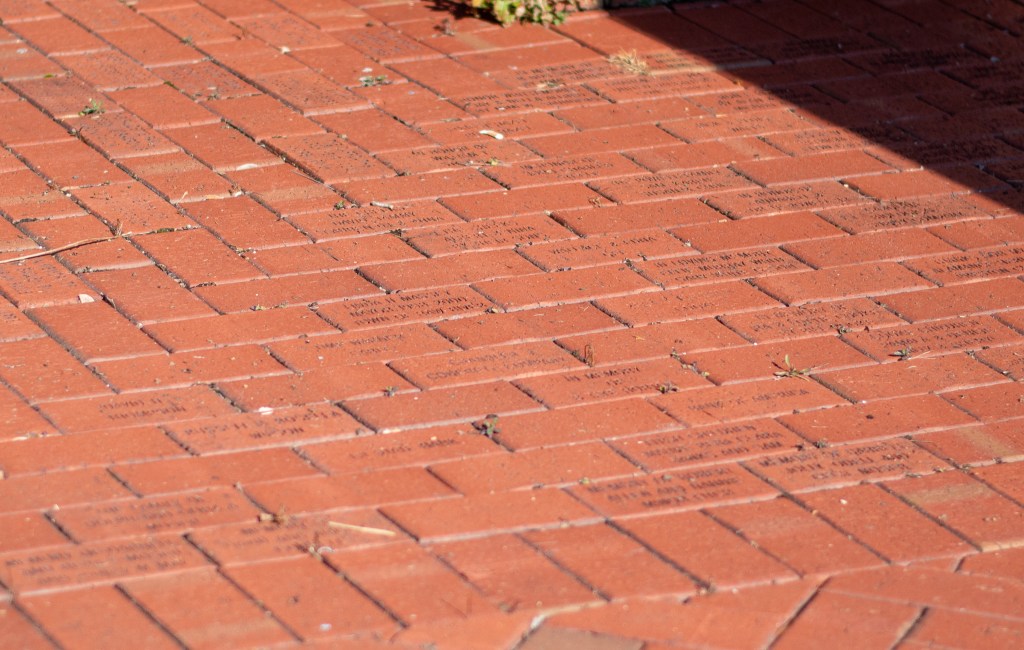
The park includes a steel gazebo, a beloved pole-mounted clock, extensive brick flooring containing the memorial names, and other landscaping features. Before 2020, the park also featured a bell, owned and loaned by the Crissman family, that was used in the original courthouse. It was temporarily removed for safety reasons during the Black Lives Matter protests held in the summer of 2020.
What made council members want to move the park?
Before 2001, the park’s current location was occupied by the original “Graham Soda Shop.” The shop’s basement was filled with demolition rubble and debris rather than properly engineered soil. Over two decades, this uncompacted fill settled, causing the park’s brick floor to shift and sink. For more than a year, it’s been creating uneven surfaces that are considered safety hazards.
The proposed relocation site is also larger, more than 7,000 square feet compared to the current 2,500 square feet.
When did this all start?
Talks about the future of Sesquicentennial Park have been happening for nearly two years.
Initial discussions began in March 2024 when the city council, under former mayor Jennifer Talley, discussed selling the lot due to maintenance costs.
By September, the park was closed to the public after the city determined the risk to public safety and potential liability were too great.
A preliminary vote was held in May 2025. The council voted 4-1 to remove the pergola and bricks. Mayor Pro Tem Ricky Hall dissented.
In late August, the City of Graham shared a public notice of a hearing about potentially relocating the park slated for Sept. 9, 2025.
In mid-January this year, the council voted 4-1 to adopt a new proposal presented by Hall to move the park to a parking lot behind the Graham Historical Museum on West Elm Street. This time, newly-elected Mayor Chelsea Dickey was the dissenter.

Shortly after the January meeting, the city posted a Request for Qualifications for design services for the relocation on Jan. 27.
The city received two submissions through last month’s RFQ process: One from Concord-based firm CESI and another from Stewart, a Raleigh-based firm.
Stewart’s proposal was the preferred RFQ for its use of the site. Councilmember Bobby Chin made a motion to award the contract to Stewart for park relocation. It passed 3-2 despite concerns about community engagement and funding for the current park.
Can council members change motions that have passed?
Yes. Under state law North Carolina council members can change or undo motions that have already passed. While some members of the public requested this, most council members have indicated they do not intend to pursue this action.
What does state law say about removing monuments, memorials and works of art?
State law regulates the removal and relocation of monuments and memorials on public property.
Under the law, “objects of remembrance” include a “monument, memorial, plaque, statue, marker, or display of a permanent character that commemorates an event, a person, or military service that is part of North Carolina’s history.”
These objects can’t be permanently taken down unless the state deems it necessary to keep the object from being damaged, or if the space is needed for construction or renovation work on buildings or transportation projects.
There is a “Public Safety Exception” to the law. This exception means the rules don’t apply if a building inspector or similar official decides the object is a public safety hazard because it’s in an unsafe or dangerous condition, which has already been the case.
If it is moved for reasons other than public safety, the law requires it to go to a spot that’s of similar prominence.
“Relocating the memorial building behind buildings into a parking lot and onto museum ground is not of similar prominence. It is a downgrade,” Sam Cohoon, the speaker who brought up the law during public comment, said.
At the special meeting Tuesday morning, Dickey asked city attorney Bryan Coleman about the statute. Coleman said that if council members understood there was a risk to public safety, the park can be moved.