
Overview:
Last winter, a cyber attack disabled the Buncombe County Alert system, BC Alerts, according to the provider CodeRed. This month the new Rave 911 system went live. County alert systems work with state and federal departments to share important information from road closures to weather evacuations.
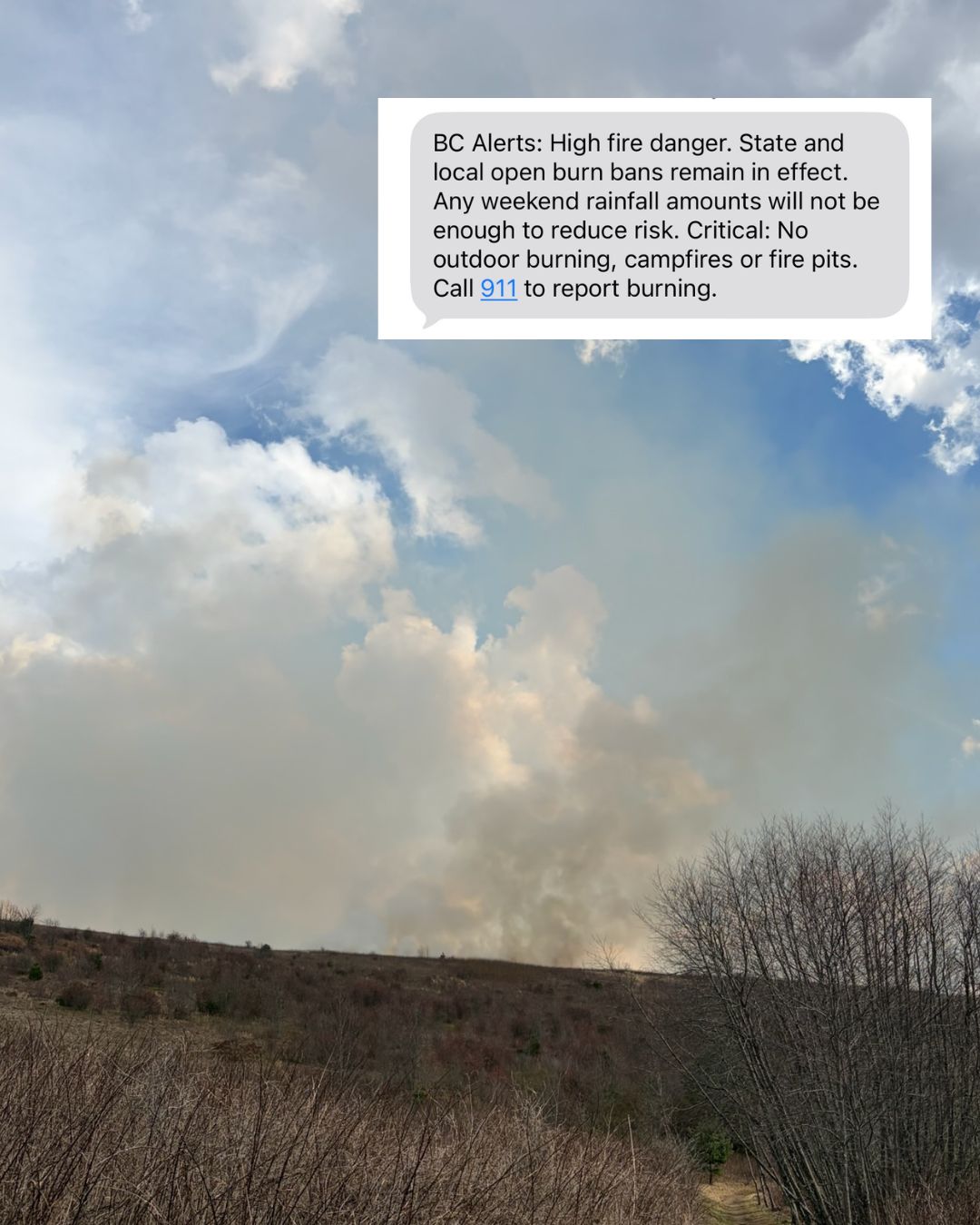
Buncombe County has a new emergency alert system, but only about 1% of residents have subscribed to the free service, which provides emails and text messages during emergencies, including extreme weather.
In recent months, county leaders had to replace the alert system that was used to send emergency messages during Hurricane Helene. Although 3,700 residents were subscribed to the old system, a data breach last winter left the county without a working system, Buncombe County Communications and Public Engagement Director Lillian Govus explained.
“We weren’t able to export them given the data breach that they had had on the CodeRed side. [That] Just made it so that the data wasn’t any good. So we had to start from zero,” Govus told NC Local.
The issue has raised questions about how local governments use technology, particularly cell phones, to give residents warnings and information during emergencies.
The county system differs from the state-managed alert system, causing confusion for some residents.
Deana Lytle, a Swannanoa resident and vice board chair of Swannanoa Resilience Hub, said she remembers receiving state alerts during Helene but wasn’t signed up for the county alerts at the time.
Now she’s signed up for the county alerts but is worried that others don’t know about the option.
“I think it is a great system to be able to offer to people. I definitely have a lot of questions as to, ‘How are they getting the word out to the community that the system exists?’” Lytle said.
Lytle said she is worried about how folks in Swannanoa without internet access will find out about the alert system.
”If you aren’t in the know and you aren’t on social media, you’re not even going to know that that exists,” she said.
Govus said the county has an advertising plan for the alert system including radio underwriting and digital ads. The county had a booth for sign-ups at the recent Emergency Preparedness Fair in Swananona earlier this month.
More than 2,500 people have signed up for the new system, BC alert, since the beginning of April, based on the most recent report, still trailing the prior database by about 1,000 people. . The total represents less than 1% of the population of Buncombe County, or about 277,000 residents.
How are emergency alerts received?
Failing to sign up for a county system doesn’t preclude someone from receiving emergency notifications through a state network called the Integrated Public Alert Warning System (IPAWS).
The state system may function for different purposes than county systems. For example, during Hurricane Helene, the county alert system was used for voluntary evacuations. But the state sent mandatory evacuation notices, managed by FEMA, through IPAWS.
IPAWS, known as “reverse 911” started when landlines were still the most common form of communication, was developed to call home phones with emergency messages.
Now IPAWS is used to send two different types of emergency alerts: geolocated messages to cell phones known as Wireless Emergency Alerts (WEA). These can reach anyone in the affected area immediately, including visitors or those who haven’t subscribed. The state also uses an Emergency Alert System (EAS), which includes radio and TV broadcast notices. Only NC Emergency Management, NC State Highway Patrol, NC Center for Missing Persons, and the National Weather Service are allowed to send EAS messages.
IPAWS is like a highway or the internet when it comes to transmitting messages, Greg Hauser, statewide interoperability coordinator and communications branch manager.
“People don’t receive an IPAWS message. They receive a message via the IPAWS network,” Hauser said. “You need keys to drive your software car on the IPAWS highway.”
While counties can request that they state send using the IPAWS network, the requests take time.
“If there’s a step that’s added, it’s going to take away the time to get them that life-saving message. So the less steps and the more empowered the local EM folks, the better. That’s what I want,” Hauser said.
Hauser said it is more efficient for counties to use their own systems to access the IPAWS network.
Live in Western North Carolina?
Sign up for The Trailhead, your guide to Western Carolina. Senior reporter Lilly Knoepp gives you a weekly look at what matters in WNC.
Accidentally unsubscribed from emergency alerts
Some phone users may be inadvertently excluding themselves from emergency notifications, Brian Haines, senior external affairs specialist for the North Carolina Department of Public Safety, said.
If a user turns off Amber alerts – the notifications about missing children – they will not receive evacuation alerts and other emergency messages.
“The problem is when you do that, then you are shutting off your ability to get alerts for other things, such as evacuations or flash flooding, or whatever the case may be that may be coming through in your area. So it’s important,” Haines said. “And for some people, it’s never been turned on, and in that case, then you need to go with your phone settings and do that.”
The IPAWS system can reach people who are visiting the area, because it uses technology tied to the geolocation of the device rather than where it is registered. The reach is important for high-tourist areas in Western North Carolina.
What alert systems do other WNC counties use?
The state saw an increase of about a dozen counties getting IPAWS network approval after Hurricane Helene in 2024, Hauser said.
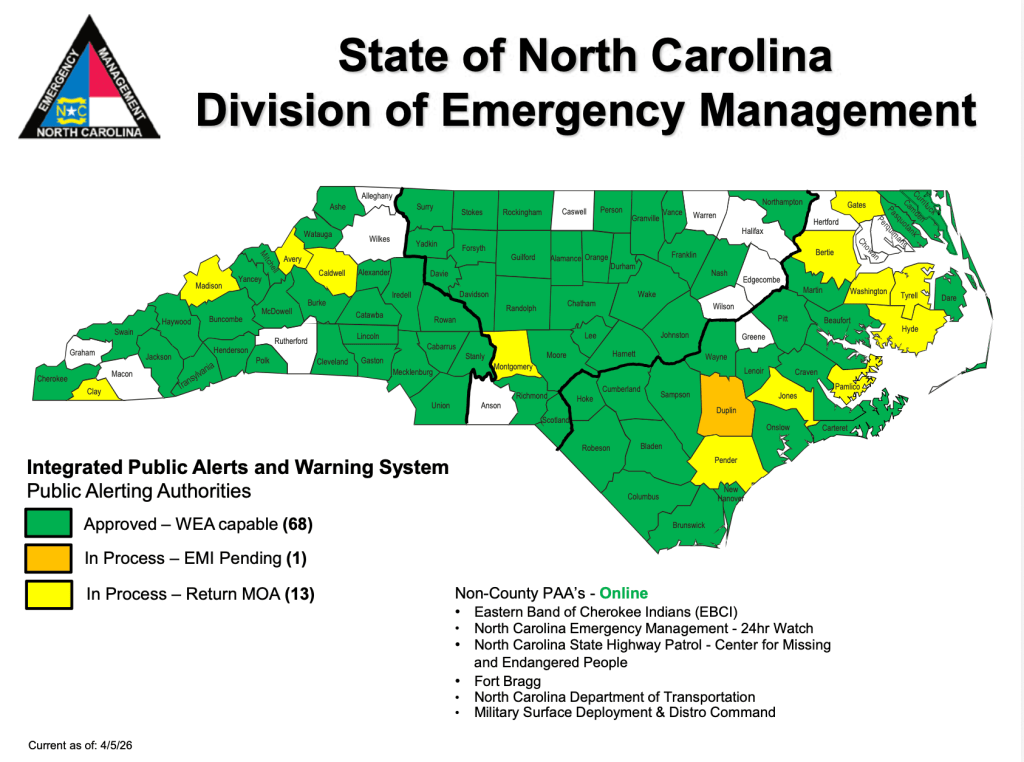
Transylvania, Polk and Henderson counties were already in the process of getting on IPAWS before the storm, but Hauser said the process was “extremely sped up after Helene.” The technology helped those local governments keep residents alert during the early 2025 wildfires.
For their county alert systems, Transylvania County and Henderson County use Rave’s Smart911, the same system Buncombe County just purchased, while Polk County uses Everbridge.
Macon, Graham and Rutherford counties aren’t approved to be on the IPAWS network. However, they can still send out state and federal warnings to people who are signed up for individual county alert systems.
Emergency Management Director Todd Seagle said the county hasn’t seen a need to get IPAWS approval because the state pushes out emergency weather notifications and local messages can be sent to subscribers in the county.
“ We just haven’t really felt the need to do what some of the other counties are doing,” Seagle said. He added that the town of Highlands also uses the system for alerts and utility messages.
Macon County has CodeRed, the same alert system previously used by Buncombe County.
Unlike Buncombe County, Macon County stuck with the Crisis24 parent company and were able to continue using the previous contact list after the national cyberattack. They are using a new platform that has the same features as CodeRed.
“We looked at some other vendors, and ultimately decided that there’s really nothing out there that does anything better or anything really any different than what Code Red does, so we stayed with them,” Seagle said.
The annual cost depends on the number and type of messages that are sent, Seagle said, but the most basic package is about $10,000 per year.
Seagle isn’t sure how many people are signed up for CodeRed in Macon County, but the list is substantial because when it first started in 2006, it used an imported list of reverse 911 numbers.
At present, residents cannot sign up for CodeRed on the county site due to technical issues Seagle said they are trying to address.
Haywood County also used a reverse 911 list at the outset of its contract with Everbridge alert system in 2017. At that time, the software cost about $31,300 for 22 months. Since then, a lot of expectations have changed, Emergency Management PIO Allison Richmond explained.
“[COVID] was kind of one of the first times that it started to become much more expected for governments to be messaging on a regular basis,” Richmond said.
The list in Haywood County has grown to more than 45,000 contacts through individual sign-ups and manual registration by county staff, she said.
The towns of Canton and Clyde also use the system for utility messages, while Waynesville has its own system, Richmond said.
Everbridge also enables Haywood to send out messaging on Facebook or on its siren system.
“The software is expensive, many counties that are small that don’t have much more than one or two staff members aren’t able to take the time to train on it. They just don’t have the resources for it, and other states have addressed that by purchasing the software statewide and giving everyone a license to it,” Richmond said.
What’s the future of alert systems?
All of these messaging systems rely on broadcasting and wireless capabilities – conditions that were severely disrupted by widespread and long-lasting outages during Hurricane Helene.
The NC Department of Emergency Management is offering counties and federally-recognized tribes an opportunity to apply for alert infrastructure grants. The department will provide $4.6 million in federal funding for counties and tribal bodies to address vulnerabilities in their alert systems.
Hauser said that changing industry standards and education can help prepare people for disasters.
“‘When you were in school, did you learn, ‘stop, drop and roll?’ So that’s ingrained in our minds,” he said. “There needs to be lessons on what to do in an emergency situation.”
Siren plans, ground moisture saturation sensors, and AI-based translation services are just some of the new ways other states are addressing the evolving needs, Hauser said.
Ironically, some advances in technology could hinder alerts, Hauser said.
Sign up for Buncombe County Alerts
Community members can sign up for BC alerts through the Smart911’s website or text “BCReady” to 67283. Here’s more information from the county about the system and how to choose what message you want to receive.
When signing up there are options for preferred language, signing up with a landline and options to receive recreation services or election reminders.