
Updated July 2
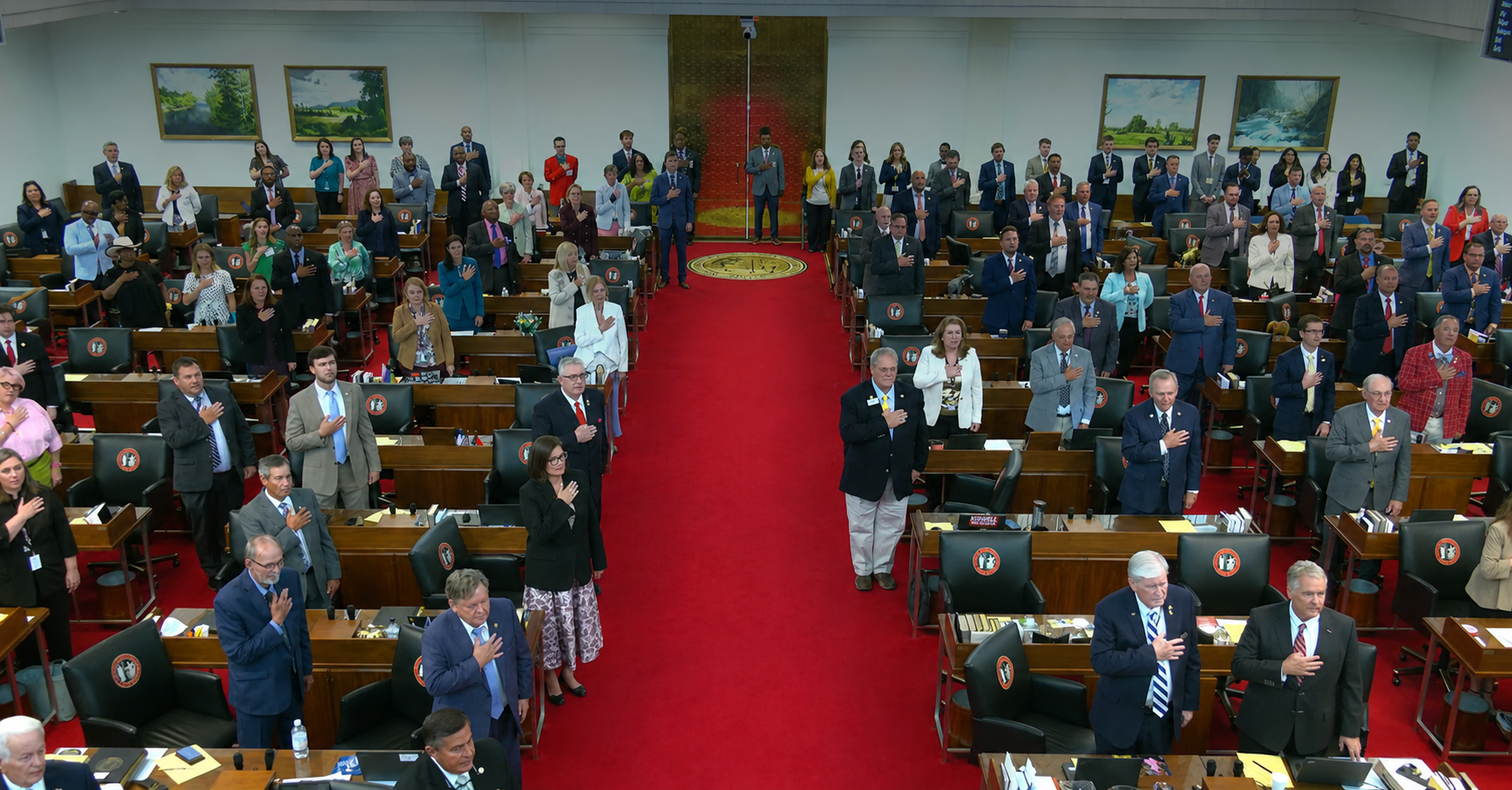
North Carolina lawmakers passed a state budget proposal Thursday after filing the spending plan Tuesday, one year to the day after it was due. A state law had kept the government running largely at 2025 spending levels in the budget’s absence.
The budget bill now goes to Gov. Josh Stein, who can sign it, veto it or let it become law without his signature. State law gives him 10 days to make a decision.
The budget document is 634 pages long, providing line-item details of $34.4 billion in spending for the 2025-2027 fiscal years.
Here are five major parts of the extensive budget.
1. Teachers and state employees get raises, but not the same amounts across the board
The final budget proposal largely keeps intact a framework Republicans announced in May.
It includes 3% raises for most state employees. Law enforcement officers would get substantially higher raises: up to 16% for officers in the State Bureau of Investigation and Alcohol Law Enforcement.
The budget also has the 8% average raises for teachers that Republicans promised in May, though educators with more experience get smaller pay increases.
For example, it raises starting salaries for teachers from $41,000 to $48,000, an increase of 17%. But base salaries for teachers with 25 years of experience or more would rise from $55,950 to $59,000, an increase of 5.5%. Many districts also provide a supplement for their teachers, so base salaries often do not reflect total compensation.
In a May press release, the North Carolina Association of Educators – the state’s teachers’ union – called the average 8% raises “smoke and mirrors.”
“Eight percent may sound like a raise — until you pay Duke Energy’s skyrocketing electric bill, Aetna’s ballooning insurance premium, and more at the gas pump,” NCAE President Tamika Walker Kelly said in May.
The raises are not retroactive, a change from prior years, meaning pay bumps will only be effective when the budget becomes law.
2. Medicaid is funded for now
The budget allocates a total of $1 billion for rising costs in North Carolina Medicaid, the program that provides health insurance for more than 3 million low-income residents, their children and people with disabilities.
It also funds nearly $60 million in expected new administrative costs to implement Medicaid work requirements outlined in President Trump’s “One Big Beautiful Bill.” Local social services departments will bear the burden of administering the changes.
That law requires Medicaid recipients who can work and are between 19 and 64 to log 80 hours per month of work or “qualifying activities,” like work training, school or volunteering. It also requires social services offices to re-check recipients’ Medicaid eligibility every six months.
3. Public school funding gets moved around, adds some AI tools
Public education is the state’s largest single expenditure at $12.5 billion, up from $11.9 billion this year.
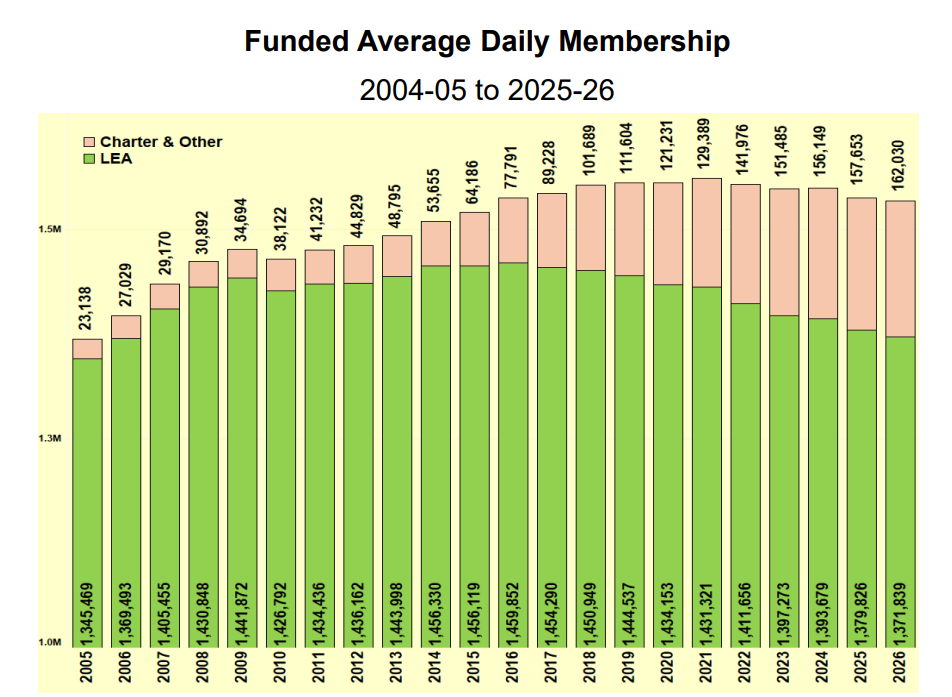
But the deal also includes a $105 million reduction tied to enrollment – or ADM, average daily membership – indicating enrollment in public schools is continuing to drop.
That money is made up elsewhere by moving nearly $130 million in lottery funds to school transportation expenses. The budget also includes $29 million to go toward teacher pay supplements and $17 million for school nutrition programs and custodial staff bonuses.
It also puts $5 million toward the use of AI education tools, including Khanmigo, described as an AI teaching assistant, and MagicSchool, an AI platform billed as a new method to help teachers build lesson plans and assignments.
4. Income taxes keep falling, but sports betting companies and data centers will pay more
The budget proposal gradually continues to lower the state’s income tax rate over the next seven years.
Taxpayers paid 4.25% on their income in 2025, and the rate drops to 3.99% for 2026. Under the new deal, the rate would drop to 3.49% starting next year, then 3.24% in 2030, and 2.99% in 2033.
Separately, voters will decide in November on a proposed amendment to the state constitution that would permanently cap North Carolina’s income tax at 3.5%.
Meanwhile, the budget increases the tax rate for sports betting platforms like DraftKings and FanDuel from 18% to 23%. Those platforms have gotten more than $7 billion in revenue during this fiscal year, generating more than $133 million in tax revenue for the state, according to the North Carolina State Lottery Commission.
The budget also repeals a sales tax exemption that some data centers got on the electricity they use. Lawmakers also recently passed a separate bill that supporters say is designed to protect residential customers from paying energy costs related to data centers.
5. A proposed children’s hospital gets major funding
Part of the impasse that held up the budget deal centered on a dispute between Republicans in the House and Republicans in the Senate over a new 500-bed children’s hospital in Apex that would be operated by UNC Health and Duke University Health System. Under the deal, $208 million in taxpayer dollars will go toward the new facility.
Duke and UNC have said the project is necessary to provide more specialized pediatric care so families don’t have to go outside the state for complex procedures.
Critics, including state House Speaker Destin Hall at one time, questioned whether the state should be subsidizing a new hospital run by two wealthy health care systems. But Hall supports this deal.
What else is in the budget?
A lot. This is what stood out to us in the first pass, but the budget document and its conference report together are more than 1,300 pages long.
NC Local will continue to report on the budget and its effects on everyday North Carolinians in the coming days and weeks.
Editor’s note: This post was updated to include the 2026 tax rate of 3.99%.