
Overview
Recovery programs, insurance coverage, and grants currently funded represent roughly 24% of the overall need, according to the state’s central recovery office’s estimates as of mid-September.
What you need to know
What happened?
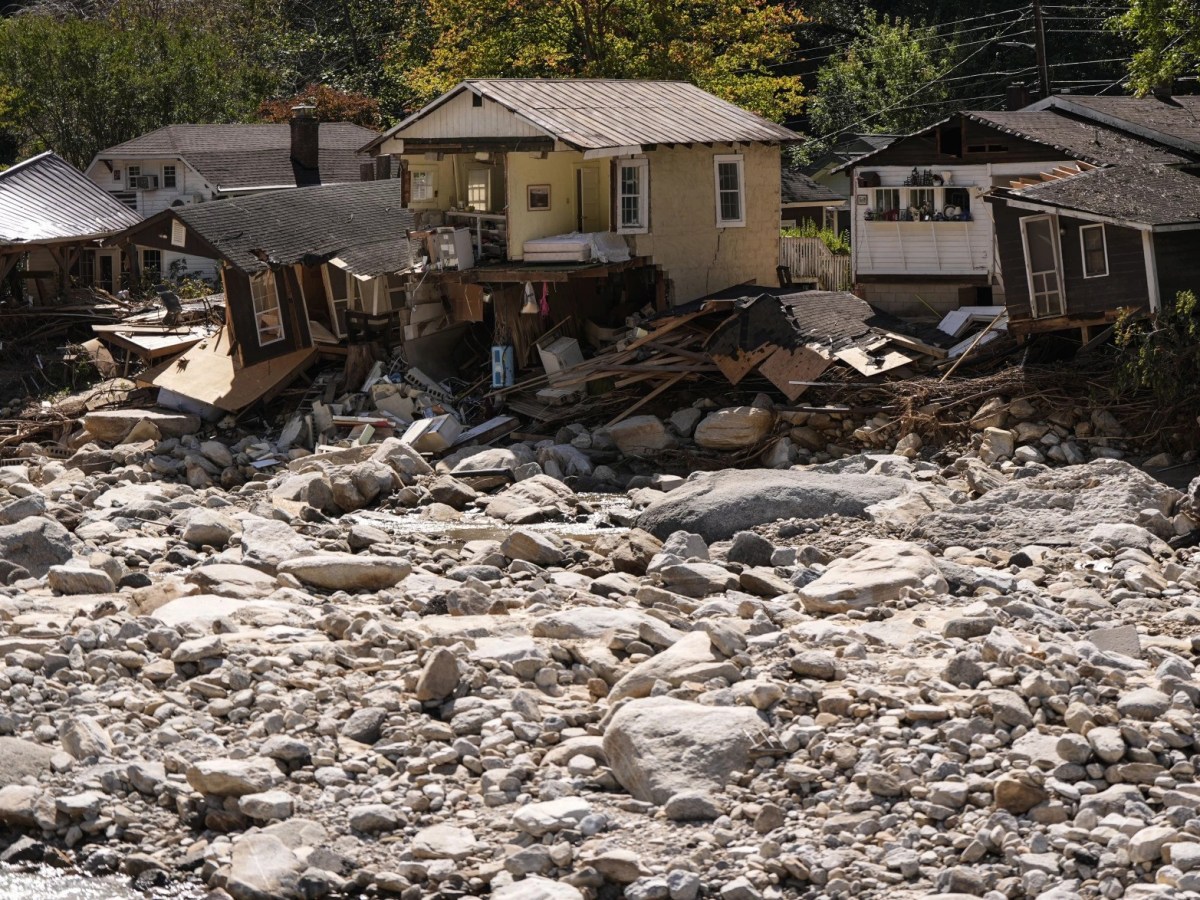
In North Carolina, Hurricane Helene caused an estimated $60 billion in damages – from private property to public infrastructure, including thousands of miles of major roads and bridges.
What’s the latest?
Using the total estimated damage as a benchmark, roughly 12.8% of costs were covered by state and federal funds in the first eight months after Helene, according to the latest report from Gov. Josh Stein’s office.
However, additional pools of federal or state money – approved but not yet allocated or spent – as well as private insurance claims would significantly increase that percentage. Taken together, public data and estimates suggest almost one-fifth of Helene recovery costs stand to be covered at the one-year mark of the storm.
Where the data comes from
Funding data comes from a variety of sources, making it difficult to track and analyze.
Funding data comes from a variety of sources, making it difficult to track and analyze. To report how much taxpayer money has been allocated to rebuilding and recovery, we analyzed major funding sources at the state and federal levels.
At the state level, four legislative relief packages have been signed into law between October 2024 and July 2025.
In Congress, a spending bill (passed to avert a federal government shutdown) includes an estimated $5.95 billion for North Carolina disaster recovery. However, the governor’s office says the state has not received the vast majority of that funding. And that figure doesn’t appear to include agency spending before December 2024 – from FEMA or otherwise – that flowed into North Carolina in Helene’s immediate aftermath.
The answer to how much exactly has been allocated or how much money has already been spent is complicated. That’s partly due to the disparate funding sources, the lag time between legislative passing and funds being dispersed, and the multi-layer approach to funding (especially at the state level, where some Helene aid was allocated essentially by taking money away from other programs).
State leaders in charge of guiding long-term recovery also estimate that insurance claims and other private funding sources will cover around $6 billion of total costs. A 75-page report from Stein’s office on Aug. 15, 2025, sheds light on the complexity surrounding the question of funding amounts – but also offers a snapshot of how much has been spent.
According to the governor, recovery funding at the state and federal levels totaled $7.6 billion, or 12.8% of the estimated financial impact of the storm. However, this report also points out that the $7.6 billion figure doesn’t tally a number of important funding sources – namely, much of the funding provided in the December American Relief Act approved by Congress.
Expenses covered by the $7.6 billion comprise grants, loans, and other direct aid to the residents and businesses that are rebuilding in Western North Carolina. In addition, much of this money goes directly to local and state government agencies for a wide range of programs.
What’s included so far
The tally of the funds already spent or committed includes:
1.1 billion
FEMA expenditures via eligibility-based programs such as temporary housing for disaster victims
$2.3 billion
Direct federal support for the state of North Carolina
$540 million
Federal funding assigned to programs like small business loans and unemployment insurance claims
$2.9 billion
Earmarked or appropriated by North Carolina legislators in fiscal year 2025, including set-aside funds for farmers with crop loss, home rebuilding programs, private road/bridge repairs, allocations to local governments to support small businesses, fire department grants, extra money for K-12 summer school programs, and more.