Overview:
The number of students using North Carolina’s Opportunity Scholarship program has more than tripled in the last two years.
The state-funded program launched in 2014, aiming to help fund low-income families who wanted a private school education over public or charter schools. But in 2023, the North Carolina General Assembly expanded the program by removing income caps and prior public school enrollment requirements.
Now, the program distributes more than half a billion dollars a year to private schools, according to the latest data from the North Carolina State Education Assistance Authority (NCSEAA). Lawmakers have pledged to increase that funding to $875 million a year by 2032, The News & Observer reported.
Here in Alamance County, the surge in Opportunity Scholarship recipients and funds disbursed mirrors the state’s growth.
Over the last two school years, the amount of taxpayer dollars flowing into private K-12 tuition vouchers has more than quadrupled in Alamance County – a result of a legislative move allowing higher-income families access to North Carolina’s Opportunity Scholarships.
In North Carolina, some critics of the private school voucher program have said they’re concerned state lawmakers are pulling available public funding away from traditional public schools. But many advocates and parents say the change has improved private school affordability and access to the program, which was started in 2014, initially as a way to help lower-income North Carolinians afford private schools.
Since 2023, when lawmakers removed household income caps on the program, the number of families applying for vouchers has significantly increased. The legislature also approved spending nearly $394 million more beginning in 2025.
In Alamance County, the change increased the value of local Opportunity Scholarships from nearly $5 million for 774 students in the 2023-24 school year to more than $14 million for 2,326 students in the current school year.
More than two-thirds of households that use private school vouchers in Alamance report income, relative to family size, that is close to or more than double the county’s local median household income of $65,651 as of the 2024 Census.
Should public dollars fund private education?
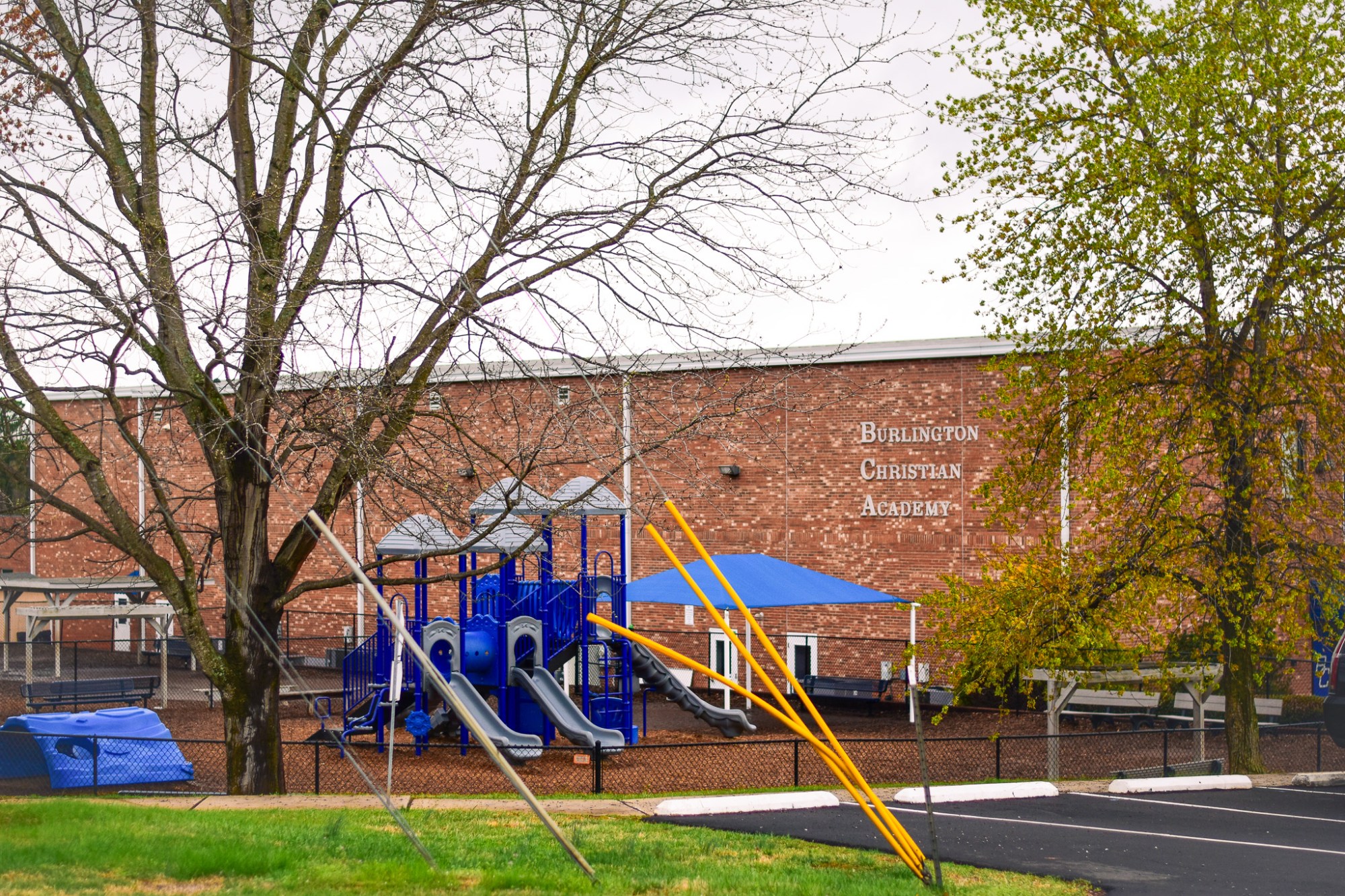
Burlington Christian Academy is one of 14 private schools that participate in the Opportunity Scholarship program in Alamance County. At $3,938,685, BCA is the top recipient of voucher disbursements in the county and the 13th highest in the state this school year. Tuition ranges between $5,500 (K3-K4) and $12,250 (grades 9-12) a year.
Laura Ferrara has worked at BCA for 18 years, first as a middle school teacher, and became the Assistant Head of School in 2020. She has two children of her own enrolled in the school.
“The voucher program is great for families that I see coming to our school that have been looking for a long time to try to do something different for their families,” Ferrara said in an interview. “That makes it possible for a family now to afford something that they couldn’t have afforded otherwise.”
Katy Rouse, an economics professor at Elon who studies the economics of education, said public school districts often worry about “losing market share,” as public education funding typically is tied to student enrollment. When students move to private schools, she said, “the money then leaves the public schools, which makes it harder for those schools.”
“[The program] gives less funding to public schools because it is taking away from the budgets that could be going there,” said Whitney Olive, who has worked as a public school teacher and is currently running for N.C. House District 63. She said that this causes the schools to lose teachers and special staff, which can then lead to higher class sizes and fewer electives and programs offered.
Like many who support “school choice,” Ferrara said that the vouchers open doors for families previously priced out of private education, allowing local school populations to become “more diverse.” She also argued that the program ensures public dollars follow the student.
“North Carolina is still getting every dollar per student that’s enrolled in their public schools,” Ferrara said. “It’s just that there have been students that have exited and gone to private schools now, and the funding has followed them there.”
Where is the money going?
NCSEAA lists 14 Alamance County private schools that will receive direct payments this upcoming 2026-2027 school year:
- Alamance Christian School
- Blessed Sacrament Catholic School
- Bradford Academy
- Burlington Christian Academy
- Excel Christian Academy
- Faith Christian Academy
- Freedom Christian Academy
- Grace Christian Academy
- KaiYros Prep Academy
- Parrish Chapel Academy
- Positive Day School
- Providence A Christian Montessori Community
- The Burlington School
- The Learning Center
Before income caps were removed, half that many schools got funding from Opportunity Scholarships in 2022. The list grew to 9, 11, and then 13 schools between 2023 and 2025.
Relative to per-pupil spending in traditional public schools, the amount of Opportunity Scholarship funding reported in Alamance County this year would support about 1,200 traditional public school students.
Who is getting school vouchers?
While legislative action opened the door for wealthier families to receive taxpayer funds, the majority of private school vouchers have gone to low- and middle-income households, according to data from NCSEAA.
However, a growing number of voucher students come from homes reporting income far above the average in Alamance, the same data shows.
In North Carolina, the award amount for a private school voucher is tied to a family’s income. The Opportunity Scholarship has four tiers, which range in annual voucher value from $3,360 to $7,468. To be eligible for the highest voucher amount, a family of four can earn no more than $57,720; or a single-parent household with one child must earn less than $41,000. Typically, a family qualifying for free or reduced lunch in public schools would be eligible for the highest voucher award.
Amber Blalock, a mother of three, currently has two sons enrolled in a local private Christian school. Her 5-year-old daughter is slated to start kindergarten there next year. She agreed to be interviewed on the condition that her children’s school not be named, in order to protect their privacy.
Blalock said the Opportunity Scholarships give her family access to a faith-based education they could not otherwise afford.
“Private schools are pretty expensive, especially with three kids,” Blalock said. “To get a Christian education around here, you have to go private unless you home school.”
Blalock said the voucher system has allowed her to select the educational environment that aligns with her family’s faith.
“It gives us and other people opportunities to choose,” Blalock said. “I think it gives more of a choice of what kind of school your kid could go to.”
How are schools managing the changes?
While scholarship applications surge, some Alamance County private schools have limited capacity.
“Right now, from what I know in our area, all schools are crowded and full, and private schools can only take what they can hold,” Ferrara said.
Unlike public schools, which must admit eligible students within their districts, private schools have the right to deny admission to anyone. Because private schools don’t have unlimited seats, Ferrara noted they prioritize admission for students who meet their specific missions and qualifications.
“If you’re talking about a religious private school, they may deny [admission] because the family doesn’t align with the values they’re going to be taught,” she said. “That sounds really harsh, but you’re also talking about a child sitting in a classroom being taught a particular viewpoint that the family doesn’t align with. That really creates conflict and difficulty for the child.”
This shift is also something education programs are looking into at the college level.
Elon’s Rouse predicts that if more K-12 students continue going to private rather than public schools, the demand for private school teachers will increase, and with that, so will their pay.
Elon University senior Hailey Gordon, a student English teacher at Williams High School, is weighing the pros and cons of teaching in a private or public school, as a former private boarding school student herself.
“The kids are so accepting, so welcoming,” Gordon said. “They’re amazing, each and every one of them. But I’m noticing a lot of things that just frustrate me with the education system as a whole.”