
When multimedia artist Lauren Rutten thinks about Hurricane Helene, she thinks about shoveling mud.
“From the very first day we could get downtown, I came down with a shovel and boots and started shoveling,” Rutten said. About a week into the work at Marshall High Studio, she looked down at the sediment gathered on the second floor of the former school.
“I saw something in the stairwell which kind of stopped me in my tracks. It was the silt of the river that had reached up into that midway point. It was like these waves of the river were there against the brick. I just looked at it and I was like that’s the river, it’s still here. It’s left its mark,” Rutten said.
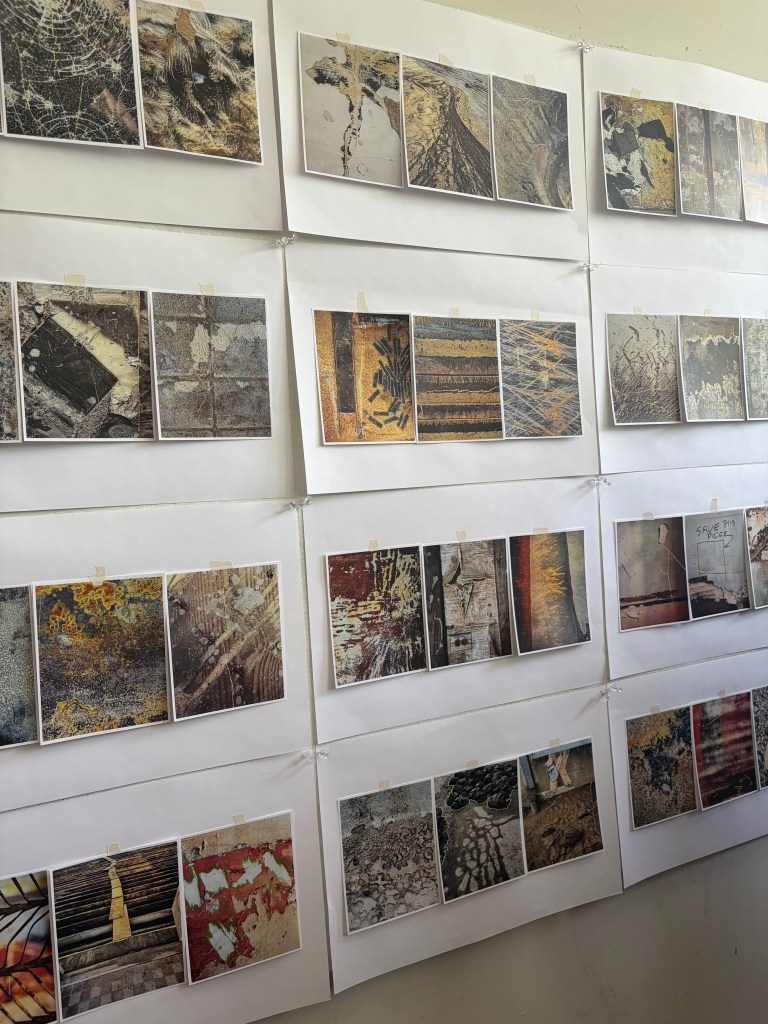
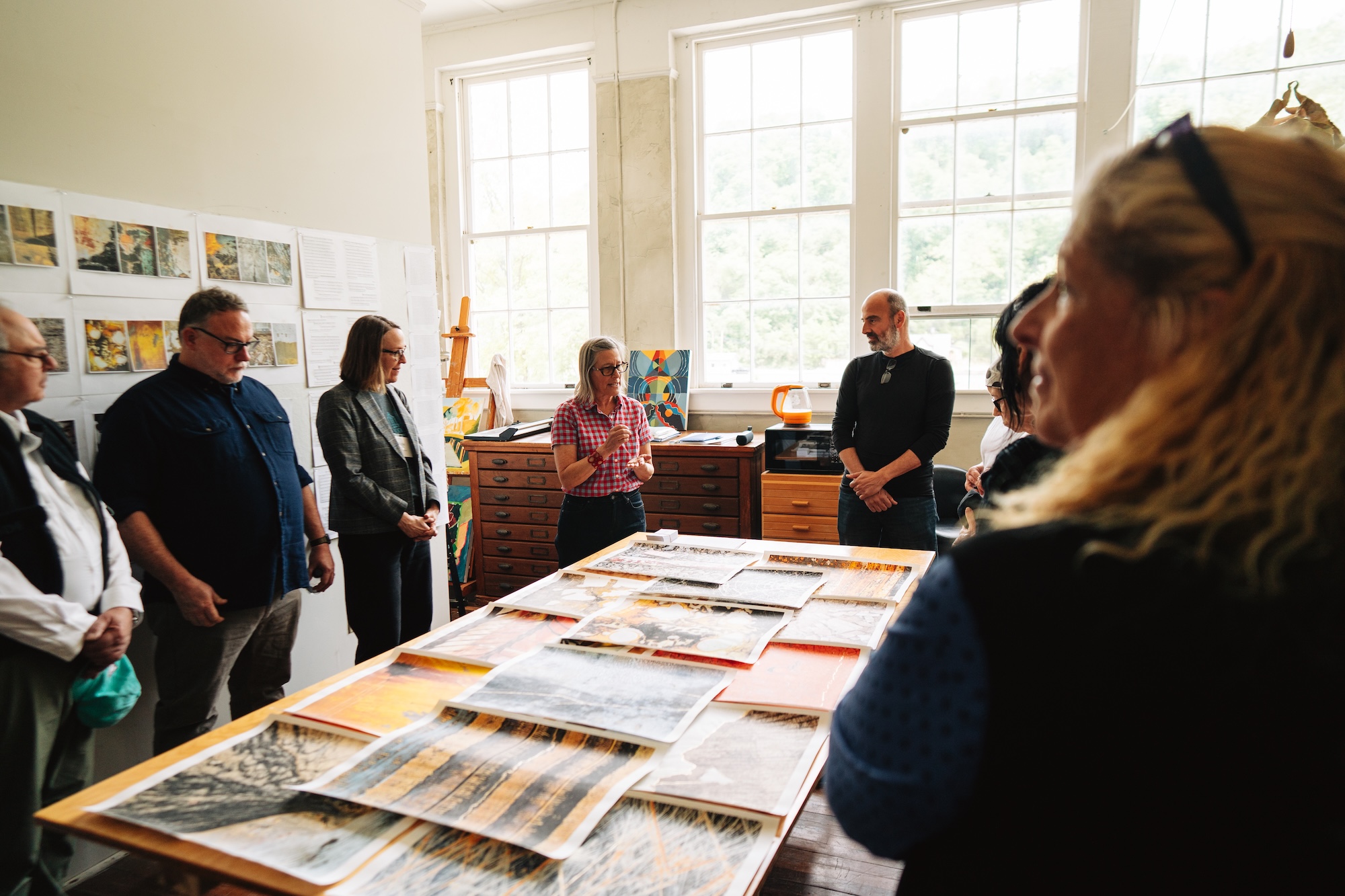
During the clean-up, she took thousands of pictures and ended up printing more than 100 images during a residency at the Penland School for Craft. The prints show the waves of sediment, cracked mud and dilapidated concrete that was left behind by the storm, highlighted with 24 karat gold leaf.
Rutten is putting the pieces together with writing responses from community members on the one year anniversary of the storm into a book called, Save This Piece.
“Save This Piece is really about honoring the way in which things mark us. Things we feel vulnerable around, change us and to not turn away from it, but to honor it and have reverence for those changes,” Rutten said.
Rutten is one of about 35 artists at Marshall High Studios, a building that sits in the middle of the French Broad River on Blannahassett Island.
This week, members of the National Endowment for the Arts Council toured the facility to learn how artists are recovering in the region.
The second floor of the 100-year building, constructed just after the Great Flood of 1916, reopened in February 2025. The first floor reopened about five months later. Rebuilding required $700,000, which the studio cobbled together from donations, grants and community support.
“It was just a total nightmare,” Marshall High Studios Executive Director Dave Schmucker said, describing the damage. “You couldn’t open the doors. All of everybody’s belongings were piled up against the doors, and the hallways were filled with mud.”
Artists turn to county, state and federal funding post-disaster
The tremendous damage in Marshall was just one place where Helene’s wrath uprooted arts communities and destroyed artists’ livelihoods.
The 28-county region impacted by Hurricane Helene exeperienced $3.1 billion in economic loss in the arts community including 34,000 lost jobs, according to the Asheville Area Arts Council (ArtsAVL).
Chairman of the National Endowment for the Arts Mary Anne Carter said highlighting the artists in Marshall demonstrates the importance of art for recovery.
“All of Western North Carolina was devastated, and we all know that artists were a big huge part of the economy here. So not only did the artists lose their income, but most of these cities and towns lost such a big economic factor,” Carter said.
Immediately after Helene, the endowment, which also funds local county arts councils through grants from the state arts council, brought employees to access the damage.
Executive Director of the North Carolina Arts Council Jeff Bell said in the early days after the storm, he and his staff worked to connect art partners to FEMA when the internet was still down in WNC.
Bell said he turned to leaders in other states, like Kentucky, who had experienced extensive flooding to learn best practices for recovery.
The NC Arts Council received more than 40% of Endowment’s funding in the state. The state organization then gives grant funding directly to county arts councils.
Carter said it is important to make sure that the councils can give money to local artists because they are closer to the community.
“It’s much easier for them to be able to analyze, assess and get the money where it needs to go then us up in Washington D.C.,” she said.
For example, Madison County Arts Council received funding to rebuild and just re-opened council space on Main Street on May 1 including a radio station. In 2026, the Madison Arts Council received $33,029 from the state arts council.
“Save This Piece” artist Rutten has received three NC Artists Support grants from the state council, including one this year.
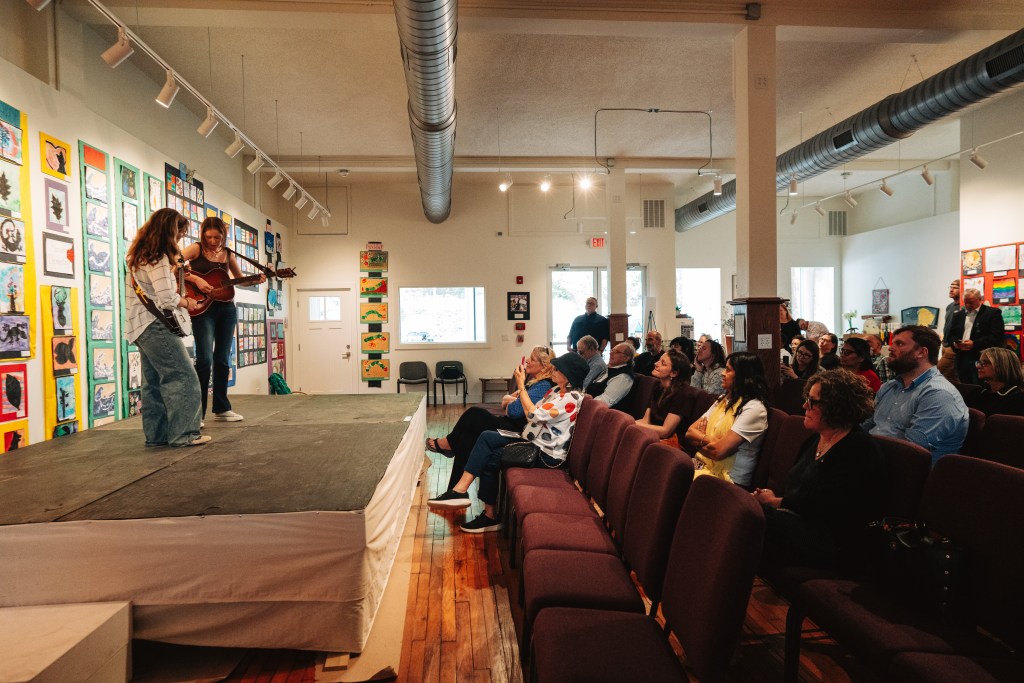
“It’s nice to come back a year and a half later. So much progress has been made. Of course, there’s still a long road ahead, but the progress that has been made is something we can now show to the council,” Carter said.
The National Endowment began deploying staff to disaster areas in 2017, following the devastation of Hurricane Maria in Puerto Rico, Carter said. The endowment has since created a disaster toolkit that outlines rapid damage assessment and resources available for artists.
Since 2024, the National Endowment for the Arts has given more than $6.2 million to North Carolina including $672,000 to artist organizations based in Western North Carolina.
The visit to Marshall helps inform how the endowment supports artists in disaster situations in the future, Carter said.
“We’ll learn a lot from Western North Carolina and the people who are doing all the work that will get incorporated and implemented [into the toolkit.] Because you know unfortunately there is another disaster down the road somewhere,” Carter said.
Correction: This article has been updated with Lauren Rutten’s correct spelling and the studio’s name.