

With flags waving and bands playing, Americans will mark the 250th anniversary of the nation on Saturday. The moment provides opportunity not only for modern patriotism but for a reflective look back in history.
Today we want to share the story of one Asheville woman who helped shape history as a political trailblazer.
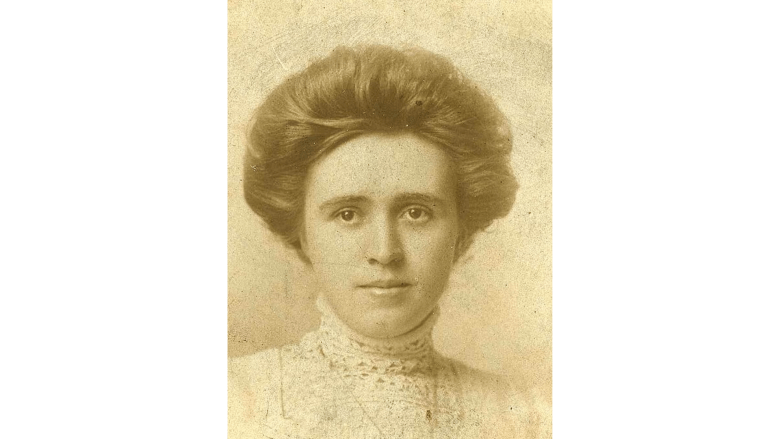
Lillian Exum Clement, born in Black Mountain, was the first woman legislator ever elected in the South in 1920.
“There’s still folks that are members of the Preservation Society, who knew [her daughter] Nancie and her husband. And they will call her Exum or even just X,” Catherine Amos, communication, education, and outreach coordinator at the Preservation Society of Asheville and Buncombe County and Clement scholar, said. “She’s definitely a complicated political figure but I think the way that most people talk about her is as a trailblazer, the first woman in those offices.”
Setting the stage
In the early 1900s, Western North Carolina was recovering and expanding. According to Amos,the region experienced several pivotal moments: The French Broad River’s historic flood of 1916. The Spanish influenza of 1918 and the end of WWI in 1918.
In 1894, South Carolinian Helen Morris Lewis held the first public meeting on women’s suffrage in NC, spawning the Equal Suffrage Association of North Carolina.
In 1908, 22-year-old Lillian Exum Clement began privately studying law despite the fact that women were not allowed to go to law school.
Exum made headlines in newspapers across the state on February 7, 1916 when she passed the bar exam—one of the first women to do so. Shortly after, she became the first woman to open her own law practice. A local judge, Thomas Jones, coined Clement’s nickname, “Brother Exum,” and the moniker stuck.
“She was a sort of divisive figure in a way, but also her own politics and her own sort of conservatism allowed her to toe this line,” Amos said.
Suffrage and segregation
Morris Lewis and Clement Stafford worked with two other early proponents for suffrage and populism: U.S. Secretary of State and presidential candidate William Jennings Bryan and Asheville mayor Thomas Walton Patton.
The politics of most Southern Democrats at the time looked more like modern conservatives, Amos explained. Most “Dixie Democrats” supported segregation and didn’t support women’s suffrage. Clement supported a woman’s right to vote despite her party’s stance.
The Equal Suffrage League of North Carolina also used racist fears to support the suffrage movement, according to Amos.
Fliers printed by the league argued that the 19th Amendment would not in fact affect the “question of the Negro vote.” One read, “If white domination is threatened in the South, it is, therefore, DOUBLY EXPEDIENT TO ENFRANCHISE THE WOMEN QUICKLY IN ORDER THAT IT BE PRESERVED.”
Clement won her race for a state House seat in a landslide of more than 10,000 votes to her opponent’s 41 votes. The historic victory made the 26-year-old the first female legislator in the South. She took her oath of office in January 1921 .
After her first day in the General Assembly, Clement shared remarks published by the News & Observer:
“‘I was afraid at first that the men would oppose me because I am a woman, but I don’t feel that way now. I feel rather shy and timid before all these men, but I have always worked with men, and I know them as they are, and have no false illusions about them. I am, by nature, a very timid woman, and conservative, too, but I am firm in my convictions. I want to blaze a trail for other women. I know that two years from now there will be many other women in the Legislature. But you have to start a thing, you know,’ she added with a smile,” according to the newspaper.
One of Clement’s most divisive opinions was her support for a women’s reform school in Buncombe County called the Lindley Training School for Girls — often for unwed pregnant women. A crowd gathered in opposition to Clement’s speech on the topic, ultimately attacking her and breaking her nose.
“This crowd had basically mobbed her and were pelting her with vegetables. They broke her nose. And then she started speaking, and she spoke so convincingly a few of them just left. But she managed to keep a crowd and make them hear her out and eventually won her argument to keep the school open,” Amos said.
During her two years in office, Clement introduced 17 bills, Amos said. Those that passed included a milk pasteurization law, a law to fund road construction and a measure which reduced the period abandoned women had to wait for get divorced from 10 years to five years.
“She did see herself as being part of social uplift in a certain way and I do think that that’s interesting and worthwhile when talking about her legacy just because she really didn’t publicly comment on anything more controversial than that,” Amos said, referring to Clement declining to speak out against racist laws at the time.
Clement served one term in the General Assembly, during which she was married to Eller Stafford, an editor at the Asheville Citizen Times.
After her term, she returned home to Buncombe County in 1922 and gave birth to their daughter in 1923. Clement died just a few years later due to complications of pneumonia and influenza in 1925. She is buried at the famous Riverside Cemetery in Asheville.