

Local journalists got a crash course in both the science of vaccines and the social forces shaping public trust during COVID, helping audiences understand safety, debunking myths, and writing thoughtfully about the cultural and historical nuances of vaccine hesitancy.
Today, local newsrooms are facing new challenges. Over the summer, Health and Human Services Secretary Robert F. Kennedy Jr. fired CDC Director Susan Monarez and dismissed the entire Advisory Committee on Immunization Practices. Some of the new members have little background with vaccines and have expressed vaccine skepticism. The committee’s new COVID recommendations have caused confusion and led to states issuing their own orders on vaccines. And the CDC just finally issued its guidelines for getting COVID shots last week.
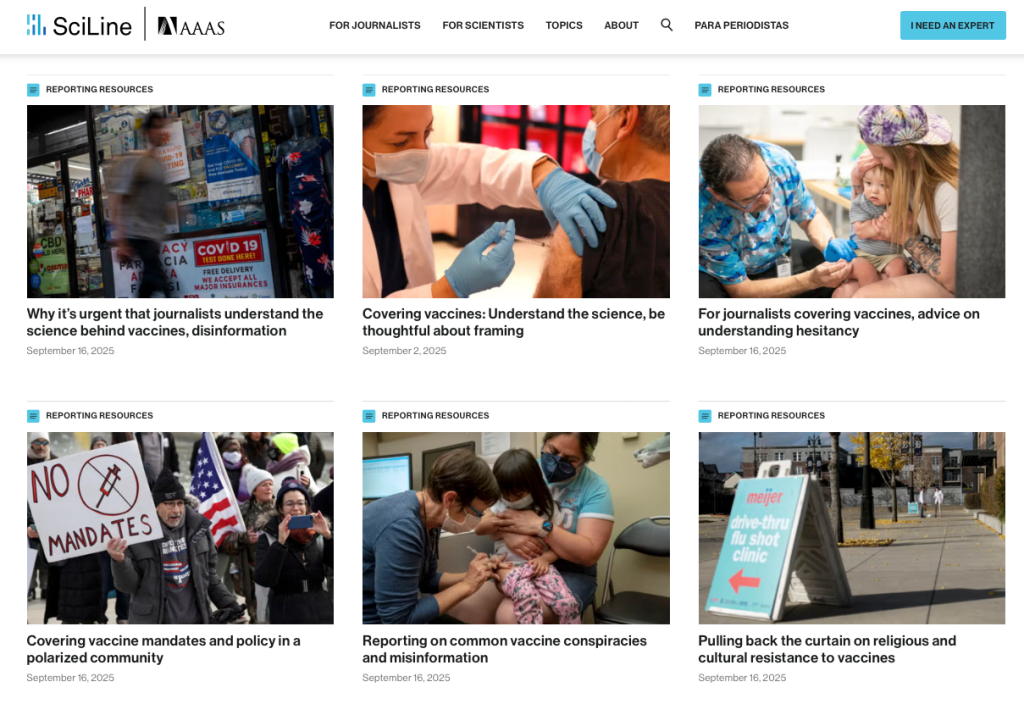
To help journalists make sense of what’s happening with COVID and other vaccines and break through the noise to serve their audiences, we’re chatting with Sara Whitlock. She’s the Scientific Outreach Manager for SciLine, a service for journalists based at theAmerican Association for the Advancement of Science. Whitlock is editor of their new vaccine toolkit: How to cover vaccines responsibly in 2025.
The toolkit is for any journalist covering vaccines, but with a specific focus on supporting reporters who are new to this topic. They’re also building out Spanish-language versions of this resource.
What are some of the challenges journalists face right now in covering vaccines?
Sara Whitlock: Amidst a sea of online misinformation and misleading political rhetoric, it can be extremely difficult to parse out the truth about vaccines from various information sources, including government organizations. The CDC has produced conflicting vaccine recommendations, removed datasets from the web, and conducted rounds of sweeping layoffs, calling the future of disease data collection into question going forward All of these actions make it harder to know what’s happening with vaccine-preventable diseases in America and what science tells us is the best way to protect ourselves and our families.
A lot of newsrooms in North Carolina are small and might not have a health beat reporter. What do you recommend they start with to get up to speed?
Sara Whitlock: Reporters who haven’t covered health or vaccines previously should start with the toolkit article, Covering vaccines: Understand the science, be thoughtful about framing. This piece introduces the basics of vaccine science and gives overarching advice for best practices when reporting on vaccines.
There’s a lot of mis- and disinformation out there about vaccines, including coming from government officials. What guidance do you have about when to address this and when it might feed into the cycle of misinformation?
Sara Whitlock: When faced with information about vaccines that you think may be mis- or dis-information, reporters should address inaccuracies clearly without criticizing, shaming, or belittling readers who may believe inaccurate information in good faith. Share correct information neutrally, cite reliable scientific sources, and talk with an expert about critical points of misinformation to debunk. If you’re having trouble finding the right vaccine expert or source, use SciLine’s free expert-matching service, and we’ll find you an articulate, credible expert source who can answer your vaccine questions before your deadline.
What about vaccine hesitancy? How should journalists approach this now—without giving a false sense of equivalency?
Sara Whitlock: It’s important to remember that many factors contribute to vaccine hesitancy—and some people who appear vaccine-hesitant may actually be facing barriers to accessing vaccines they would otherwise be open to. When covering hesitancy, ask non-judgemental questions to learn why a person isn’t getting vaccinated, and remember that, for consumers, the process of asking questions about vaccination, including about safety to side effects, is a normal and reasonable part of weighing risks and deciding whether to get a vaccine. For more context on why people are hesitant about vaccines and how reporters should cover hesitancy, see SciLine’s toolkit piece: For journalists covering vaccines, advice on understanding hesitancy.

It’s important to remember that many factors contribute to vaccine hesitancy—and some people who appear vaccine-hesitant may actually be facing barriers to accessing vaccines they would otherwise be open to.
Is there any specific kind of language to use or avoid when covering vaccines?
Sara Whitlock: When covering vaccines, we recommend avoiding language that implicitly or explicitly places shame or blame on communities with vaccine hesitancy. Instead, ask questions to understand your audiences’ concerns and level of understanding, and provide context with analogies or metaphors to help audiences understand risk without relying on fear-based, inflammatory, or hyperbolic messaging. While the toolkit doesn’t contain a word by word style guide, reporters can see the following toolkit sections covering how to strike the right tone when reporting on vaccines:
- Overarching vaccine reporting tips
- Tips for covering vaccine hesitancy
- Responsibly reporting on vaccine mandates
- Tips for journalism covering hesitancy in cultural and religious groups
What do you recommend when thinking about what visuals to include with stories or guides about vaccines?
Sara Whitlock: When deciding what visuals to include in a vaccine story, it’s important to consider the unintentional viewpoint signals images may convey. If your story is about children getting vaccinated, an image with a child who looks scared sends a different message than an image of a child looking happy and strong. Image selection relays emotional messages that words may not, so carefully curate your images to match the emotions of your story.
We also recommend avoiding stylized images of scientists, such as images of researchers holding beakers of brightly colored liquids. Whenever possible, include images of scientists working in real lab settings, or of medical practitioners treating patients.
There’s a lot happening right now—and a lot of confusion—from the ouster of the head of the CDC last summer to new restrictions coming from the Advisory Committee on Immunization Practices (ACIP). What should local reporters be focusing on to help their communities understand what’s happening?
Sara Whitlock: Local reporters covering vaccines should focus on helping their audiences understand what vaccine recommendations are backed by the consensus of current scientific research. To do this effectively in a short timeframe, it’s best to consult a scientific expert or experts who can sum up the state of the research. If you’re having trouble finding the right vaccine expert or source to cite, submit your story and questions to SciLine’s expert matching service, and we’ll find you a credible, articulate expert source who can answer your vaccine questions before your deadline.
And when covering claims about vaccines from your political officials, ask “how do you know that” questions. Follow up on the sources they cite and compare that information to credible, scientific sources to hold political officials accountable for the information they put out into the world.
Finally, focus on the process of science as much as possible. Emphasize the long, rigorous process involved in developing vaccines, and the steps taken to ensure that those vaccines are safe.
Any other recommendations for local newsrooms and/or resources you want to highlight?
Sara Whitlock: Scientific and medical organizations around the country have stepped in to fill in information gaps caused by the changes at the CDC. A few we recommend for reporters covering vaccination in their communities:
- For vaccine recommendations, the American Academy of Pediatrics produces vaccine recommendations that reporters can turn to when CDC recommendations are confusing.
- For the latest collections of research about vaccines, An organization called the Vaccine Integrity Project, based at the Center for Infectious Disease Research and Policy at the University of Minnesota, convened a committee of scientists to do a review of new vaccine research relevant to fall vaccinations—a task that the ACIP usually performs.
- For other questions about vaccine science, the Children’s Hospital of Philadelphia’s Vaccine Education Center produces evidence-backed explanations of common questions about vaccines and the science basis of vaccine schedule recommendations.
Access the Vaccine Toolkit here and sign up for the SciLine newsletter.