
Updated March 24:
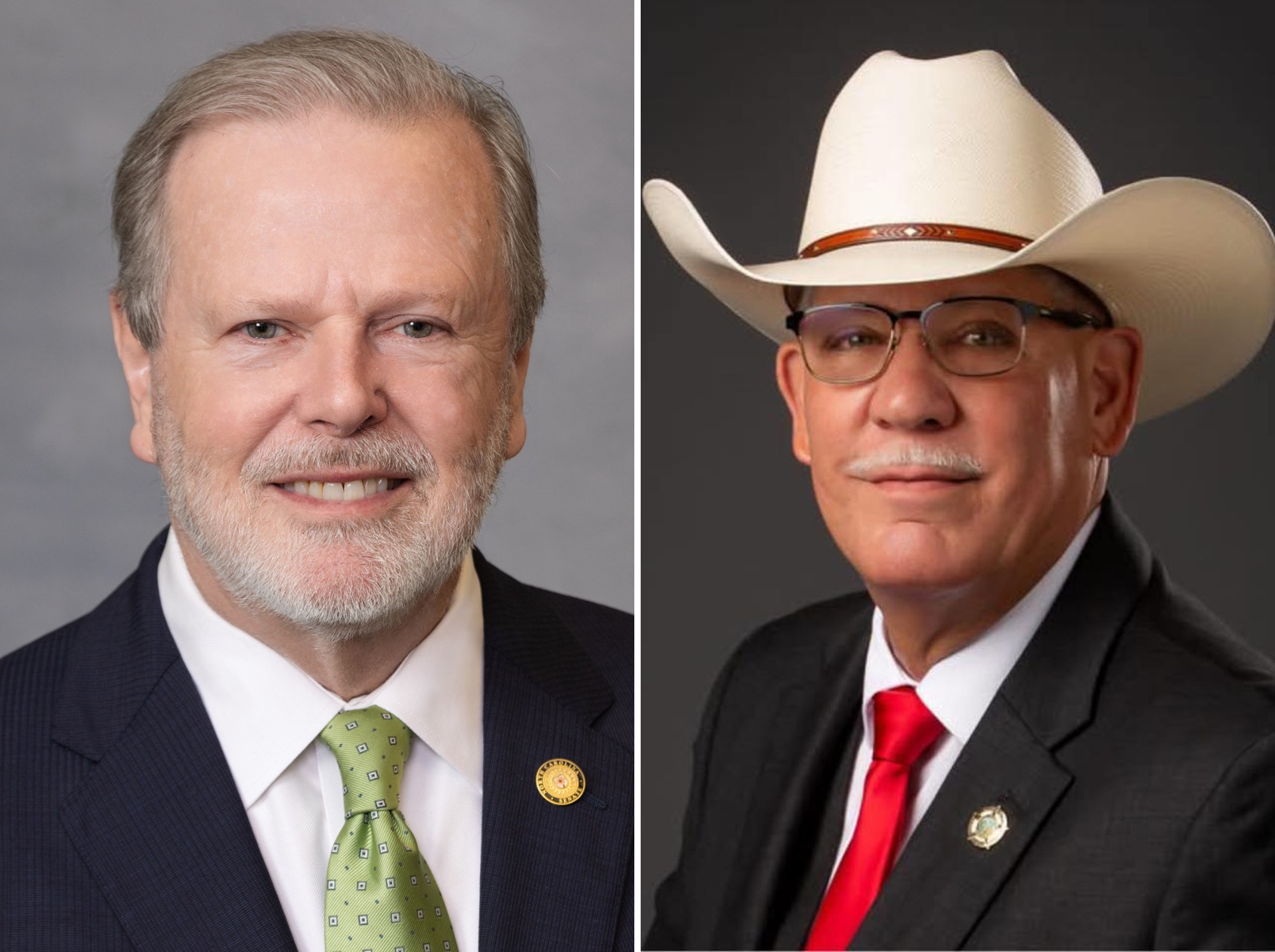
North Carolina Senate leader Phil Berger conceded Tuesday to his challenger in the Republican primary, Rockingham County Sheriff Sam Page.
“While this was a close race, the voters have spoken, and I congratulate Sheriff Page on his victory,” Berger said in a statement his campaign released Tuesday.
“Over the past 15 years, Republicans in the General Assembly have fundamentally redefined our state’s outlook and reputation. It has been an honor to play a role in that transformation,” the statement said.
Berger’s concession means his tenure will end in January, after 26 years in the North Carolina Senate, 16 of which he spent as the chamber’s president pro tempore. Assuming his party retains its majority, Republicans will select a new leader next year.
Previous reporting, published March 20:
The Republican primary between North Carolina Senate leader Phil Berger and his challenger, Rockingham County Sheriff Sam Page, is opening a window into some obscure parts of state election law.
Berger has requested a recount in the race, which he appears to have lost by just 23 votes after counties completed canvassing, the process of making sure all votes were counted correctly and certifying the results.
But Berger, a 13-term state senator and leader of his chamber for the past 15 years who is fighting to keep his powerful position, has also filed election protests tied to voters who he says either did not see the Senate race on their ballot or ran into other problems that kept them from voting in it.
State law treats those as separate processes even though they will unfold at the same time in the same race. Here’s what to expect in the coming weeks.
How does a recount work?
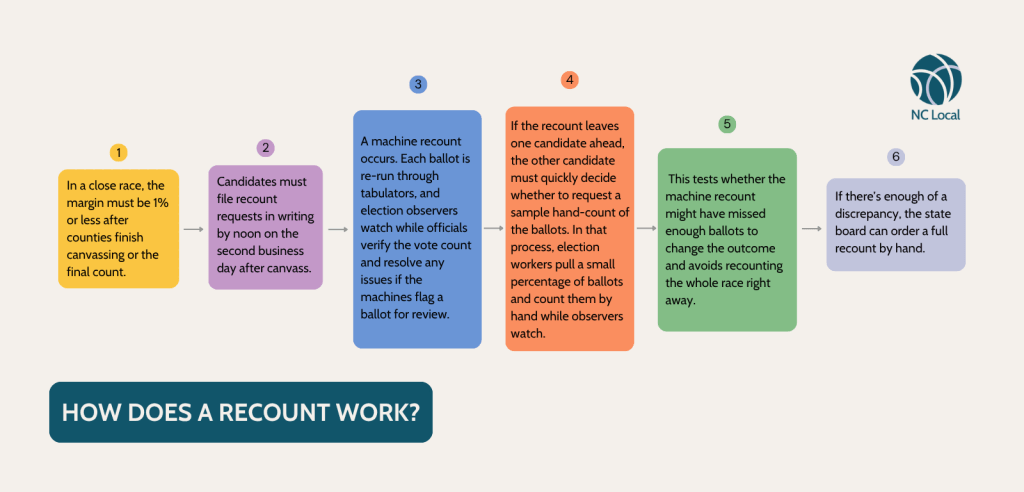
In North Carolina, candidates in non-statewide elections can request a recount in a close race. The margin must be 1% or less after counties finish canvassing or the final count. Page’s 23-vote lead falls well within that threshold.
Candidates must file recount requests in writing by noon on the second business day after canvass, which Berger did Tuesday.
County Boards of Elections usually start with a machine recount. They re-run each ballot through tabulators, and election observers can watch while officials verify the vote count and resolve any issues if the machines flag a ballot for review.

Berger’s request went beyond that basic recount process. In his letter to the State Board of Elections, he said election results showed more than 200 “undervotes” and “overvotes” in the district, which includes Rockingham and parts of Guilford counties.
An undervote is a ballot that was not entirely filled out. Those voters might have simply decided not to vote in a particular race or might have accidentally skipped a race. An undervote does not invalidate that ballot.
An overvote is a ballot in which a voter made more choices in a race than permitted, such as voting for two candidates where only one is allowed. State law invalidates that ballot item, but counts all other races on that ballot if they are clearly marked.
Berger argued the number of undervotes and overvotes could affect the outcome in his race. He asked election officials to immediately review all those ballots by hand. But members of the state Board of Elections denied that request this week, saying counties have already started machine recounts per state law.
What is an election protest?
An election protest is a formal challenge to how officials conducted the election. State law allows either a candidate or an eligible voter to file a protest with their county board of elections if they believe something went wrong.
One of Berger’s protests involves eight Guilford County voters whose ballots did not have his Senate race on them when they should have, though he still needs to prove that claim. Berger says those voters should be allowed to recast their ballots, WUNC reported. His campaign also asked the Guilford County Board of Elections to investigate whether more voters might have gotten ballots that incorrectly left his race off.
Berger filed three other protests related to voter registration, claiming at least five other voters should have been able to cast a ballot in the Republican primaries, but were denied. Again, this must be proven in a hearing.
Each county’s board of elections will decide whether the protest complies with state law and whether probable cause exists to suggest a violation. If the answer is yes, they hold a hearing.
If the county boards move forward, they can review affidavits from voters making those claims, subpoena witnesses and listen to testimony. The board then issues a written decision, which either candidate can appeal to the State Board of Elections.
What happens next?
First, Guilford and Rockingham counties will do the machine recount to see if that changes the 23-vote margin at all.
If the recount leaves Page ahead, Berger will have to decide quickly whether to request a sample hand-count of the ballots. In that process, election workers pull a small percentage of ballots and count them by hand while observers watch.
This tests whether the machine recount might have missed enough ballots to change the outcome and avoids recounting the whole race right away. If there’s enough of a discrepancy, the state board can order a full recount by hand.
Meanwhile, the Guilford and Rockingham counties’ elections boards will determine whether to hold hearings on Berger’s protests. If they do, the race could remain undecided for weeks or even months, especially if Berger or Page appeal decisions along the way.