
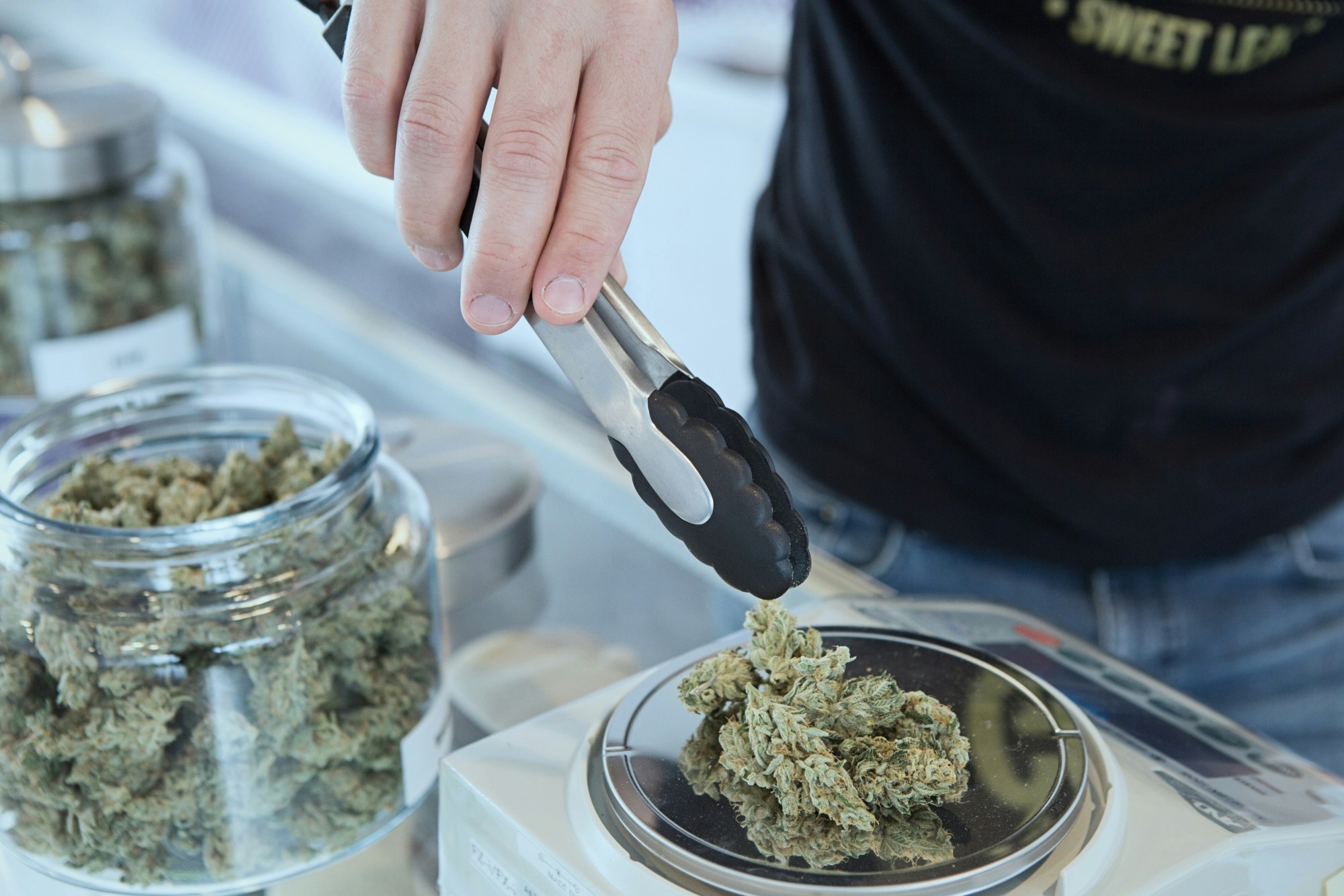
Marijuana. Cannabis. CBD. THC. Delta-9. Hemp. Understanding the laws around cannabis in North Carolina can be confusing. And those laws could be changing.
North Carolina Gov. Josh Stein started The North Carolina Advisory Council on Cannabis last summer to better understand how to create a regulated cannabis market in the state.
The council focused on creating a recommendation for “a comprehensive approach to regulate cannabis sales and create a safe, legal market for adults that protects kids.”
In their interim report, the council recommended regulation for products that contain THC including hemp and marijuana and the establishment of an adult access market with protections for medical consumers.
The report gives the General Assembly a clear directive that “a well-regulated market, including both oversight and enforcement authority, is a safer market for our state,” Stein said in a press release.
“Our state’s unregulated cannabis market today is the Wild West and is crying for order. Let’s get this right. Let’s protect our kids and create a safe, legal, and well-regulated market for adults,” Stein said.
The council’s report estimated the illicit cannabis market in North Carolina is worth about $3 billion – the second largest in the nation.
“An adult access model would bring the most revenue to the state,” according to the report. Money could be used to support public health education campaigns and enforcement, the report suggested.
What is the legality of cannabis right now?
In April 2024, the Department of Justice (DOJ) proposed to move marijuana from Schedule I to Schedule III under the Controlled Substances Act. The process has not yet been finalized. In December 2025, President Trump issued an executive order instructing the attorney general to further expedite the process of rescheduling marijuana.
The Controlled Substances Act’s definition of “marijuana” has been revised a number of times. In 2018, with the removal of “hemp” (cannabis containing no more than a 0.3% concentration of the psychoactive compound delta-9-tetrahydrocannabinol [delta-9 THC]) from the definition. It was further revised in 2025 to include the concentration of all THC, not just delta-9-THC.
North Carolina is one of only 10 states without a regulated adult-use marijuana market or medical marijuana program, according to the report.
However, marijuana has been decriminalized to some extent in the state. Possession of one-half ounce (0.5 ounce) or less is classified as a Class 3 misdemeanor which typically results in a fine rather than active jail time.
Cannabis is legal in one area: The Qualla Boundary, the sovereign nation of the Eastern Band of Cherokee. The tribe legalized cannabis on tribal lands for recreational use in 2023 and medical use in 2021.
The tribe’s Great Smoky Cannabis Company grows, processes and sells cannabis at the largest dispensary in the world which opened for recreational sales to nontribal members in September 2024. The tribe spent about $50 million on the venture in 2024.
How is business on the boundary?
When the dispensary opened two years ago, Tribal leaders spoke about the financial benefits of the operations.
Former Tribal Council member Tom Wahnetah of Yellowhill explained in 2024 that he saw expanding the dispensary sales to recreational marijuana as a crucial part of the tribe’s economy.
“It’s very important because gaming has popped up all over Tennessee, Virginia and probably soon in South Carolina and Georgia. So we have to diversify more our revenue streams to support our people in our programs,” said Wahnetah, who was liaison between Qualla Enterprises and tribal council at the time.
Officials also saw it as a “pilot program for the state,” according to Tribal Council member Boyd Owle at the time.
In 2023, CEO/General Manager, Qualla Enterprises LLC / Great Smoky Cannabis Company Forrest G. Parker estimated that gross revenue by year five of the cannabis venture could exceed $800 million compared with $200 million less if the tribe only legalized medical marijuana sales.
Qualla Enterprises LLC which manages the tribe’s cannabis business has dealt with some issues recently, The Cherokee One Feather reported.
Last week, a request for an investigation into some of the board members was brought to tribal council. Ultimately, tribal council concluded that an Ethics Committee investigation was warranted for the entire board. The board is suspended until a recommendation is made by the tribe’s Ethics Committee to the tribal council. The chairperson of the board was also subsequently removed during this meeting.
In a few weeks, tribal members will receive a distribution of revenues from Qualla Enterprises, the Cherokee One Feather reported in March.
These payments are expected annually in April, but the amount has not yet been reported.
No other Indigenous groups in the state grow or sell marijuana, giving the Eastern Band of Cherokee an advantage as the only federally recognized tribe in the state. But in December, the Lumbee tribe was recognized by President Trump, opening up the possibility for building a casino or legalizing marijuana. The tribe purchased 240-acres for economic development in January.
“What form of economic development we take early on in this new era, whether gaming is a part of our future or not, will be determined by the will of the Lumbee people,” Lumbee Tribal Chairman John L. Lowery told WRAL in January.
What can the state learn from Eastern Band of Cherokee cannabis regulations?
Over the last decade, the Eastern Band of Cherokee’s tribal council wrestled with some of the same issues state leaders now face, including if and how to legalize recreational and medical marijuana.
Eastern Band members took part in a 2017 pilot program to grow hemp. The program was authorized in 2014.
The Eastern Band then did a feasibility study on the mass production of hemp which was presented in 2019. Because hemp became legalized by the federal government in 2018, the market is already saturated with the mass of CBD products. That’s when they began to consider marijuana legalization.
When medical marijuana was legalized by the EBCI in 2021, it was available to adults 21 and older with 18 specific conditions such as anxiety and chronic pain. Medical cards are approved by the tribe’s cannabis control board with the submission of an application that includes medical records.
Even in the early discussions about legalizing medical marijuana, child safety was a concern, as it is for Stein’s council today.
“Back in the early 1970s, pot was the drug of choice; I raised kids back then so I remember,” former council member Tommye Saunooke said, according to Carolina Public Press. “It always frightens me when we legalize something that we were taught is bad. Saunooke passed away in 2022.
“But if that would alleviate some of the painkillers,” she added, referencing prescription pain med abuse on the reservation, “that would help.”
The state council is also considering child safety through a subgroup, The Consumer Safety and Youth Protection Subcommittee, to focus on youth safety guardrails. The subcommittee discussed an age minimum requirement, advertising standards that would not appeal to young people.
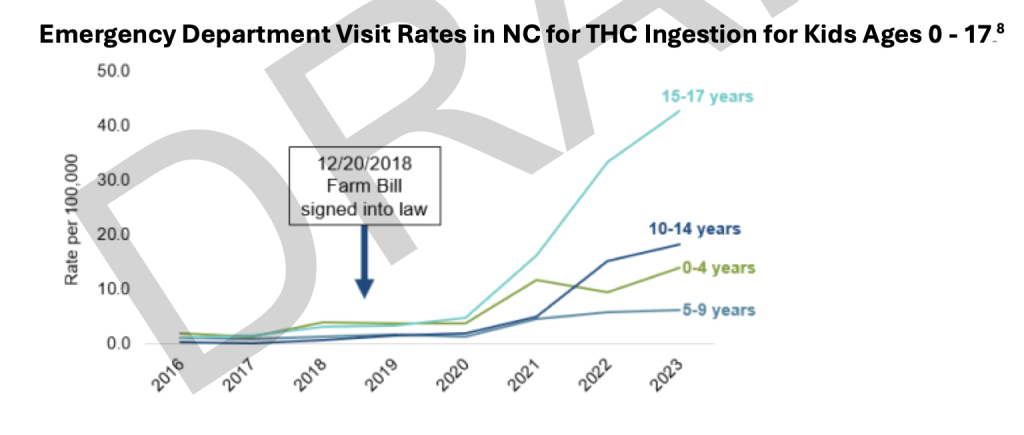
The council report identified that emergency department visits for kids who were intoxicated because of cannabis has risen sharply in recent years with rates for children ages 17 and under increasing by more than 600% and more than 1,000% among older teens.
The tribe eventually resolved to protect children on the boundary by enforcing a requirement that marijuana possession be illegal for anyone younger than 21 years old. There are also additional penalties for selling or giving marijuana to those who are underage.
While recreational marijuana was legalized on the Qualla Boundary, another protection for children was to prohibit public consumption. There are also additional protections against consumption within 100 feet of a school, child day care facility, public park, playground, community club building, public swimming pool.
Consumption is also not permitted within 100 feet of a church, hospital, tribal government building,or community facility. Consumption is also not allowed inside the casinos and possession of cannabis is not allowed on school property. Violating these rules will result in a criminal offense that is punishable with a fine of up to $500 dollars, community service, or a substance abuse assessment. Fines and punishments increase for additional offenses to include jail time.
What is the next step?
As the legislature is ramping up for the short session starting April 21, cannabis regulation is expected to be up for discussion.
Rep. Timothy Reeder (R-Pitt) and Sen. Jim Burgin(R-Harnett) both told the News & Observer that they were against legalizing marijuna. Both led appropriations and health care committees.
This early pushback by Republicans, who control the majority of the state House and the Senate, signals that this legalization may move through the legislature quickly.
The council is putting together a final report that will be shared in December 2026. Public comment is still open for the council if you want to share your thoughts on this issue.
File your public comment here.