
Artistic interpretations of a tiny green amphibian could be an unlikely driver of economic recovery in Western North Carolina after Hurricane Helene devastated the region in late 2024.
The Green Salamander Art Trail includes 33 pieces of art featuring the native green salamander at 30 businesses throughout Lake Lure, Chimney Rock Village and the Blue Ridge Foothills. Artists and business owners hope the trail will entice tourists and art lovers to visit the area.
“The [green salamander] in front of my business is a 7-foot sculpture out of pickle balls,” local business owner Thomasina Coile said. The sculpture is a playful creation outside Coile’s complex of a candy store, a fun zone, an escape room and an axe-throwing company.
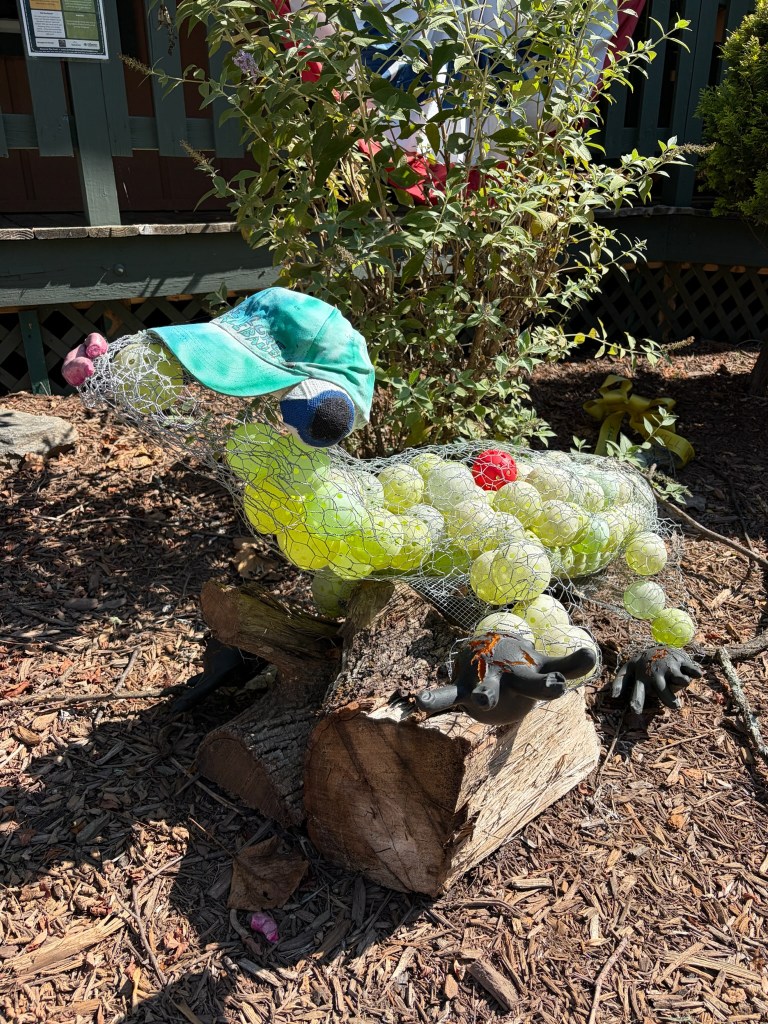
Coile’s business is just one of the stops on the trail visitors can explore through a scavenger hunt. Each piece of art featured a QR code with a fun fact about the rare salamanders found in the Hickory Nut Gorge.
Coile, who moved to the area from Savannah, Georgia in June 2024, said she is hopeful that the trail will attract more business.
“There is still so much recovery and devastation that even last fall it was not anywhere compared to the years in the past. So we’re very hopeful for this summer and even going into the fall that it’s going to bring more people here,” Colie told NC Local in June.
Colie credited Kim Sayles, owner of Lake Lure’s Grafton Lodge, with the idea for the art trail. Colie, who is also on the Hickory Nut Gorge Chamber of Commerce, said Sayles wanted to highlight artists.
“Obviously we do have a lot of artists in Western North Carolina. We are all struggling after Hurricane Helene, brick-and-mortar businesses, we are slow. We need tourism. Artists they’re struggling. They need support as well,” Colie said.
The trail features a variety of art including a ‘salamandala,’ a salamander made of iconic Lake Lure landmarks and more.
The Green Salamander Art Trail will run through August, and on September 15, the pieces will be auctioned off to benefit the Hickory Nut Chamber of Commerce and Helene recovery.
Lessons from the past
The Salamander trail builds on the concept of a craft trail that started in the early 1990s.
Anna Fariello, curator of the Blue Ridge Craft Trail, said she remembers then-President George Bush declaring 1993 the year of “American Craft.”
“I have a degree in art history but when you get a degree really, you learn European art history. You don’t really learn American art history and you certainly don’t learn about the history of craft, at least at that time. And so that’s what launched me in this direction, which was to look at the history of craft in Appalachia,” Fariello said.
The craft tradition flourished about 100 years ago during the “golden years” of Appalachian craft revival, Fariello explained. Iconic institutions launched in the Western North Carolina: the John Campbell Folk School which opened in 1925, the Penland School of Craft which opened in 1929 and the Southern Highland Craft Guild (originally the Southern Mountain Craft Guild) which opened in 1930.
“Those three which give us the foundation for why craft is such a hugely important field in Western North Carolina,” Fariello, who has written books about local craft history such as Qualla Arts and Crafts, said. She most recently released an expanded edition of her acclaimed book, Craft & Community: John C. Campbell Folk School 1925-1945 last year for the school’s 100th anniversary.
Craft is not just art, it’s the cultural heritage of a region, Fariello explained.
“Because the strength of Western North Carolina art is craft, that’s how Handmade in America kind of developed and how the Blue Ridge National Heritage Area came into developing the Blue Ridge Craft Trails,” Fariello said.
Fariello pointed to Becky Anderson as a leader in this movement to craft.
Anderson worked for the Asheville Chamber of Commerce in the 1990s, and she remembered trying to crack the code on a new industry for the region.
“Tourism was just beginning to emerge as maybe an economic solution to some of the projects that were falling, i.e. agriculture and the loss of tobacco,” Anderson said. Manufacturing, centered primarily on furniture and textiles, had once been another economic driver in the region, she said.
“I grew up in Canton so I was very used to Papertown USA and that kind of thing but what could bring more people to the area? We had the Smokies. We had the Parkway. What else and what could people do for a longer period of time?” she asked.
She said they realized that Appalachian culture and craft could bring the region together for a new economic strategy.
With a grant from the Pew Charitable Trust, the chamber spent a year meeting with local leaders across 20 counties in the region to figure out how to bring more tourism into the rural communities.
“We wanted to get rid of the stereotypes of Li’l Abner and Snuffy Smith and the movie Deliverance and the Beverly Hillbillies and all that. It was time for that to go,” Anderson said. “Tourism became the thing that could keep us all together.”
The craft community also took part in the community meetings and wanted to know how to better sell their work beyond craft shows, she said.
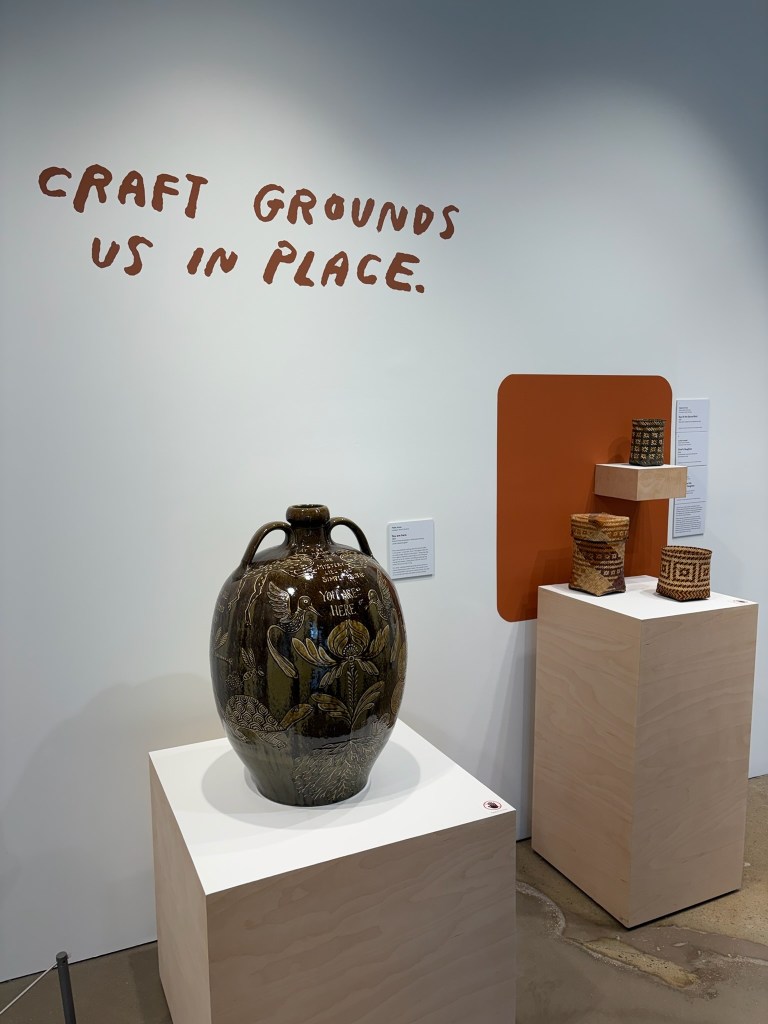
“So we said, let’s reverse the system and bring the visitor to you,” Anderson said.
The effort became Handmade in America, a community development organization first managed by Anderson, who created the original Craft Heritage Trails of Western North Carolina.
These trails were printed in guidebooks that showed visitors to hundreds of craft studios, galleries, schools, and more across the mountains. Anderson created the first edition of the trail book which was published in 1996. Over the next six years, three more editions were published, and 1.7 million copies of the guide books were sold.
Over the next two decades, Handmade in America worked with 14 small towns to promote tourism centered around arts and culture before it closed its doors in 2015, according to the Mountain Xpress.
Ultimately, the program merged with efforts to federally designate the Blue Ridge National Heritage Area, Anderson said. The area was officially recognized in 2003 as a significant place for cultural, musical and historical heritage.
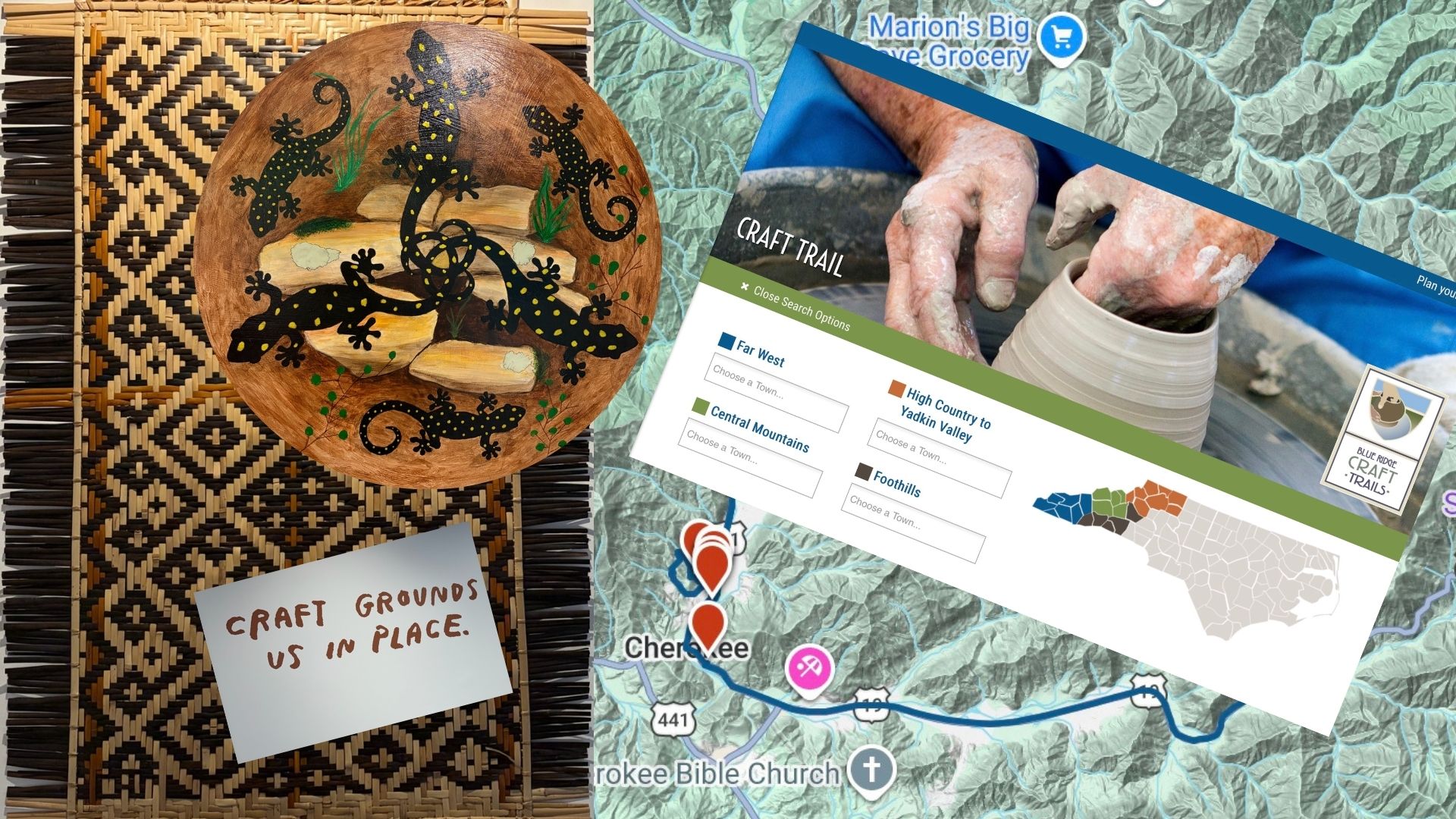
Through this designation the heritage area was able to launch the Blue Ridge Music Trail in 2013 which expanded to the Blue Ridge Craft Trail in 2017 with a $90,000 grant from the Appalachian Regional Commission.
The trail spans 25 counties and includes more than 100 and arts organizations as well as about 250 individual studio artists. There are also itineraries to help plan your trip to different parts of the region like High Country, Foothills or Far West.
Blue Ridge National Heritage Area was estimated to contribute more than $2 billion annually to the regional economy, according to a 2014 economic impact study.
“One of the things that has happened over the past few decades is communities have started to identify what what are their assets,” Fariello said. “We live in a beautiful place and, of course, it’s always easy to say that the Great Smoky Mountains and the Tuckasegee River, these are our natural assets, but we also have cultural assets.”
The cultural assets are what draw people to an area, so their identification is critical, she said.
“The craft trails help not only identify them but it helps visitors connect with local artists and galleries,” she said.
Tourism has long since become the economic powerhouse of the region. The Western Arts Agencies of North Carolina estimated that in 2024 the creative economy generated more than $1 billion in earnings and over $3.1 billion in sales across the region.
Recovery through arts
Some local and state leaders are betting on the draw of the region’s arts and culture as a key element of the recovery process.
Past economic benefits demonstrate how the arts might help current efforts to boost recovery after Helene. The 28-county region impacted by Hurricane Helene experienced $3.1 billion in economic loss in the arts community including 34,000 lost jobs, according to the Asheville Area Arts Council.
Artists are still recovering in small businesses and personal studios across the region. The Blue Ridge Parkway Foundation has been using the craft trail model to share itineraries for towns along the Parkway during rebuilding efforts including highlighting local art like the Toe River Arts Council. Detours of Discovery shares maps to Spruce Pine, Little Switzerland and Burnsville.
“I think that craft is just such a central part of our community and our culture and how we relate to each other and even how we take care of our own community, whether it’s quilts or pottery that was super useful and it’s wonderful that through the craft trails, we can see the beauty of these things that may have been utilitarian,” said Rita Larkin, Chief Communications Officer for the Blue Ridge Parkway Foundation said.

Last week, Gov. Josh Stein announced a new investment in local arts programs in the region. Asheville’s Center for Craft will become one of the nation’s five craft hubs through a partnership with Etsy’s Craft Catalyst Initiative. The company plans to invest $10 million over the next three years across the country.
In Western North Carolina four nonprofits received $100,000 in funding during the first round including Haywood Community College Professional Craft Programs.
This program teaches one and two year degrees in clay, fiber, jewelry and wood that “blend craftsmanship, design, and entrepreneurship” to train the next generation of craftspeople, according to the community college.
The school plans to use the Catalyst funding to create a structured Professional Crafts Alumni network and online resource platform.
“Local artists have long been an integral part of western North Carolina culture,” First Lady Anna Stein said in a press release on the announcement. “Etsy’s support will help drive more people to visit Asheville and surrounding areas, which will help boost local economies, especially as we continue to recover from Hurricane Helene.”