

Overview:
Last July, state lawmakers prohibited the state bar association from distributing grants from its legal aid fund known as the North Carolina Interest on Lawyers’ Trust Accounts program, or IOLTA. The program, which is not funded by taxpayers, uses earned interest from lawyers’ trust accounts to award grants to organizations providing free legal services to low income residents across North Carolina.
What is IOLTA?
The North Carolina Interest on Lawyers’ Trust Accounts program, or NC IOLTA, is a program that collects earned interest from lawyers’ trust accounts and distributes the funds as grants to organizations providing free legal aid services to low-income residents across the state.
Attorneys are required to hold funds that don’t belong to them, such as lawsuit settlements, in trust accounts. When funds remain in those accounts, they generate interest that doesn’t belong to the client or the attorney.
In 1983, state lawmakers and the state Supreme Court established the program, which is managed by the North Carolina State Bar. Most of the funds are distributed to organizations providing civil legal aid services, such as representation during eviction, domestic violence and elder abuse proceedings.
North Carolina’s IOLTA program works with attorneys and banks to collect these funds, which Mary Irvine, NC IOLTA’s executive director, said are often described as “found money picked up off the street.”
“It was there and ripe for the taking and now we can use it for this really important public purpose,” Irvine said.
The funds go to organizations like Legal Aid of North Carolina and Pisgah Legal Services, who provide legal services in civil matters like landlord-tenant disputes and in the aftermath of Hurricane Helene, disaster assistance. The nonprofit organizations provide legal services that private firms charge $200 to $300 per hour to handle.
Since the start, the program has awarded $134 million in grants, and last year, it provided close to $12 million in funds to 35 organizations. About half went to Legal Aid of North Carolina, totaling about 15% of the organization’s entire annual budget. A small portion of IOLTA money is also awarded as grants to support administration of justice efforts, like mediation-related services, Irvine said.
Why did lawmakers freeze NC IOLTA’s ability to distribute grants?
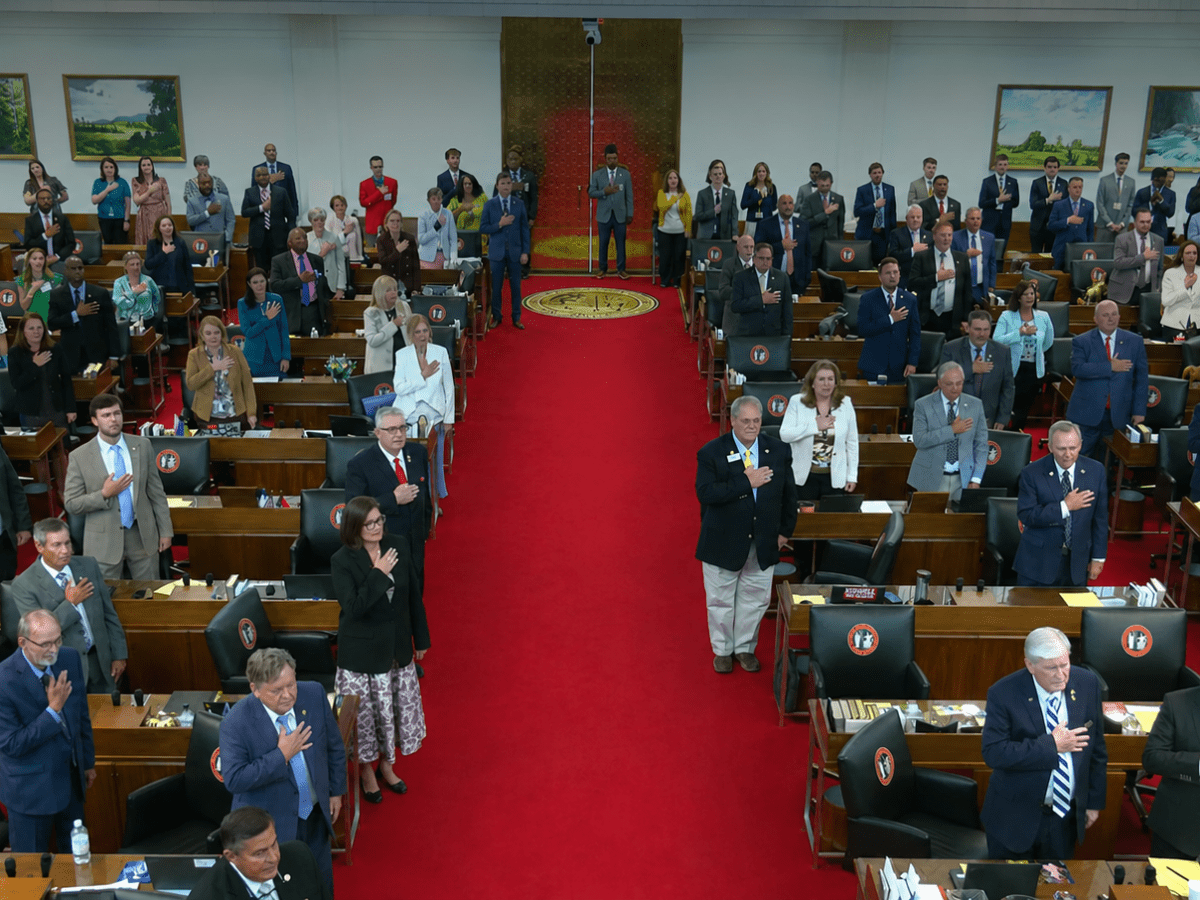
Lawmakers in the Republican-controlled North Carolina General Assembly approved a year-long freeze of NC IOLTA’s grant-making abilities last July when they passed the 2025 Public Safety Act. The measure was included as a provision in the bill.
Though Gov. Josh Stein, a Democrat, signed the bill, he said in a statement that he was concerned about the provision, saying “it punishes organizations providing civil legal services to low-income North Carolinians.”

Jack Flame Sorokin/Come Hell or High Water Community Memory Project Credit: Jack Flame Sorokin / Come Hell or High Water Community Memory Project, accessed September 19, 2025, https://helenehistory.omeka.net/items/show/890.
In May, before the measure passed, lawmakers had debated the use of IOLTA funds.
State Rep. Sarah Stevens, a Surry County Republican running for a seat on the North Carolina Supreme Court, said she wanted IOLTA used to shore up Indigent Defense Service’s private assigned council fund — money used to pay private attorneys to represent indigent clients in non-capital cases where a public defender is not available — a measure that was included in the House’s proposed state budget that did not pass.
Months later, after passage of the freeze, House lawmakers held an oversight hearing where they questioned Irvine, NC IOLTA’s executive director, and the state bar’s executive director Peter Bolac, about the grant-making process and receiving organizations’ alleged political activism.
At the hearing, Harry Warren, a Republican lawmaker from Rowan County, said the program awarded grants “to leftist groups with leftist ideologies.”
In April, North Carolina Auditor Dave Boliek released a report that found no wrongdoing within NC IOLTA, but still called for more post-award oversight.
At the same time, Boliek said the audit proved that grants were being awarded to “organizations with clearly partisan, political agendas.”
Most of the groups that receive funds are 501(c)3 organizations, nonprofits barred from engaging in political activity.
“We’re pleased to share that the report demonstrates NC IOLTA’s steady, focused commitment to achieving our mission with the highest standards for how we work,” Bolac said in a statement after the release of the auditor’s report. “Notably, the audit did not identify any instances of funds being improperly disbursed by the Board or misused by grant organizations.”
Who is impacted by the freeze?
With funding on hold, many of the organizations that typically receive IOLTA money are having to make difficult decisions.
The News & Observer reported that Legal Aid of North Carolina eliminated 45 positions and closed nine offices as a result of the freeze.
Other organizations have been forced to lay off full-time employees, with additional layoffs expected, if funding is not restored.
Reducing legal staff means a reduction in legal services for low-income people. Clients who have experienced domestic violence, for example, may not be able to afford private firm assistance to get restraining orders against their abusers.
Inner Banks Legal Services Executive Director Sarah Beth Withers said the freeze in IOLTA funds, which she said has averaged about a third of the organization’s entire annual budget since 2023, is also hitting her organization in rural Eastern NC particularly hard.
“It is so hard, especially when you have a domestic violence survivor with four kids, and she hasn’t worked for the last five years because she was a stay-at-home mom, and now you’re telling her, ‘Your custody case and your divorce case isn’t over, but now you’re gonna have to find money to pay for that, even though you haven’t worked and you’re not employable,’” she said.
In Western North Carolina, the funding freeze comes as Hurricane Helene survivors still need help with civil legal matters.
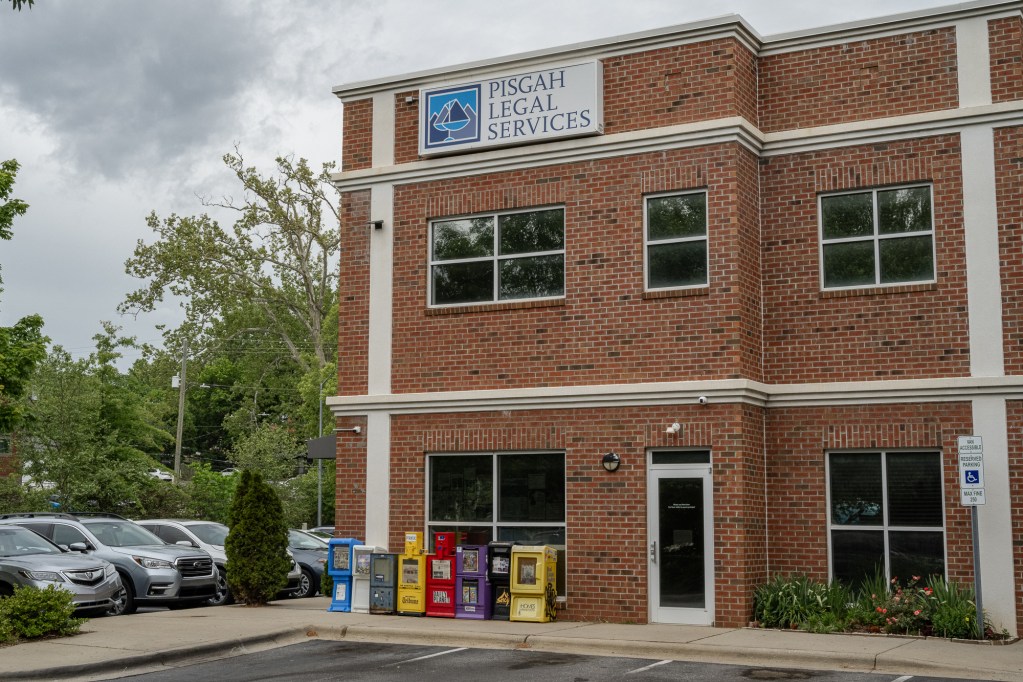
“Almost nobody comes in the door that wasn’t in some way impacted by Helene,” said Molly Maynard, Pisgah Legal Services chief program officer.
More than 18 months after the storm, Maynard told NC Local that residents are still facing foreclosure because of lost income, battling insurance companies for payouts and dealing with scammers that “took their insurance money and then disappeared” without making repairs.
“IOLTA really stepped up in a big way after Helene to make it possible for us to help people,” Maynard said. “And the absence of that funding is stark.”
Jacob Biba/NC Local
Legal Aid announced the closure of its Boone office late last year. The facility served residents in some of the counties hit hardest by Helene, including Watauga, Avery, Mitchell and Yancey counties. The office was the only nonprofit civil legal services provider in the area, according a press release.
The funding freeze came at a time when legal services for low-income people were already in short supply. A recent study found 86% of legal needs in the state go unmet because of limited resources for civil legal aid providers.
For providers like Inner Banks who are still trying to address the needs of lower-income clients, specifically those navigating family law cases, the lack of IOLTA money is “hitting home the hardest,” Withers said.
“We are not rolling in the dough out here,” she said. “We are nose to the ground, grinding out as many cases as we can physically and providing real work for people who truly need access to the courts.”
The organization, which serves a high-poverty region, had received a two-year IOLTA grant to fund a fellowship to provide free family law services for people earning under 200% of the poverty level, about $43,000 for a family of two or $66,000 for a family of four. Clients get assistance on bankruptcy cases, domestic violence matters, family law issues and other cases.
Using surplus funds, the organization has been able to continue providing services, but family law cases are time intensive and sometimes take years to resolve. In April, the organization started transitioning clients and preparing them for loss of representation, some in the middle of their cases.
If funding isn’t restored, Withers said Inner Banks would have to drop 34 cases it is currently working on.
“They’re going to have to pay or find other representation,” Withers said.
What happens next?
The freeze is set to expire June 30.
Gov. Stein’s budget proposal, House Bill 1146, would lift the freeze. No new measures specific to IOLTA have been filed in the current legislative short session.
Lawmakers are currently trying to hash out a budget deal, as North Carolina is the only state in the country to not have passed a budget last year.